F-35 to Insect: Worldwide Stealth Drone Deal is Signed
Two days after joining the portfolio, the $62m small-cap just locked up the material behind the next generation of stealth drones

Adisyn (ASX: AI1) ran hot on Monday. Around 40 million shares changed hands, roughly $3.5 million in turnover, the biggest volume day in the stock's history.
If you came in on that, welcome. Two days on, there's more news.
AI1 just locked up exclusive worldwide rights to the graphene material behind a new wave of stealth drones.
Today, a drone on a military radar screen looks about the size of an F-35 fighter jet. AI1's tech has already shrunk that signature by 100 times in testing at Tel Aviv University.
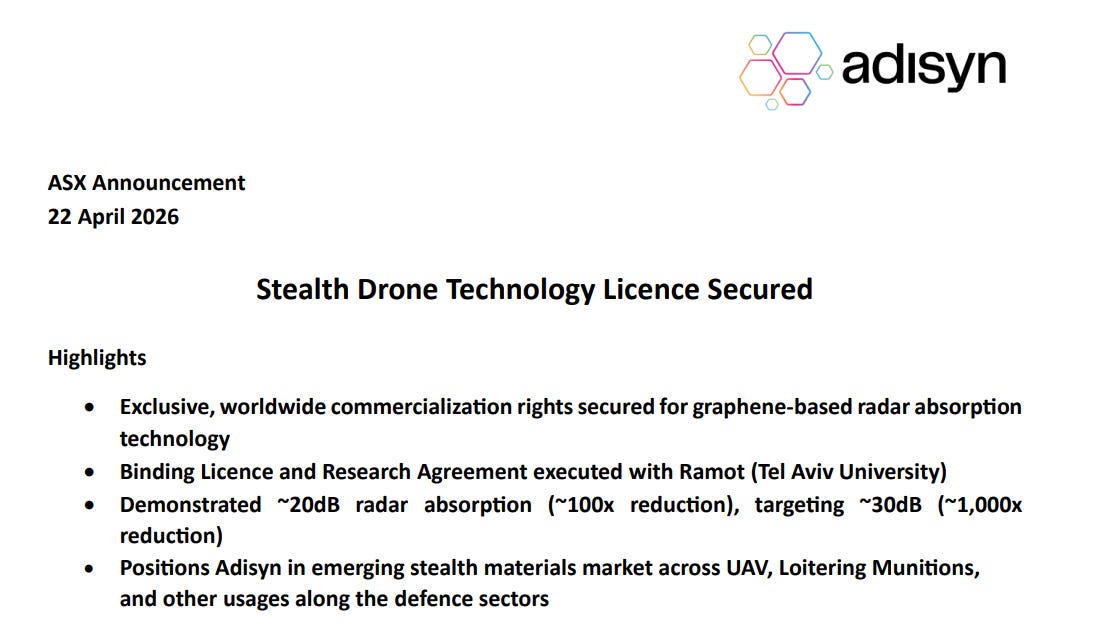
The next target is 1,000 times, where the drone shows up looking more like an insect than an aircraft.
The country that builds it first gets a lethal edge in the next decade of airborne warfare.
The deal Adisyn signed is a binding licence between AI1’s subsidiary, 2D Radar Absorbers Ltd, and Ramot, the commercial arm of Tel Aviv University. It replaces the option AI1 had in place.
An option means you might own it. A licence means you do.
The licence gives Adisyn the right to earn royalties whenever the graphene tech is deployed in a drone or defence platform.
That’s how the drone side of the business turns into revenue.

AI1 is a $62 million ASX-listed graphene technology company pointed at two enormous markets.
One is chipmaking, where its low-temperature graphene process cleared a decade-old semiconductor roadblock earlier this week.
The other is drones, where the same graphene platform drives the stealth tech above.
Anyone who watched Droneshield (ASX:DRO) rip from 20c to over $5 knows what a defence thematic can do to an ASX small-cap.
Today’s news is about the drone side.
AI1 entered a trading halt this morning ahead of a capital raising announcement. Trading is expected to resume by Friday.
Meet Ramot
Ramot is Tel Aviv University's commercial arm, and this will be the first time most of our readers come across them.
Ramot's partner list runs through the heavy hitters of global pharma and tech: Pfizer, Teva, Bayer, Novartis, Merck, Samsung, Google and Microsoft.
These companies pay Ramot to license Tel Aviv University (TAU) research. TAU is a global leader in applied physics and materials science (the two fields AI1's tech sits on).
Ramot’s defence credentials are just as serious. It’s been a strategic partner of Leonardo since 2023.
Leonardo is a A$32 billion defence giant that builds helicopters for armies, cyber systems for NATO, and sits alongside BAE, Lockheed and Raytheon. The partnership covers cybersecurity, unmanned vehicles and defence electronics.
They’ve also run research programs directly with the Israel Defense Forces.
These are the names Ramot usually sits across the table from. Handing an exclusive global licence to a $62 million ASX small-cap is not normal.
Ramot has its pick of partners. It’s telling that they chose AI1 for the exclusive deal.
The 20dB Story, in Plain English
Radar performance moves on a log scale. Every 10 decibels (dB) of reduction means a tenfold drop in what the radar picks up.
So 20dB is 100 times less radar return. 30dB is 1,000 times less. 40dB is 10,000 times.
AI1 has already hit 20dB in testing, and got there faster than they thought possible. The 12-month program that just got funded is now chasing 30dB.
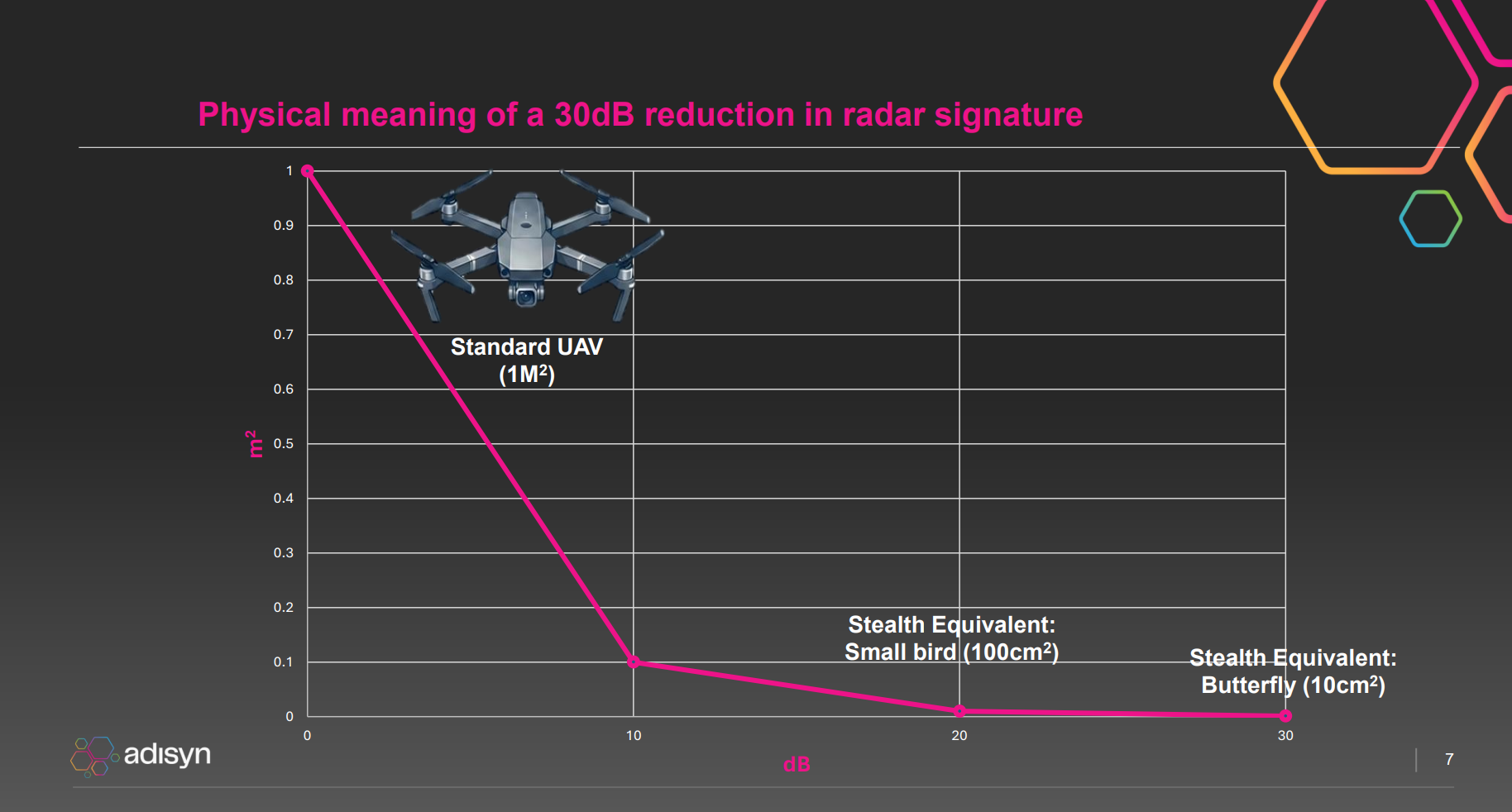
Getting from 20 to 30 looks like a modest bump on paper. In physics terms, it’s a tenfold leap in stealth performance.
At 100 times, the radar operator spots the threat too late. At 1,000 times, the drone gets through undetected.
AI1 chairman Kevin Crofton, who spent three decades running businesses that sold into TSMC, Samsung and Intel, put it to us this way:
“A quadcopter drone on a radar screen looks to be about the size of an F-35. We’ve reduced that by 100 times already, and we’re working on getting it to somewhere between 100 and 1,000 times - which becomes about the size of a bird or butterfly on a radar cross-section.”
The 12-month research program chasing 30dB is costing AI1 less than A$100,000. In defence R&D terms, that’s a rounding error. A defence contractor spends more than that on a single week of engineering time.
AI1 is pointing it at exclusive rights to the next generation of stealth material.
The Drone Race is Now a Stealth Race
Ten years ago, drone development was about range. Then payload. Then autonomy. Now it’s about visibility.
Radar sees a drone early, the drone gets intercepted. Radar sees nothing, the drone gets where it’s going. That’s the whole game.
Monday’s portfolio addition piece walked through the defence spending numbers. Short version: Germany, the UK, the Pentagon and NATO have committed tens of billions to autonomous systems in 2026, and Australia added A$5 billion for drones a few weeks back.
This week, Australia put A$7 billion behind counter-drones specifically over the next decade, more than double the previous allocation.
Defence Industry Minister Pat Conroy called it “Star Wars happening right now.”
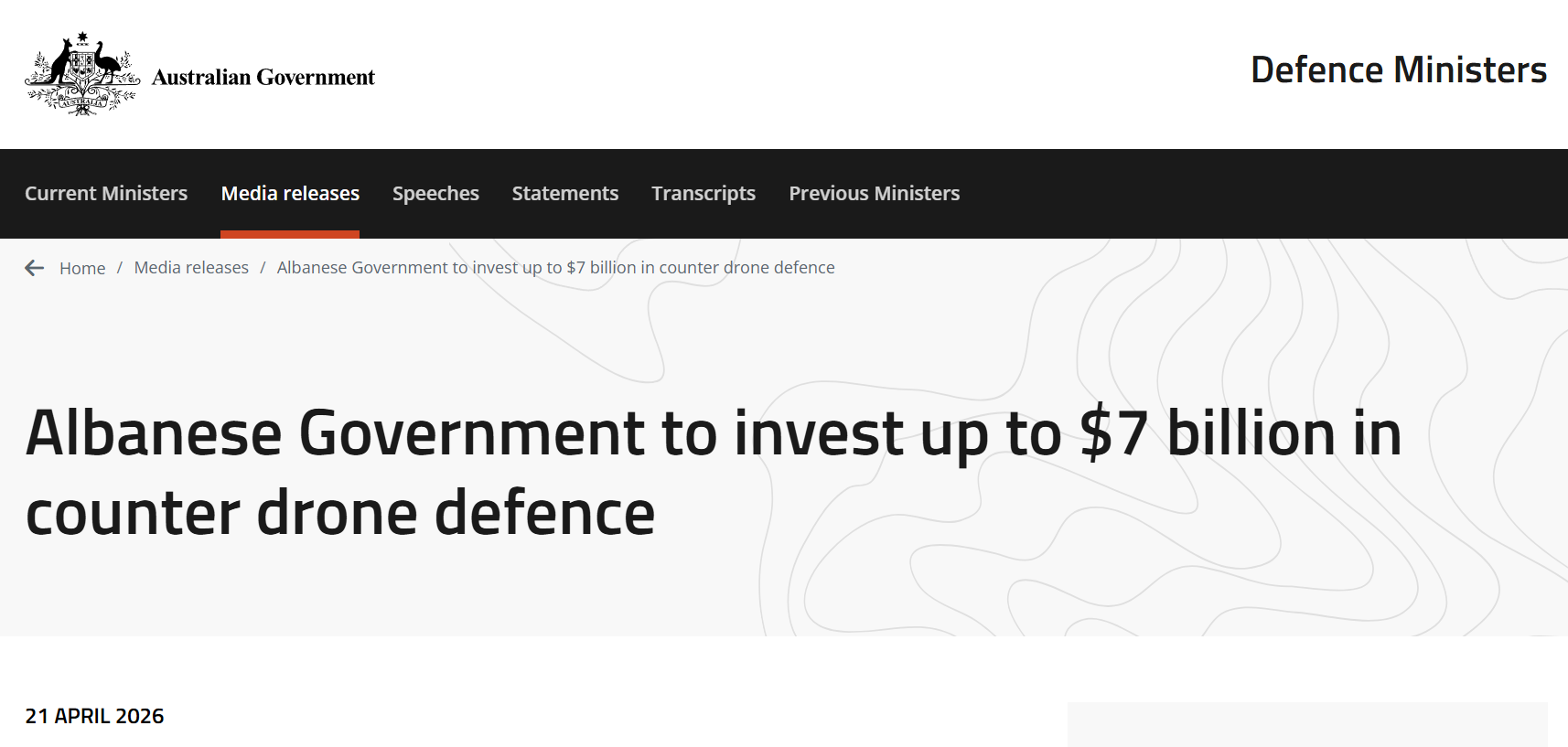
Every counter-drone system depends on detection. Lasers, missiles, interceptors. None of them fire until radar spots the threat. A drone radar can't see slips past every dollar Australia just spent.
And more money spent shooting drones down means more money for drones that can get through.
Military drone spending alone is forecast to triple from US$20.7 billion in 2026 to US$66 billion by 2035. US investment bank Oppenheimer pegged the total addressable drone market at US$400 billion within a decade.
Inside all that money sits a materials problem. Stealth coatings work, but they add weight, and on a small drone every extra gram matters.
Graphene sidesteps the trade-off. It becomes part of the composite structure itself and absorbs the radar signal there. The drone stays light.
That’s the technology AI1 just locked up.
The Team
Adisyn’s managing director Arye Kohavi has been solving military logistics problems for nearly two decades.
As an IDF Special Forces commander, he saw what happened when frontline troops ran out of drinking water. In Lebanon or Gaza, supply could only come by convoy or helicopter.
In 2009 he co-founded Watergen to build a machine that pulls drinking water out of the air. Soldiers at the front had their own water source.
Watergen sold to the US Army, UK Army, French Army and IDF. TIME named it one of the 100 best inventions of 2019, and Foreign Policy put Kohavi on its list of 100 leading global thinkers.
Now he’s doing it again.
Alongside Kohavi on the drone side sits Professor Pavel Ginzburg, a radar physicist at Tel Aviv University who picked up a European Research Council Proof of Concept grant in February.
That’s one of only 150 handed out worldwide, and they exist specifically to push university research into commercial use.
Alongside him is Professor Maxim Sokol, whose speciality is advanced materials integration and scalable composite manufacturing.
Two serious operators working on exactly the problem every defence contractor is trying to solve right now. Reduce radar visibility. Keep the weight off.
Israel is the world’s testing ground for drone technology. Elbit Systems and Israel Aerospace Industries sit near the top of the Unmanned Aerial Vehicle (UAV) export market, and stealth has been a core edge of their platforms for decades.
Running a materials program in that ecosystem is about as close to the customers as you can get.
The Terms
AI1 pays Ramot a 4% royalty on net sales, and Ramot takes a 19% equity stake in AI1’s 2D Radar Absorbers subsidiary.
Both numbers keep TAU aligned with AI1 for the long run. The more the tech sells, the more Ramot earns.
The whole commercial model stays capital-light. Someone else builds the factories and holds the inventory. AI1 collects royalties.
For a $62 million company with two licensing shots at multi-billion dollar markets, the upside stays uncapped.
What We’re Watching From Here
There are three main drone-side catalysts we see over the next 12 months.
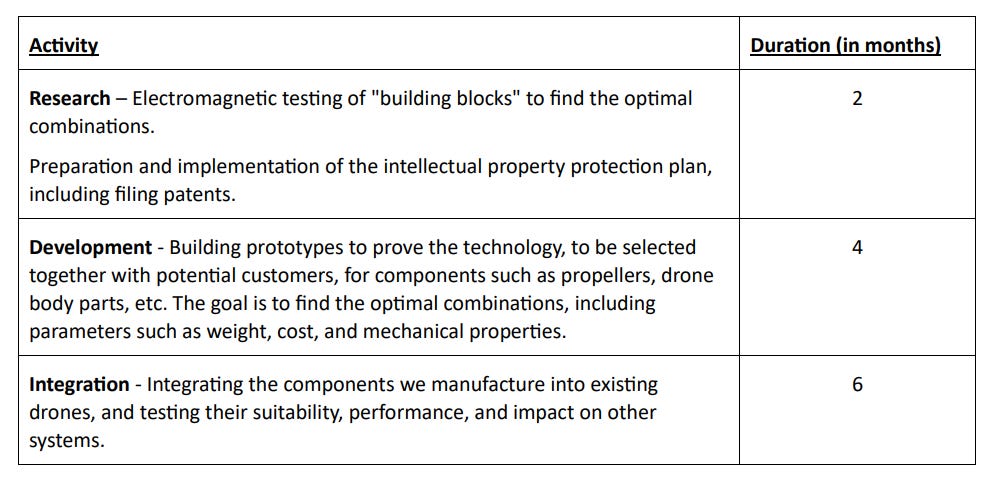
Lab results pushing toward the 30dB milestone. That’s the number that takes the drone story from proof of concept to the doorstep of commercial conversations.
Validation across operational radar frequencies. Real battlefields operate across a wider band than any lab can replicate. Confirming performance holds up in the field unlocks live customer trials.
First contact with customers. UAV makers and defence contractors have budgets they can deploy right now. Early engagement signals tell us how fast this goes from licence to revenue.
Defence procurement runs on its own clock and milestones slip. A graphene composite that works in Tel Aviv may need reformulation elsewhere, and AI1 is a small-cap with a long runway ahead of it.
The asymmetry is what we like. Less than A$100,000 of research spend, against a market writing the biggest cheques defence has seen in a generation.
When we added AI1 to the portfolio on Monday, we told you the company had two shots at multi-billion dollar markets. Today, one of those shots got a lot clearer.