


Azzuro Resources (ASX: AZ9) has pulled thick, high-grade copper out of its Red Hill project in Mongolia.
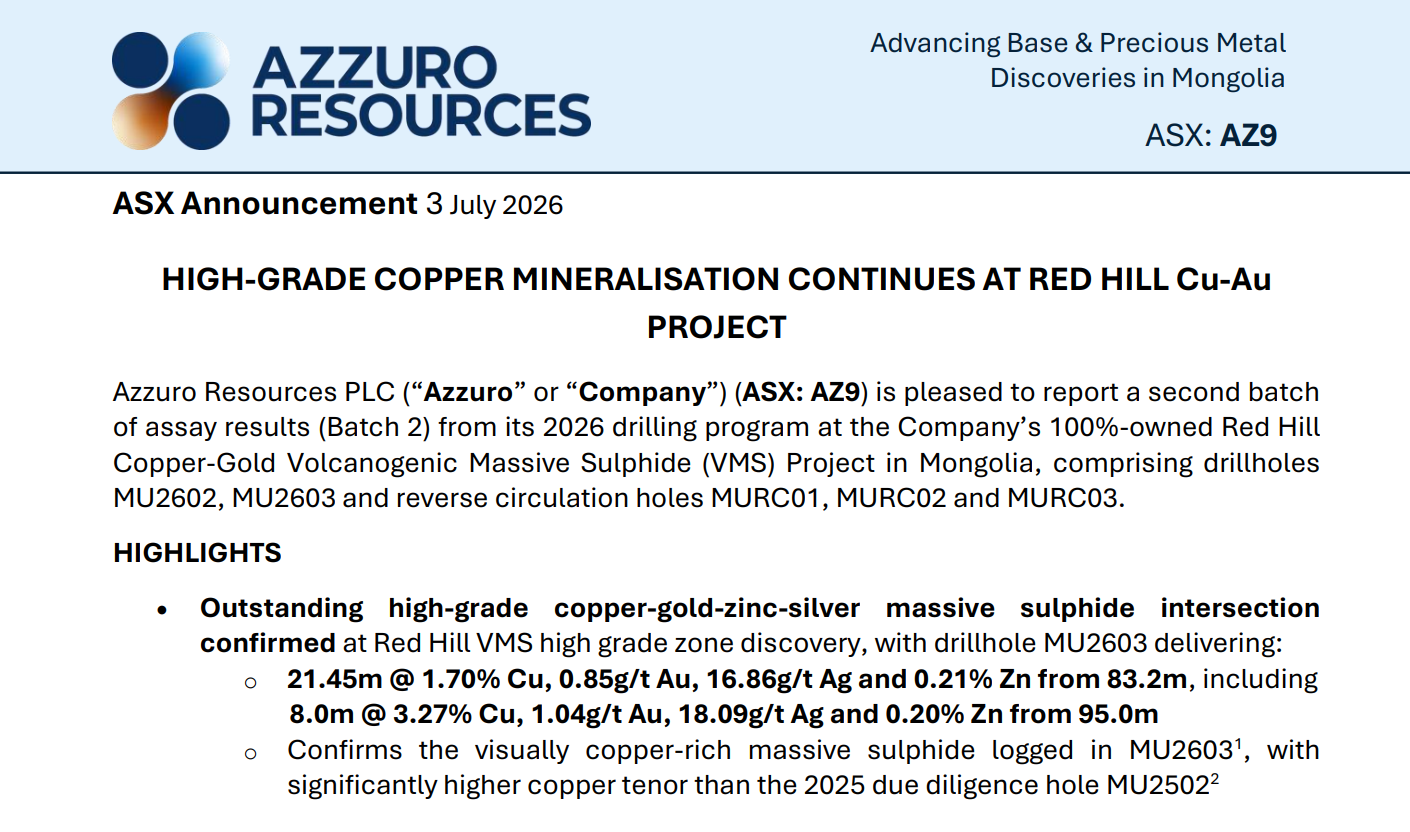
The standout hole cut 21.45m grading 1.70% copper, 0.85 g/t gold, 16.86 g/t silver and 0.21% zinc from 83.2 metres downhole. Sitting inside that is an 8-metre core running 3.27% copper, 1.04 g/t gold and 18 g/t silver.
It's the type of hole you can build a project around.
Copper is trading near all-time highs because the world decided to electrify everything at once, from power grids to AI data centres, and forgot to build enough mines first.
The shares are trading at 1.8 cents, with roughly $4.5 million in cash in the bank.
Holes like this are how discovery stories start, and this one starts at a $15 million market cap.
The Hole Itself
Red Hill is what geologists call a volcanogenic massive sulphide system, or VMS.
These deposits form on ancient seafloors, where volcanic vents pump metal-rich fluid up into cold ocean water, and the sudden chill drops the copper, gold, silver and zinc out of solution as dense bands of sulphide minerals.
Nature ran the concentrator a few hundred million years early, which is why one VMS hole can carry four metals.
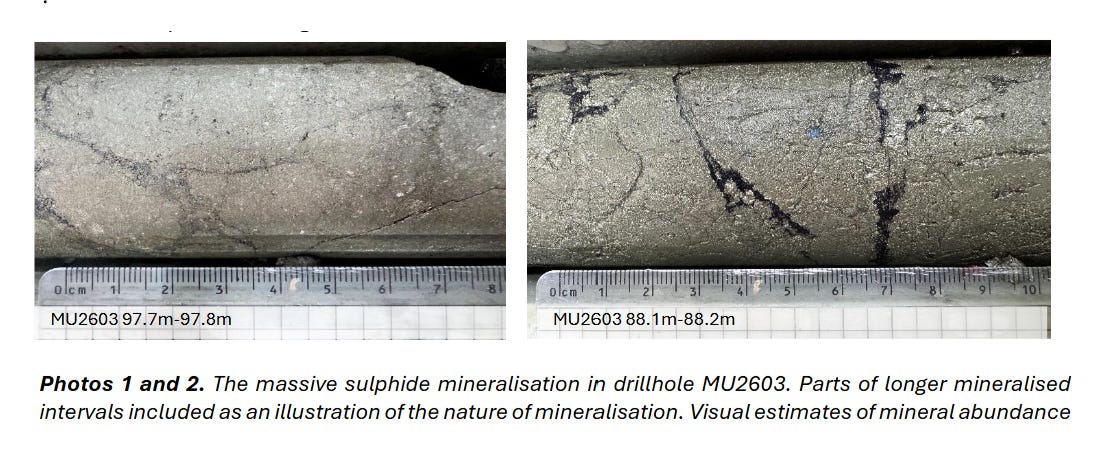
When a drill hits more than 21 metres of it, it points to a large, metal-rich plumbing system underneath.
MU2603, the hole behind those numbers, is the best Azzuro has drilled at Red Hill. It hit the massive sulphide about 75 to 80 metres up-dip of a hole the company drilled during due diligence last year.
The copper grade in the new hole came in well above that earlier intercept, so the grade is holding up, or improving, as they climb into shallower parts of the lens (shallower ground is cheaper to drill and, one day, cheaper to mine).
Plenty of copper explorers report intervals under 1% copper and call it a good day. The hole averaged 1.70% copper across more than 21 metres, with a high-grade guts of 3.27% copper over 8 metres.
The hole carries gold, silver and zinc alongside the copper. Roll those into copper terms at current prices and the headline 1.70% copper lifts to 2.84% copper-equivalent, or CuEq.
The main zone runs 0.85 g/t gold and nearly 17 g/t silver, and the high-grade core lifts to 1.04 g/t gold with 18 g/t silver.
In a producing mine those metals would be sold alongside the copper for next to no extra cost, and the cash they bring in lowers the cost of every tonne of copper out the gate.
A bit of zinc rounds out the hole, giving Azzuro one more metal to sell from the same ground.
The Ground, and Where This Takes the Project
The copper at Red Hill was first mapped between 1988 and 1991 by a Mongolian government expedition, long before anyone was measuring copper demand in units of data centres.
Later explorers ran mapping, sampling, trenching and some drilling across the ground, and then the place sat waiting for someone with modern gear to return.
That earlier work never became a JORC resource you can lean on today, though it flagged Red Hill as a copper system worth a proper modern look.
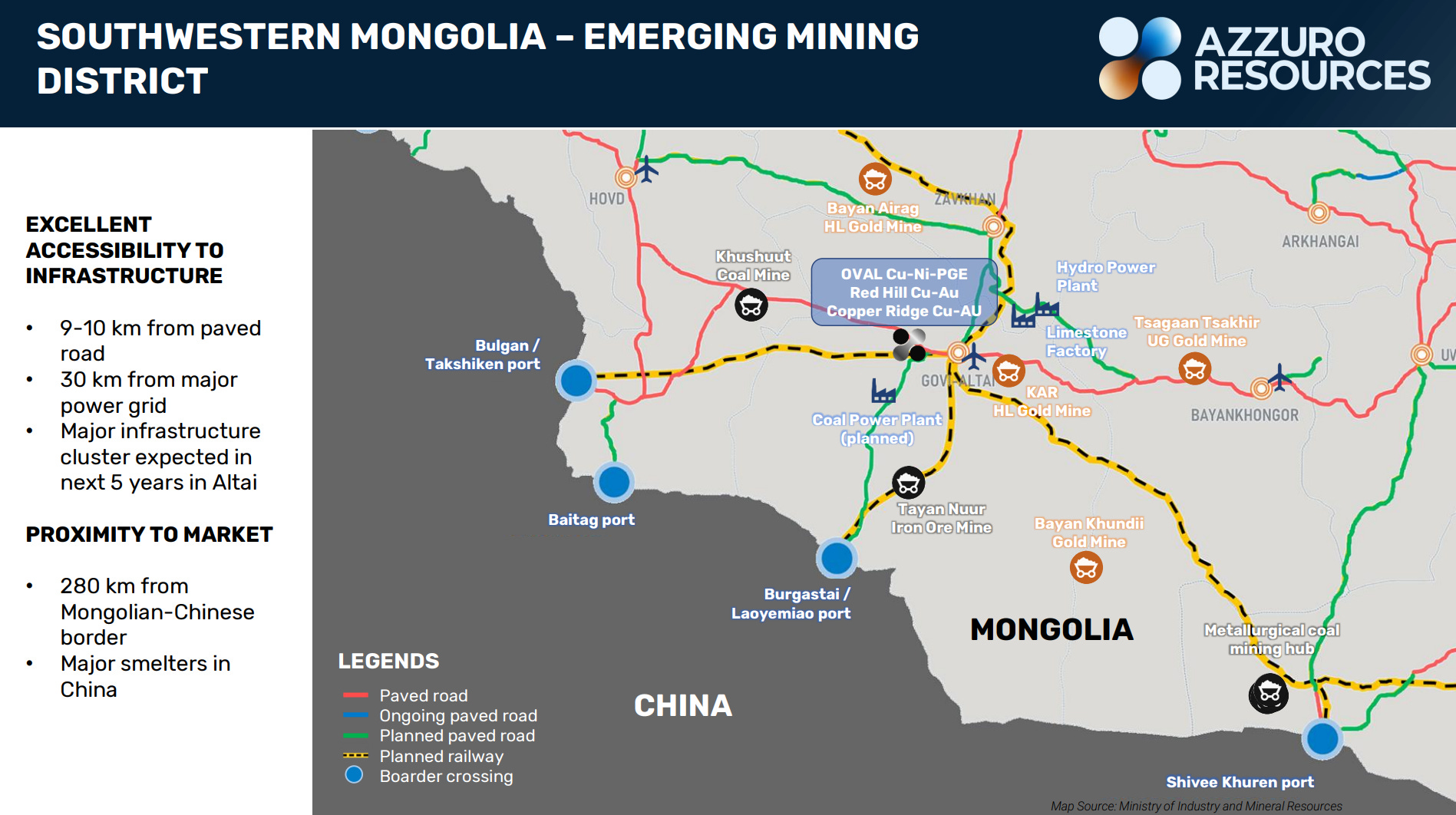
Azzuro completed the acquisition of 100% of the project in April this year, and the 2026 program is the first campaign to test the system with modern drilling and proper assay control, backed by downhole geophysics.
MU2603 was drilled to chase a strong reading from an underground survey. Massive sulphide conducts electricity, so that survey can pick it out and draw an X on the map before the drill gets there.
The core landed right where the survey said it would, which means the method works. Azzuro is now pulling its other underground surveys into the same picture to line up the next round of holes.
Azzuro still hasn't mapped the full size of the system, and the survey work keeps turning up targets the drill hasn't reached yet.
North of the main find, a shallow band of gold now stretches across a possible 600-metre run, with two more holes hitting gold near surface.
One returned 9 metres at 0.59 g/t gold from surface, the other 5 metres at 0.63 g/t. That’s a separate, easier-to-reach target sitting above the main game.
Azzuro says the rest of the 2026 program is fully funded, with assays from nine more holes due this month. For a small-cap, drilling through the year without needing to pass the hat around is worth a lot.
The Copper Backdrop
Azzuro picked a good year to hit copper.
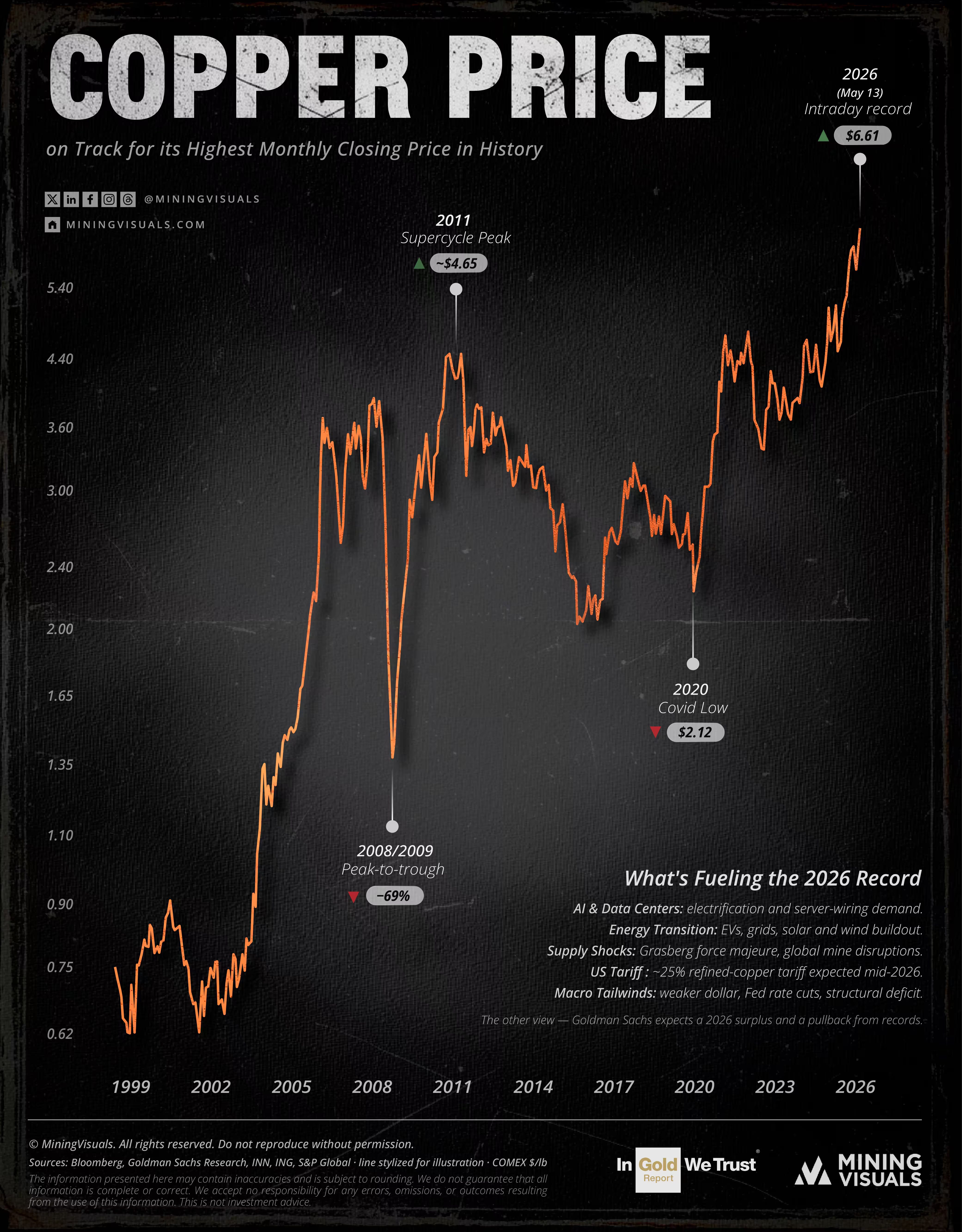
The metal is trading around US$6 a pound (close to record territory), after touching US$6.50 earlier in the year. Demand keeps climbing while new supply drags behind.
Wood Mackenzie's head of copper research says grid expansion will pull more copper over the next two decades than electric vehicles or renewables. Every EV and solar panel still plugs into the grid, and the grid is built from copper wire.
Stack the data-centre and AI build-out on top and copper demand now climbs every year, regardless of where the building cycle sits.
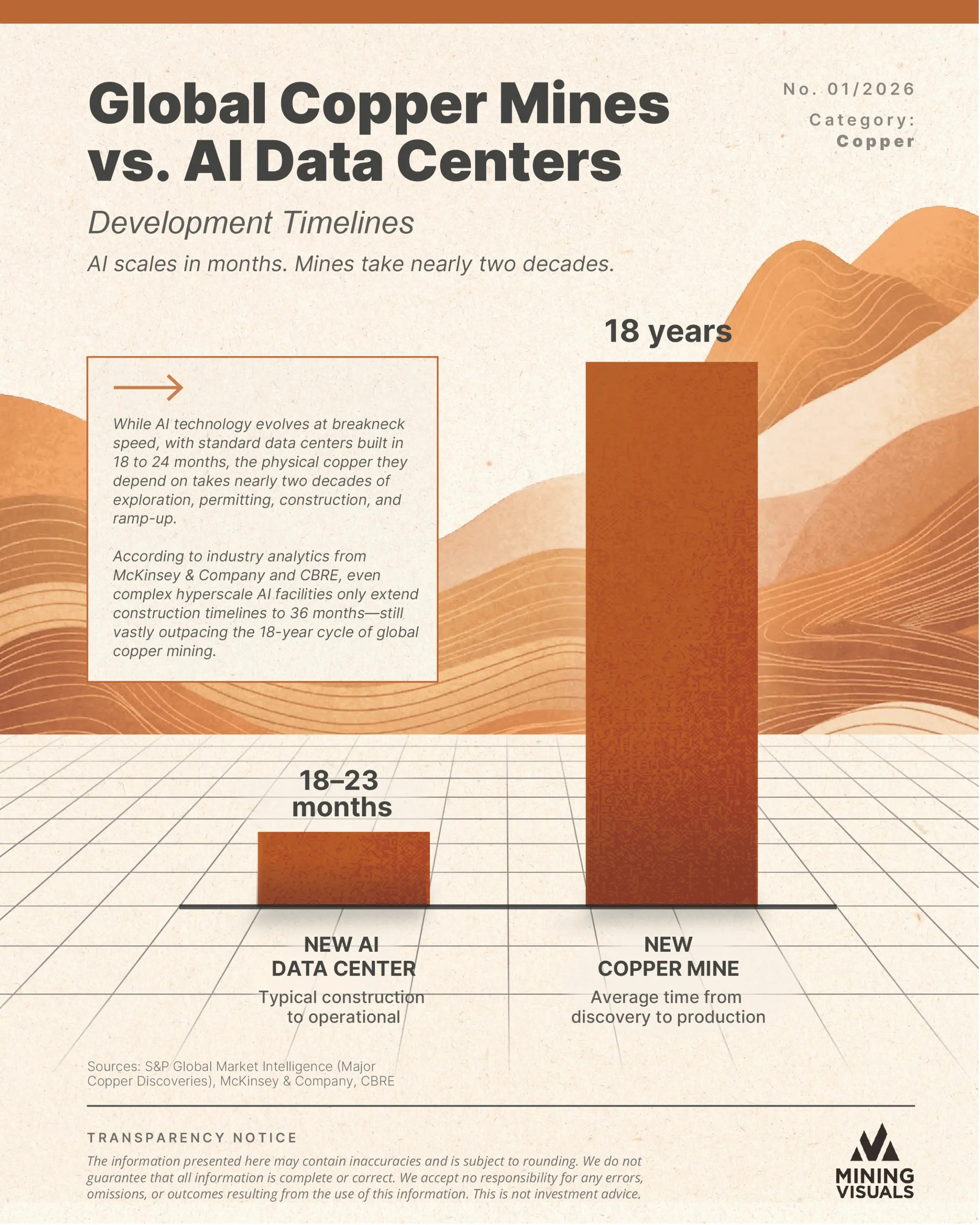
New mines take years (sometimes decades) to permit and build, and the easy shallow deposits have largely been found.
Wood Mackenzie estimates the world needs to bring on at least 900,000 tonnes of new copper supply every year, indefinitely, just to stand still.
Global mine production grew about 1% last year while refined demand kept climbing.
Smelters make their money charging miners a fee to turn concentrate into metal.
To underline how tight the market is, there are now more furnaces than there is concentrate to feed them, so smelters have been undercutting each other on that fee just to keep running, and it has collapsed toward zero.
A high-grade discovery in this market is what the majors go hunting for when they need copper faster than they can build new mines. Azzuro is a long way from that conversation, though a hole like MU2603 is how these stories start.
The Bottomline
Azzuro has proved it can pull high-grade copper-gold out of Red Hill, in a market paying up for grade.
Phase 1 is drilled out, and assays from nine more holes land this month, with cash in the bank to pay for them.
True widths of the lens haven’t been locked in yet, and plenty of strong drill holes never become mines, so the usual small-cap caution applies.
But explorers wait whole careers for a hole like MU2603, and most never get one. At 1.8 cents and a $15 million market cap, none of that success is in the price.
What sits in the ground is a high-grade copper-gold system getting bigger with every hole, in the one metal the world can't get enough of.
Keep pulling copper like this out of Red Hill and a $15 million valuation gets hard to justify.