Anyone who’s held Evion Group (ASX: EVG) knows the morning ritual. Coffee in one hand, announcements open in the other.
And plenty of mornings paid off. A graphite plant in India banking sales. The EU signing on. A fluorspar project picked up in Nevada.
The one piece still missing was sitting on a desk in Madagascar's capital.
The wait started in November 2022, when Evion published the feasibility study for its Maniry graphite mine in southern Madagascar. The study gave Maniry a 21-year life and a value of US$263 million before tax. All it needed was a permit.
Then Madagascar rewrote its mining code and changed governments, and Evion’s application went to the back of the queue.
Nearly four years of mornings.
This morning, it appeared: Mining Permits Granted.
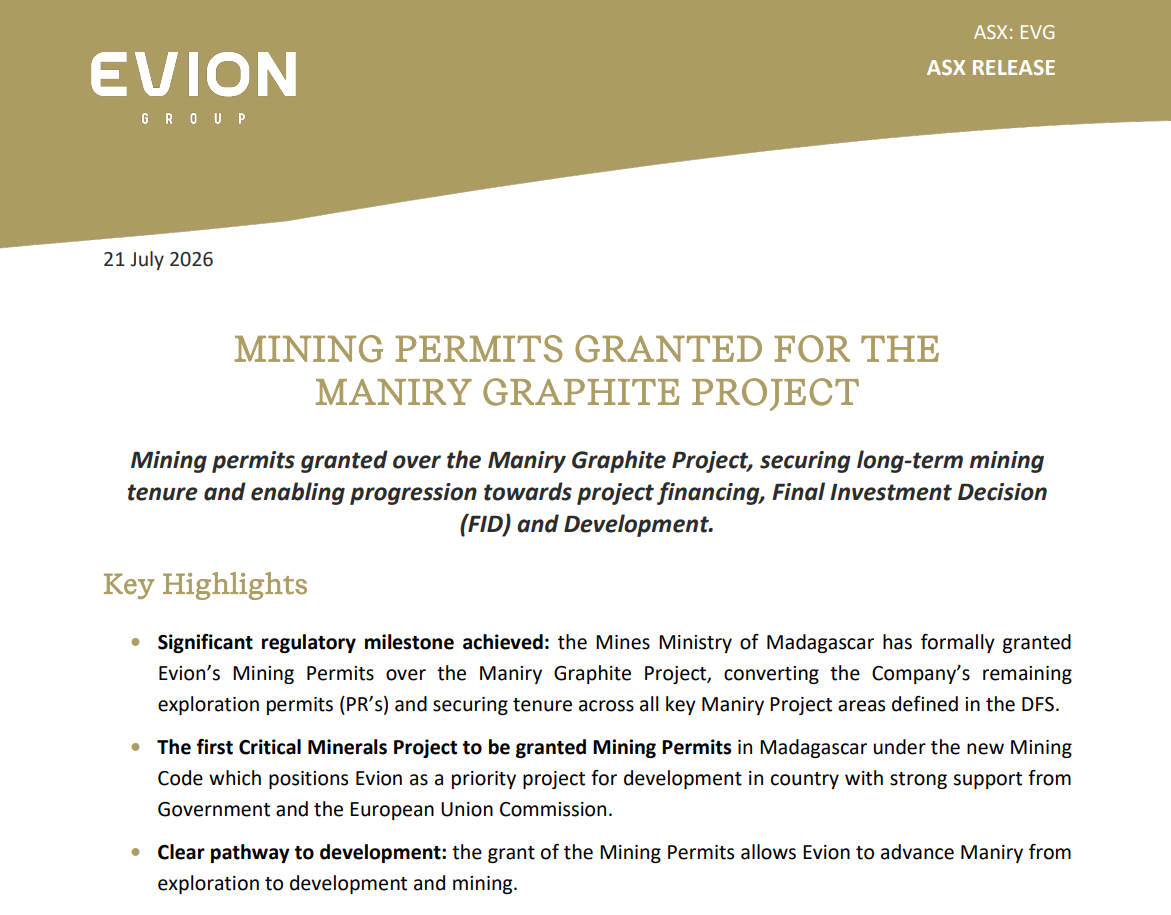
The Mines Ministry of Madagascar has signed off on Evion’s mining permits over Maniry. The final rubber stamp, a government decree, lands this week.
Maniry is the first critical minerals project permitted under Madagascar’s new mining code. No ASX company has been granted a graphite mining licence anywhere in the world for years.
That leaves a project worth US$263 million on paper sitting inside a company the market values at $19 million.
The EU has already named Maniry a Strategic Project, with grant money flowing and financing talks running with two of Europe’s development banks (more on that later).
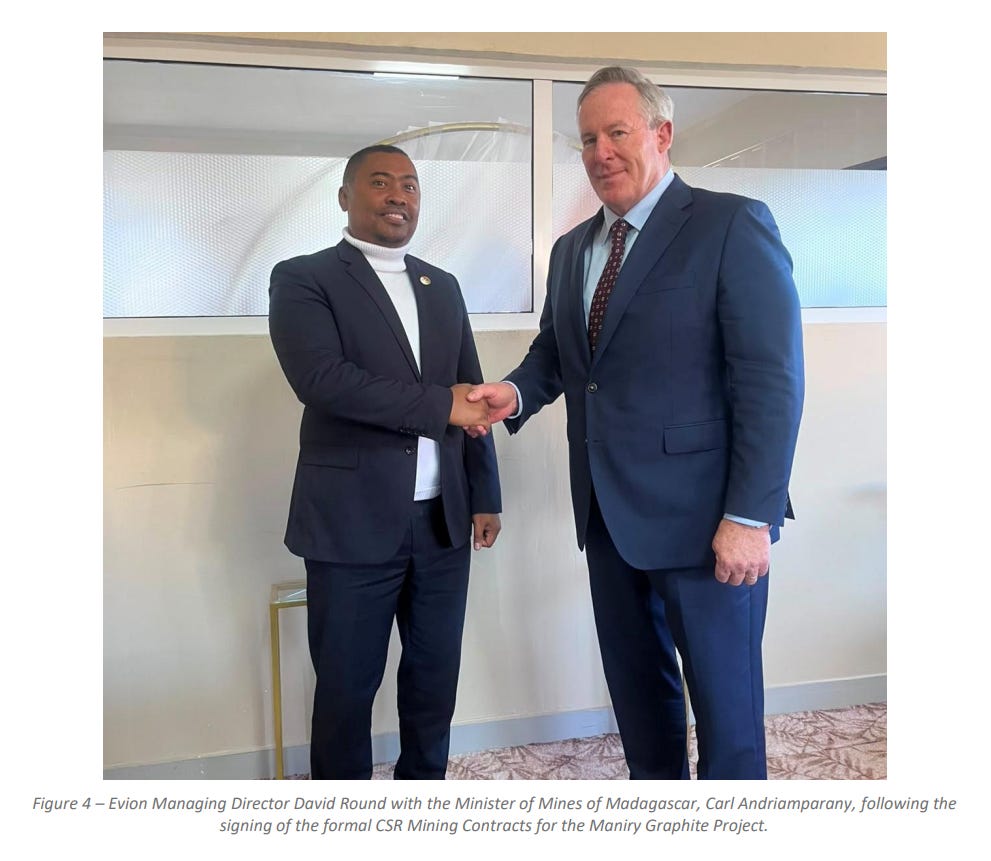
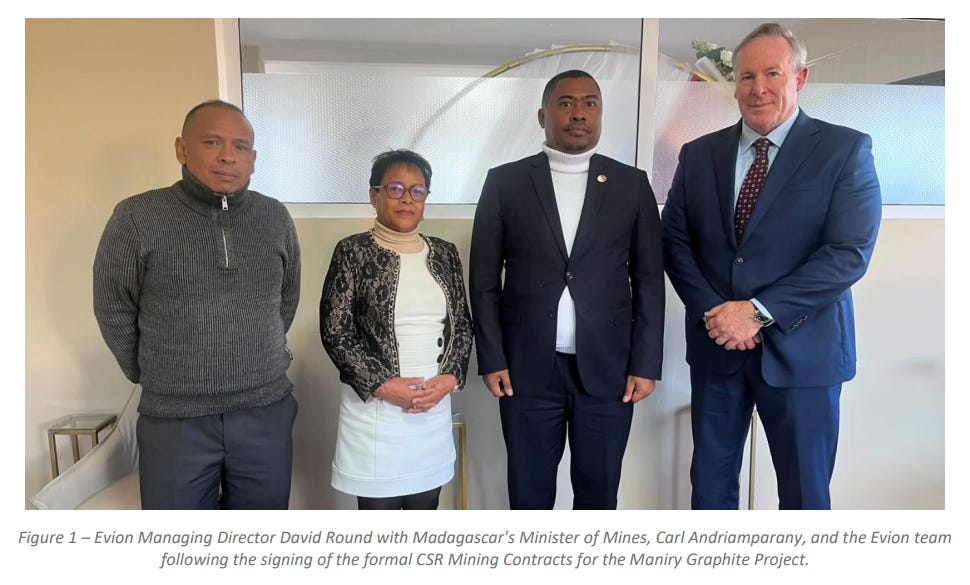
David Round was the finance director when the study went out, and now he’s managing director. Today he called the grant “a transformational milestone for Maniry and for Evion”.
We’ll have David on camera in the coming days to walk through what comes next.
Let’s dig in.
What Evion Can Now Do at Maniry
Evion has held exploration ground at Maniry for years, which is the permit that lets you look. What Madagascar signed off on this morning is the one that lets you dig it up and sell it.
The grant covers every area in the feasibility study. They hold three tenements outright across 112.5 square kilometres, and Madagascar will merge them into a single mining permit, with the paperwork due this week.
This is decades of legal right to mine, on ground where the economics were worked out in detail years ago.
And what comes out of the ground is flake graphite concentrate. Meaning the ore gets crushed and the graphite separated out (it’s the same stuff as pencil lead, only this quality ends up inside the battery of every electric car on the road).
It’s also the feedstock Evion’s own plant in India turns into higher-value product, but we’ll get to that.
A permitted flake graphite mine is rare on the ASX. Syrah Resources is the only one mining natural graphite at scale, and nearly every other graphite name is still waiting on a permit or the money to build.
Evion just cleared the hurdle most of the sector is stuck behind.
Now for the numbers, straight from the 2022 definitive feasibility study:
An initial mine life of 21 years, with an 18-year ore reserve behind it
Stage 1 production of around 39,000 tonnes of graphite concentrate a year, growing to 60,000 tonnes from year four
A Stage 1 capital cost of US$79.2 million
A net present value of US$263 million before tax
An after-tax internal rate of return of 32.65%, with the build paid back in 3.8 years
Net present value takes all the cash a project should generate over its life and squashes it into one number in today's dollars. That's the US$263 million, and it's what we meant by "on paper" up top. This permit is what starts turning paper into a mine.
The internal rate of return works like the yearly return the project earns on the money spent building it. At 32.65% after tax, Maniry pays back its build in under four years and keeps earning for another 17.
The study has Maniry producing concentrate at roughly US$640 a tonne and selling it at an average of US$1,448 a tonne.
Better than double the cost of production, on every tonne, for two decades.
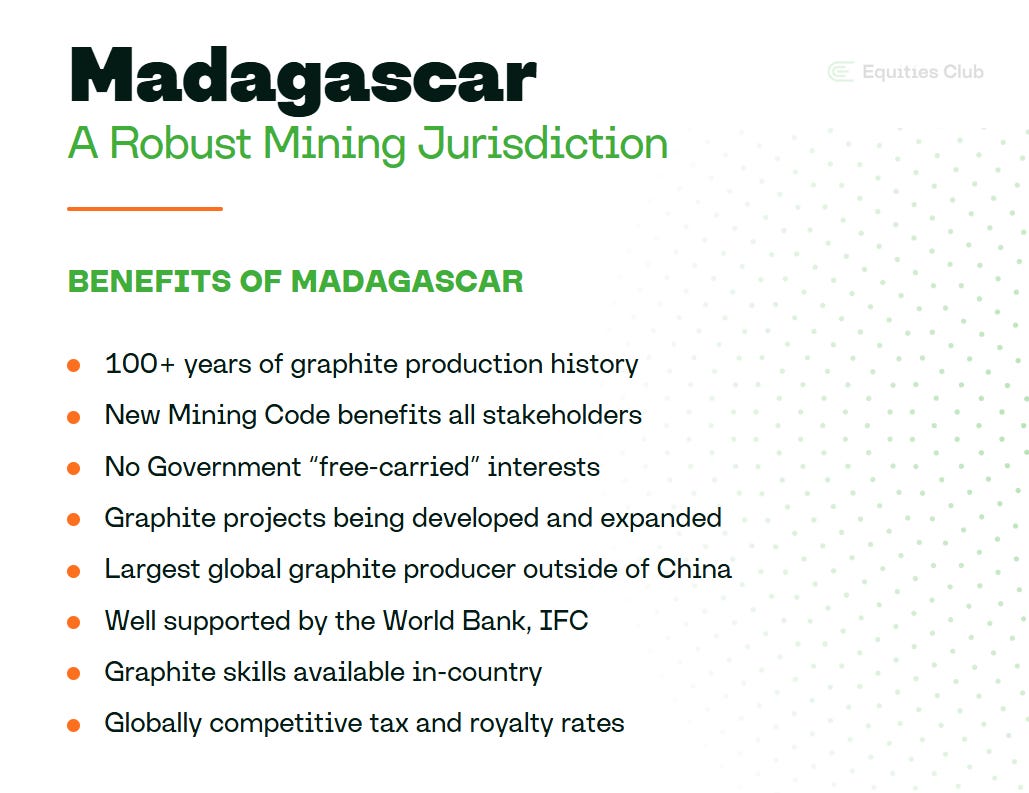
Madagascar is the second-biggest graphite producer on earth behind China, with a workforce that's been mining graphite for generations (longer than most ASX companies have existed).
The India Plant Already Banking Sales
Most graphite miners sell their concentrate at market price and watch a processor somewhere else turn it into a product worth multiples more. Evion owns the somewhere else.
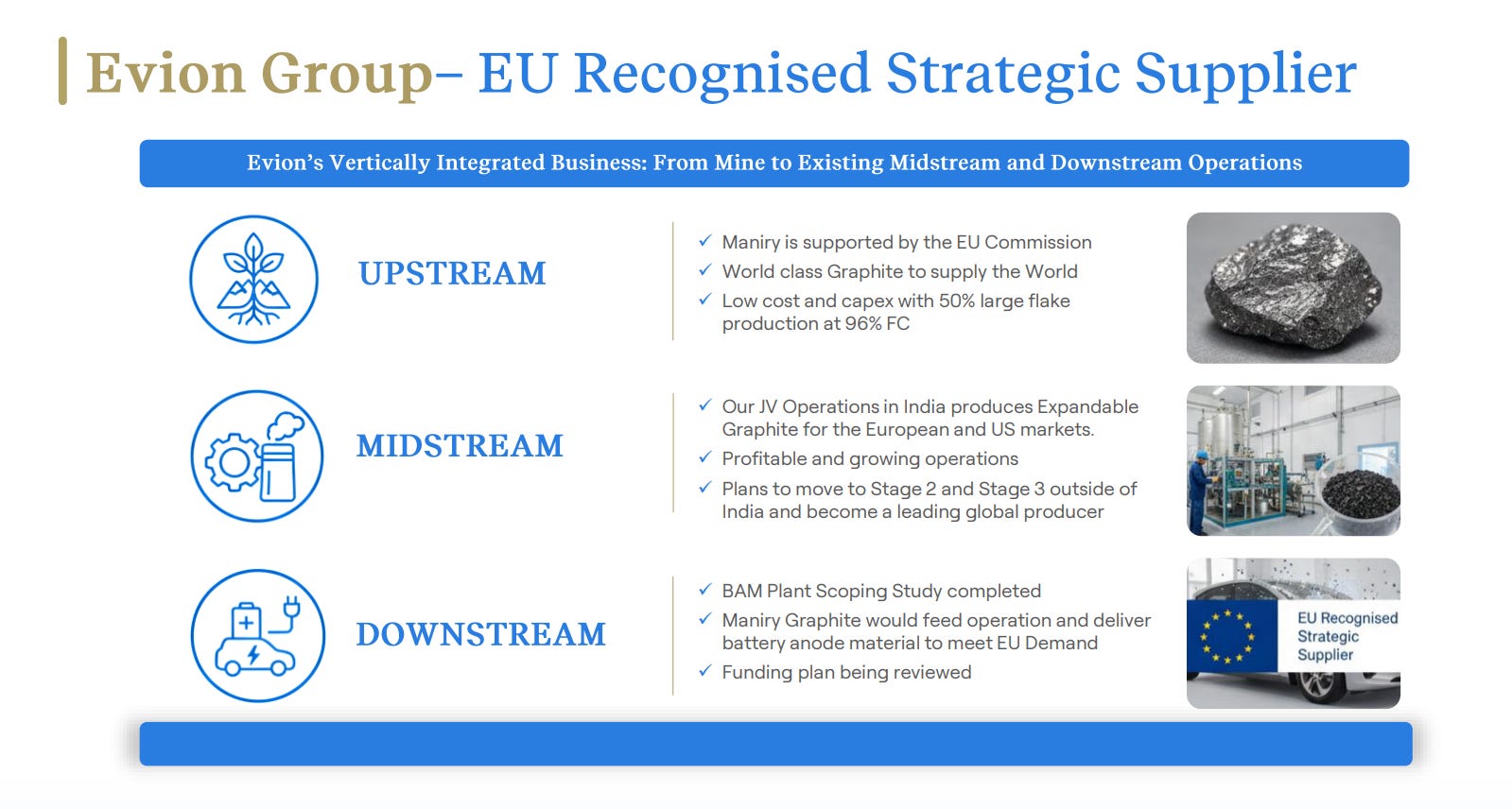
The company has the deposit at one end of the chain and half a processing operation at the other (the fancy term is vertical integration), and the processing piece is already banking sales.
Panthera (PGT), Evion's 50/50 joint venture near Pune in India, has been producing and selling expandable graphite into the US and Europe since March 2025, including a $1.5 million order to a US buyer in December and further orders since.
So while Maniry is still years from first production, PGT brings in cash. The company earns while it builds, which is not a sentence you get to write about many $19 million companies.
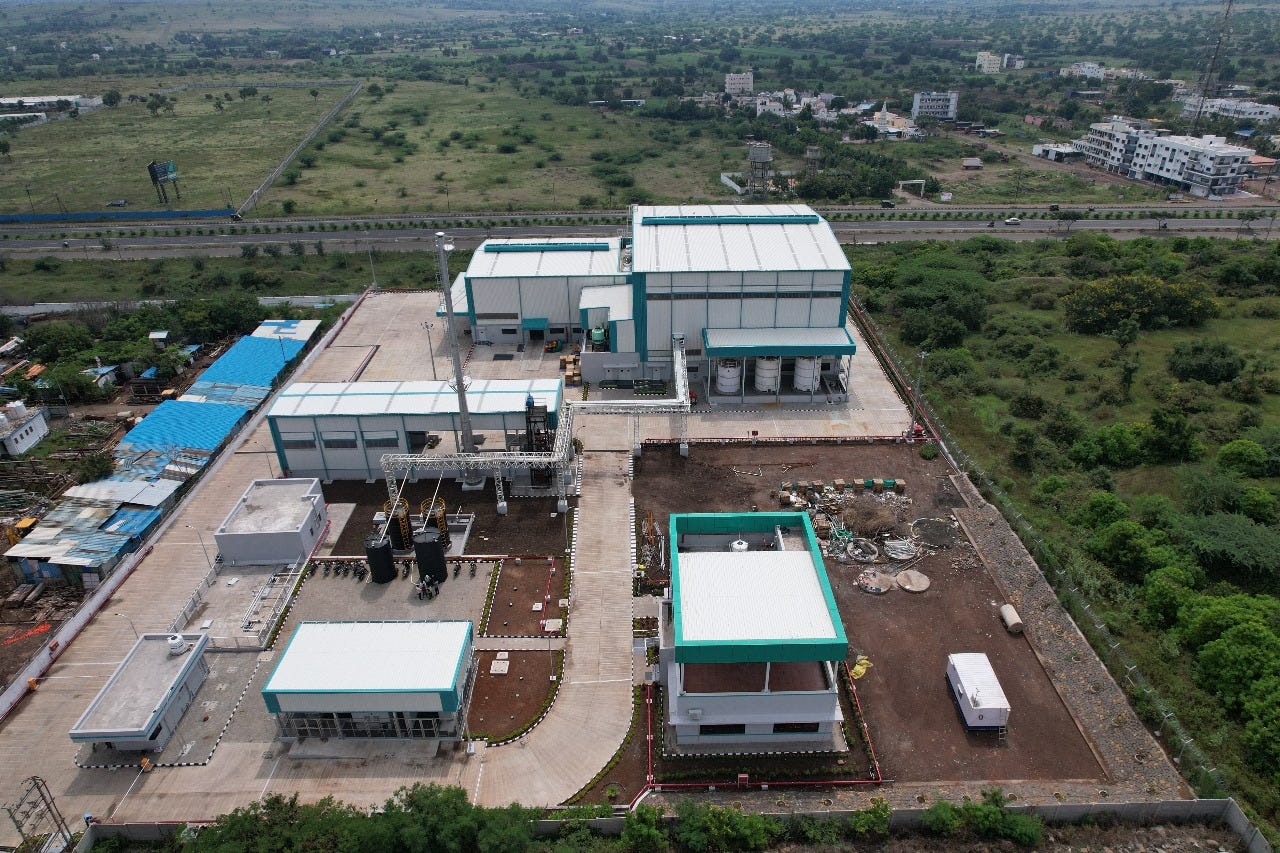
Expandable graphite holds its price at over US$3,000 a tonne because so few plants outside China can make it. Concentrate sells for less than half of that. Every step down the chain makes the same tonne of Maniry graphite worth more, and Evion keeps the margin most miners hand to someone else. And if the concentrate price sags, the downstream margin is still there.
In Germany, a scoping study has mapped a third step, a battery anode plant that would turn Maniry graphite into the material inside lithium-ion batteries.
China controls more than 70% of natural graphite supply and nearly all of the processing, and Evion’s chain has no Chinese partners anywhere in it. Buyers across the US and Europe are actively hunting for alternatives, and companies offering a full non-Chinese chain are scarce on any exchange.
Today’s grant puts a permitted, long-life mine behind everything downstream.
The Money Talks Can Now Move
For four years, Evion has likely been making the same pitch to battery makers across Europe and development banks in Frankfurt and Luxembourg.
The pitch is a good one. A 21-year mine with double the margin on every tonne, in a country that’s been mining graphite for a century.
We’d wager a lot of those meetings ended the same way. Call us when you’ve got the permit.
At the next meeting, the permit is sitting on the table.
The buyers haven’t gone anywhere. They’ve been waiting on the same signature.
In December 2025 the EU named Evion a preferred supplier of graphite concentrate and started putting the company in front of European battery makers and industrial buyers.
Maniry is the only African graphite project the EU recognises as a Strategic Project under its Critical Raw Materials Act.
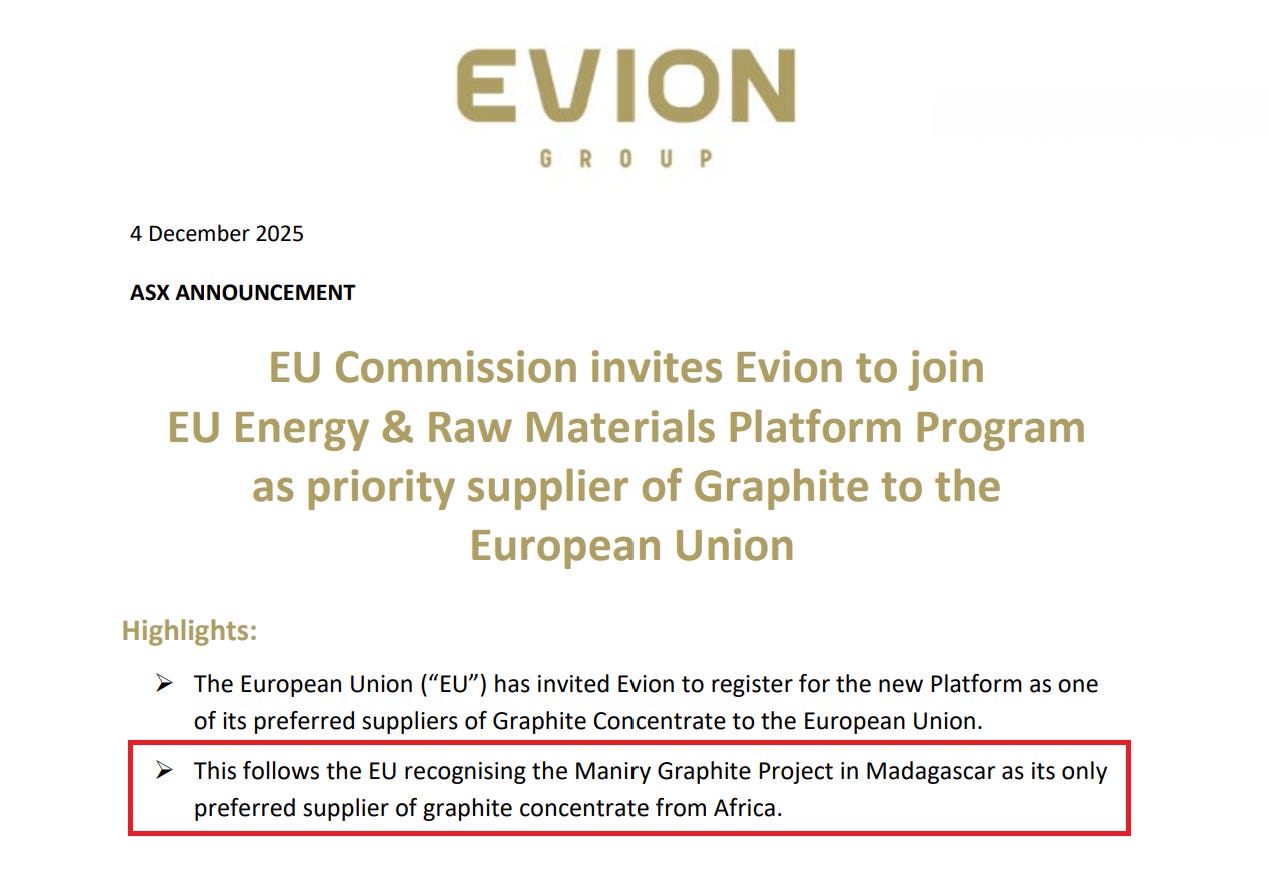
Europe wants a battery supply chain that runs outside China, and it has picked Maniry to help build it.
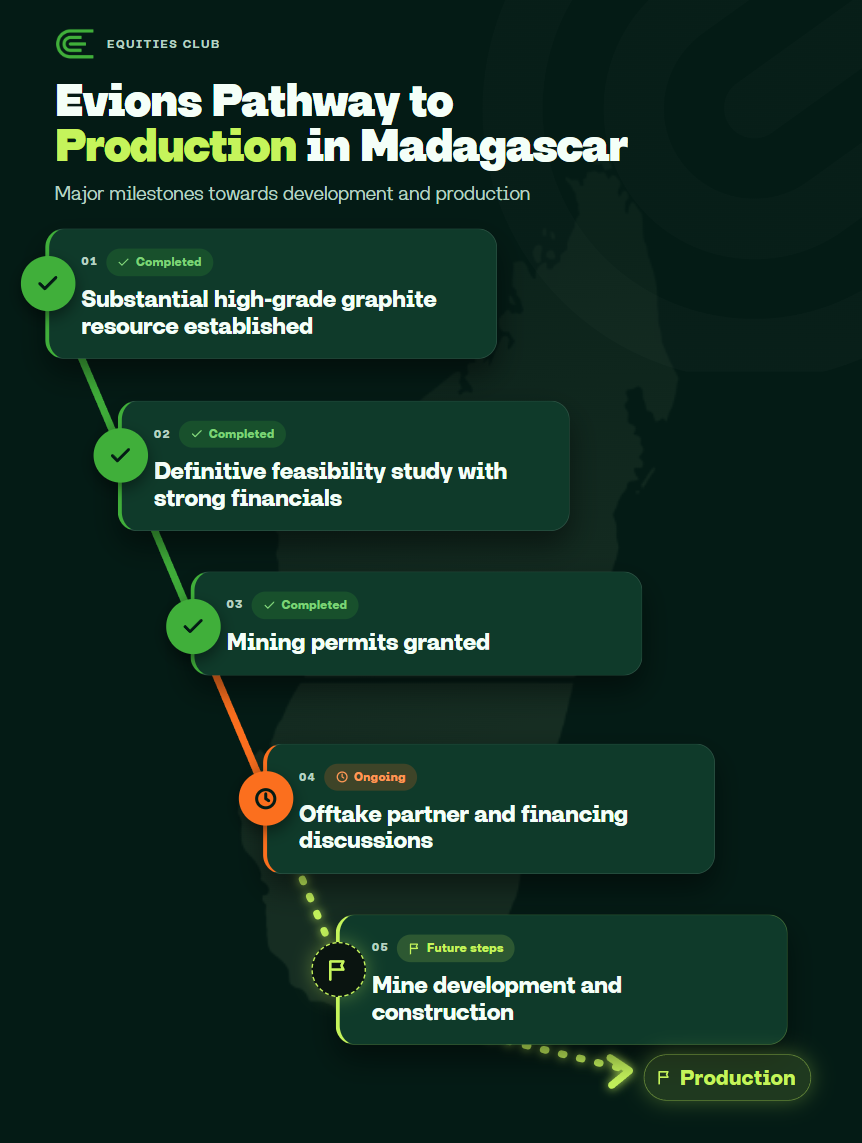
The next step with those buyers is an offtake, where a customer commits to buy tonnes before they’re dug. It’s the piece financiers want most, because a mine with contracted buyers means a bank can lend against it.
Evion has funding applications in with the European Investment Bank and Germany’s KfW, two banks Europe uses to get critical minerals projects built. An EU grant of up to €3 million has started flowing, with the first payment received.
Debt from banks like these would spare holders the alternative every small-cap dreads, funding a whole mine build through dilution at low prices.
Madagascar’s new president used to govern the region around Maniry and has pushed its development for years, and Evion has signed community agreements (the CSR mining contracts in today’s announcement) putting money into local development.
From here the board’s job is getting to a final investment decision, the yes that starts construction. Stage 1 costs US$79.2 million.
Between the EU, two of its banks and a grant already paying out, Evion walks toward that decision with more doors open than most $19 million companies ever see.
What We’re Watching Next
The government decree which lands this week
The new combined mining permit number.
The community fund deposit (the FMISC in today’s announcement), with the amount confirmed over the coming month and likely payable before 31 October 2026.
Offtake and financing news as the EIB and KfW talks move toward a final investment decision.
Results from Carp in Nevada, where the sampling and survey work never stopped while Madagascar deliberated.
Four Years of Mornings
The feasibility study was published in November 2022. The permits arrived in July 2026. In between sat a rewritten mining code, a new government, a full technical review and a lot of patient work from David Round and his team.
Plenty of juniors would have walked. Evion kept Panthera shipping while it waited, and this morning Madagascar handed over the permits.
What’s left is some company. A permitted 21-year mine in the world’s second-biggest graphite producing country. The EU’s only endorsed African graphite supplier. A processing plant in India already banking revenue. A fluorspar project in Nevada on top. All of it under one ticker at 2.6 cents.
Tomorrow morning the ritual is the same. Coffee in one hand, announcements open in the other.
Only now they’re the announcements of a company with a mine to build.