Whether a rare earth project actually flies depends on whether a metallurgist can pull the metal out of the rock cleanly enough for someone to want to buy it.
Mount Ridley (ASX: MRD) just hired theirs.
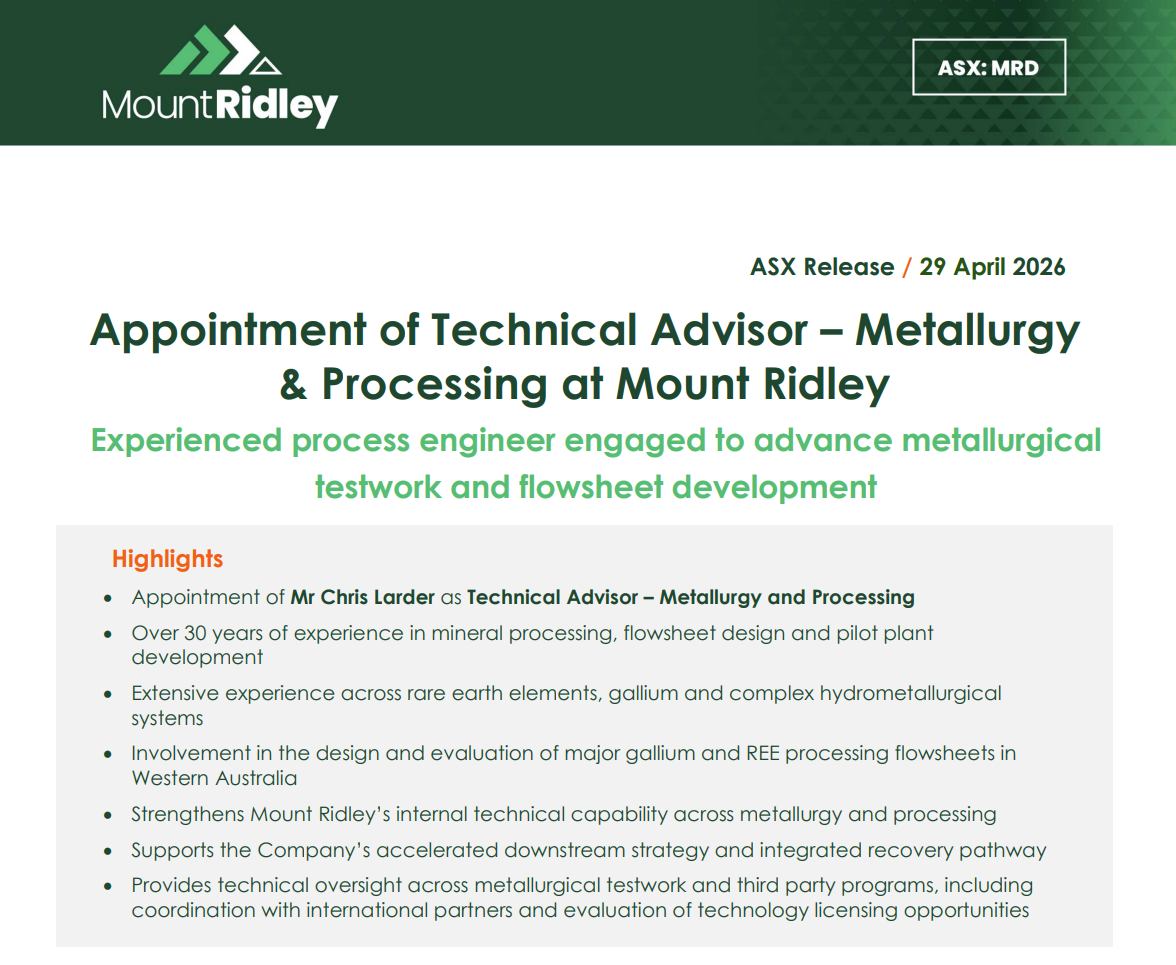
His name is Chris Larder, and his job is to turn the deposit at the Grass Patch project into something a Western processing plant will actually take.
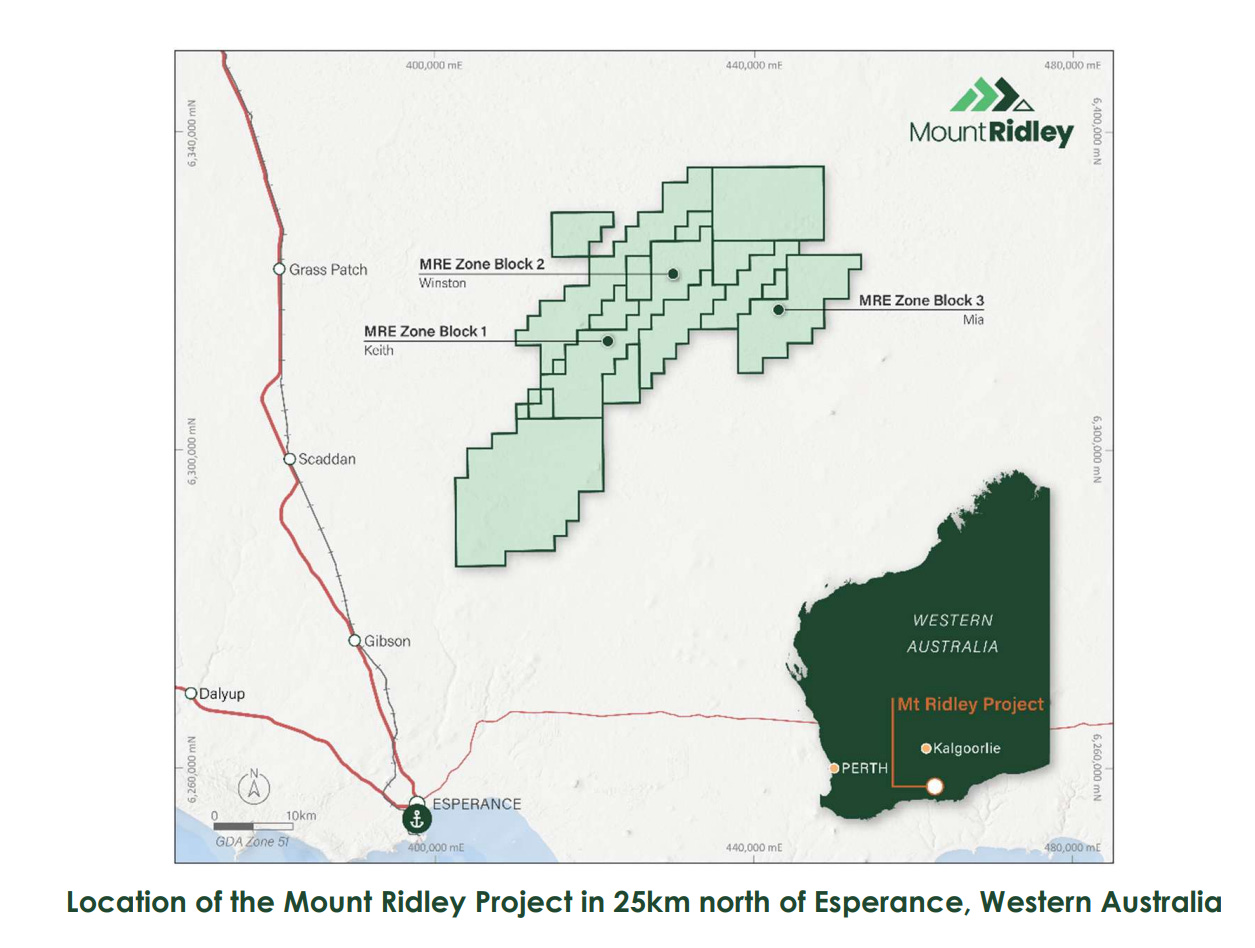
Grass Patch sits just north of Esperance in WA, with heavy rare earths, scandium and gallium in the same deposit.
Larder has thirty years in mineral processing, and his flowsheet work in WA covers both sides of MRD's basket.
He's been involved in flowsheet design and review at Alcoa's Wagerup refinery in WA, the exact facility Australia and the US recently picked for a US$200 million gallium processing build.
He’s also worked on REE flowsheet design at Mt Weld, one of the only rare earth separation plants running outside China.
China has had its boot on the throat of rare earth processing for years. The US and Australia are finally throwing real money at prying it loose, with a lot of that build-out happening in WA.
Larder’s CV maps onto MRD’s deposit almost line for line - gallium at Wagerup, heavy rare earths at Mt Weld.
For a $41 million junior moving from a defined deposit and proven recovery into flowsheet design, that's about as targeted a hire as you can make.
MRD vs VTM - The Heavies
Grass Patch carries dysprosium, terbium, scandium and gallium. Four metals, all of them on the West's "we need this but we don't have it" list.
Dysprosium and terbium are the high-strength magnet ingredients that go into EV motors, wind turbines, fighter jet electronics and missile guidance systems.
China controls more than 90% of global supply and has been tightening export controls since late 2024.
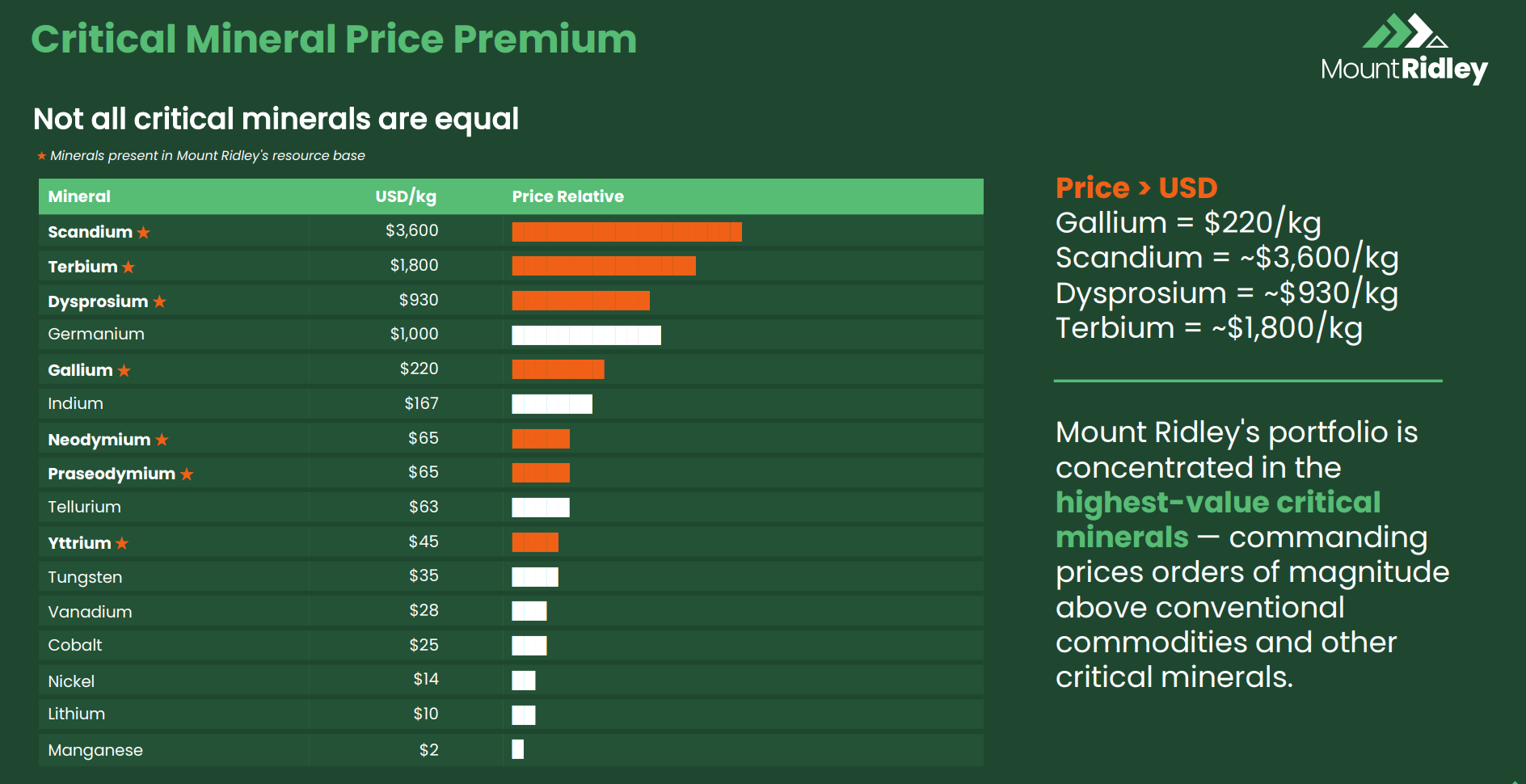
Scandium is a strengthener for aluminium alloys used in aerospace and humanoid robot frames. Global production sits at around 25 tonnes a year. MRD has 18,855 tonnes in the ground.
Gallium goes into radar, semiconductors and EV fast chargers. China controls about 95% of refined supply there too.
On the heavies specifically - the part of the basket that goes into magnets - MRD’s resource holds 44,600 tonnes of contained heavy rare earth oxides. Victory Metals (ASX: VTM) North Stanmore, the most advanced ASX-listed clay-hosted heavy rare earth project, holds 57,400 tonnes.
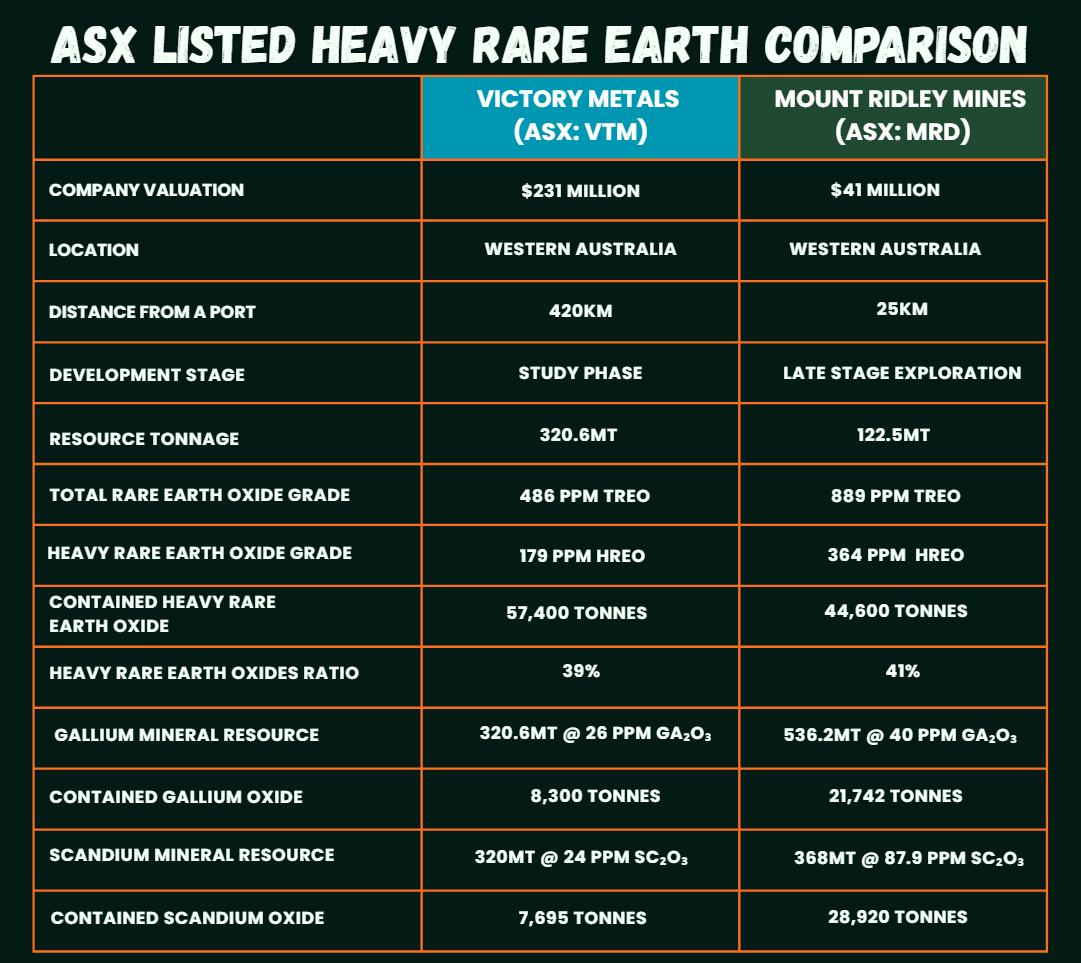
MRD has roughly 80% of VTM’s heavy rare earth tonnes. It trades at $41 million. VTM trades at $223 million.
That’s MRD at about 20% of VTM’s market cap, with 80% of the heavies, plus scandium, plus gallium, plus a metallurgist whose CV maps onto the deposit line for line.
The market hasn’t priced much of that in yet. Larder’s job is to give it a reason to.
What Larder Actually Does
Larder’s first piece of work is reviewing what came back from Lawrence Livermore National Laboratory (LLNL).
LLNL is one of three US nuclear security labs and runs on a US$3.7 billion annual budget. MRD shipped them a sample of Block 1 core last year under a Material Transfer Agreement, and a follow-up batch of around 200kg is already prepared.
Larder’s job is to read what LLNL has done with the first sample, then help shape the formal collaboration agreement that governs the next round of work. The CRADA, in industry speak.
The second workstream is the historical met testwork as Grass Patch has been drilled on and off for over a decade.
There are old reports, old leach results and old beneficiation data sitting in filing cabinets. Larder’s job is to pull it all together so the current programs build on what’s already been done instead of redoing it.
The third piece is the integrated flowsheet itself - the actual processing route that takes clay from the ground and produces a saleable product at the other end.
That’s the work Larder has spent thirty years doing, and it’s the work that decides whether MRD becomes a mine or a footnote.
There’s also re-assay interpretation on around 3,300 samples already submitted to the lab. The goal there is to expand and upgrade the Mineral Resource without drilling a new metre.
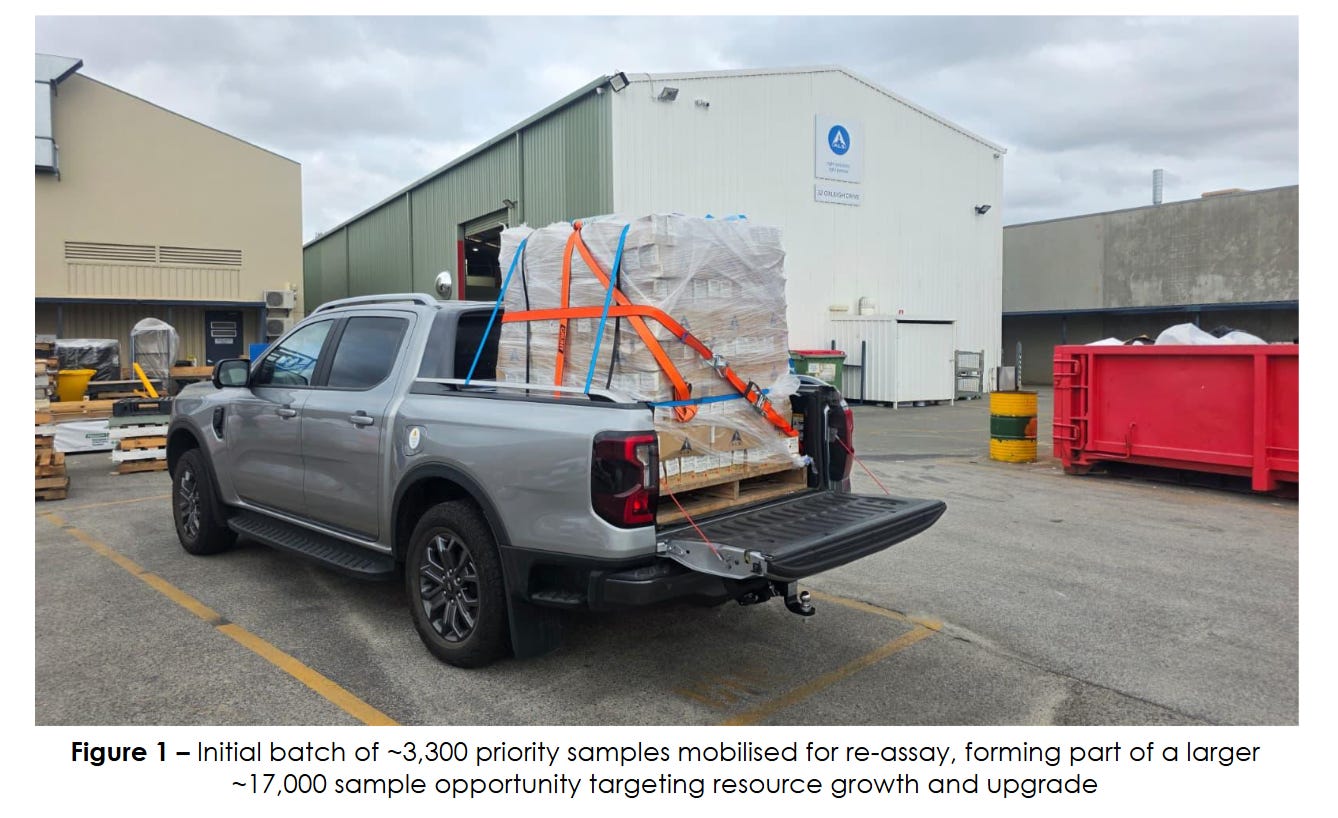
Sending old material to a lab to find something earlier explorers missed is the cheapest way to grow a junior’s resource. MRD’s entire rare earth discovery came from doing exactly that.
And he's also got a tech assessment brief - looking at processing technologies and licensing opportunities the company could plug into rather than build from scratch.
Five workstreams across LLNL, historical data, integrated flowsheet, resource expansion and tech licensing, all going through one experienced process engineer.
Where MRD Sits From Here
MRD joined our portfolio in March on the back of the maiden resource. Met testwork landed shortly after and cleared the first hurdle.
The Larder hire is the next step on the same path.
MRD has a defined heavy rare earth resource, met testwork that says the metals come out, and now a metallurgist with hands-on flowsheet experience at the two WA facilities those metals could realistically feed into.
All at a $41 million market cap.
The risks are the usual ones for a junior at this stage. Lab recovery doesn't always survive the jump to a flowsheet, and government funding pathways like the ones flowing into Wagerup don't always reach the projects you'd expect them to.
None of that is unique to Mount Ridley. All of it is the game.
What changed today is that the work of pulling those workstreams together now sits with someone who has done it before, at the exact facilities that matter for this deposit.
The Larder hire is the kind of step that closes the gap to peers like VTM, and we’re still backing the story.