We backed Black Horse Mining (ASX: BHL) as our 2025 Small-Cap of the Year back in December. The first drill results from Mt Egerton are now in, and the gold system we backed is confirmed.
The maiden program returned up to 17.4g/t gold from 55 metres below surface. The team also located the historic underground workings exactly where the old records said they’d be, and picked up spur vein mineralisation that suggests the gold system is wider than a single reef.
Those spur veins are a genuine find. They mean BHL has a bigger target to drill into once the next program kicks off.
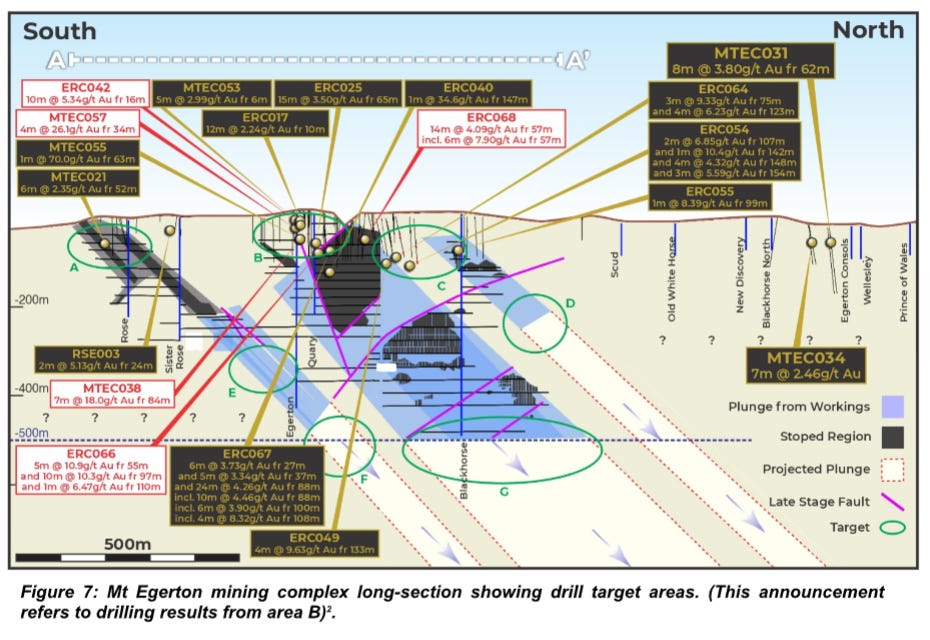
BHL has drilled around 500 metres at Mt Egerton to date. Barely a scratch on a system that produced 1.29 million ounces at 12 grams per tonne before water shut it down in 1906.
The company is now mobilising a bigger rig that can cover that kind of metreage in a week. Deeper drilling starts by the end of March, testing the ground the old miners never reached.
At 39.5 cents and a market cap around $25 million, the maiden program has confirmed the geology and set up the next phase.
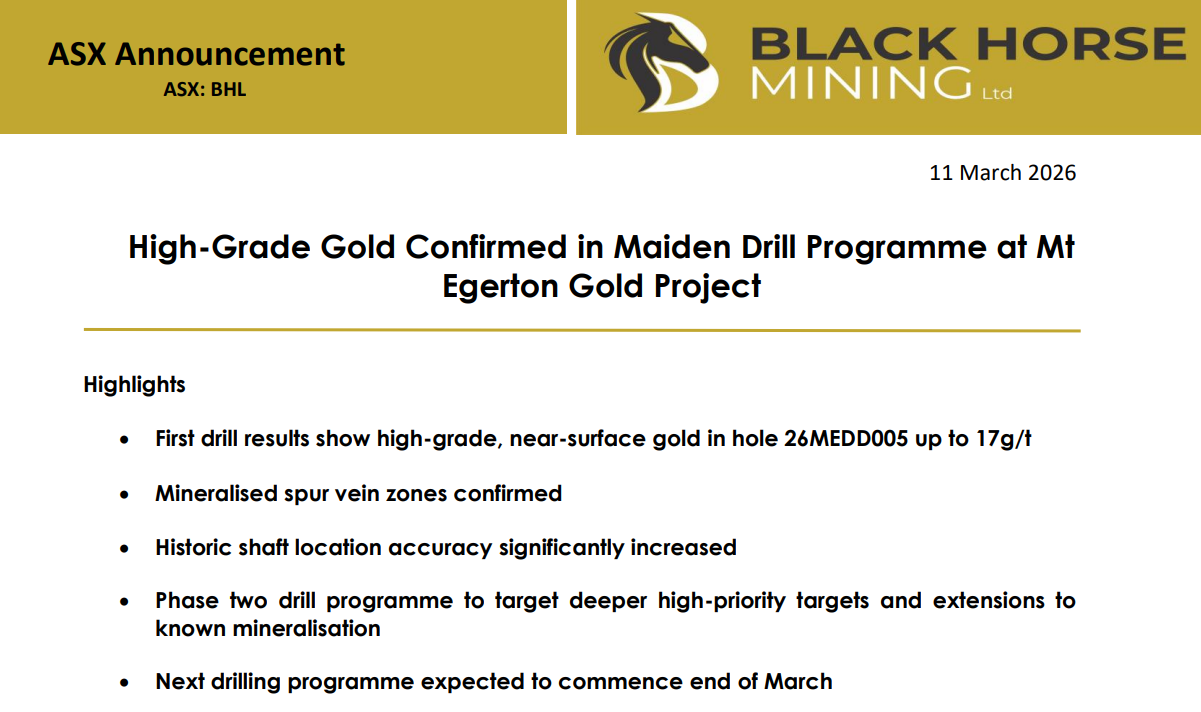
Mt Egerton: Quick Catch-Up for New Readers
Only eight Victorian mines have ever cracked a million ounces from hard rock underground. Mt Egerton is one of them.
The mine closed in 1906 because the pumps of the day couldn't handle the water. The gold didn't run out. The deeper parts of the system were left behind, and over 90% of all historic drilling stopped above 150 metres.
Even at those shallow depths, earlier campaigns returned 7 metres at 18 grams per tonne and 4 metres at 26 grams per tonne.
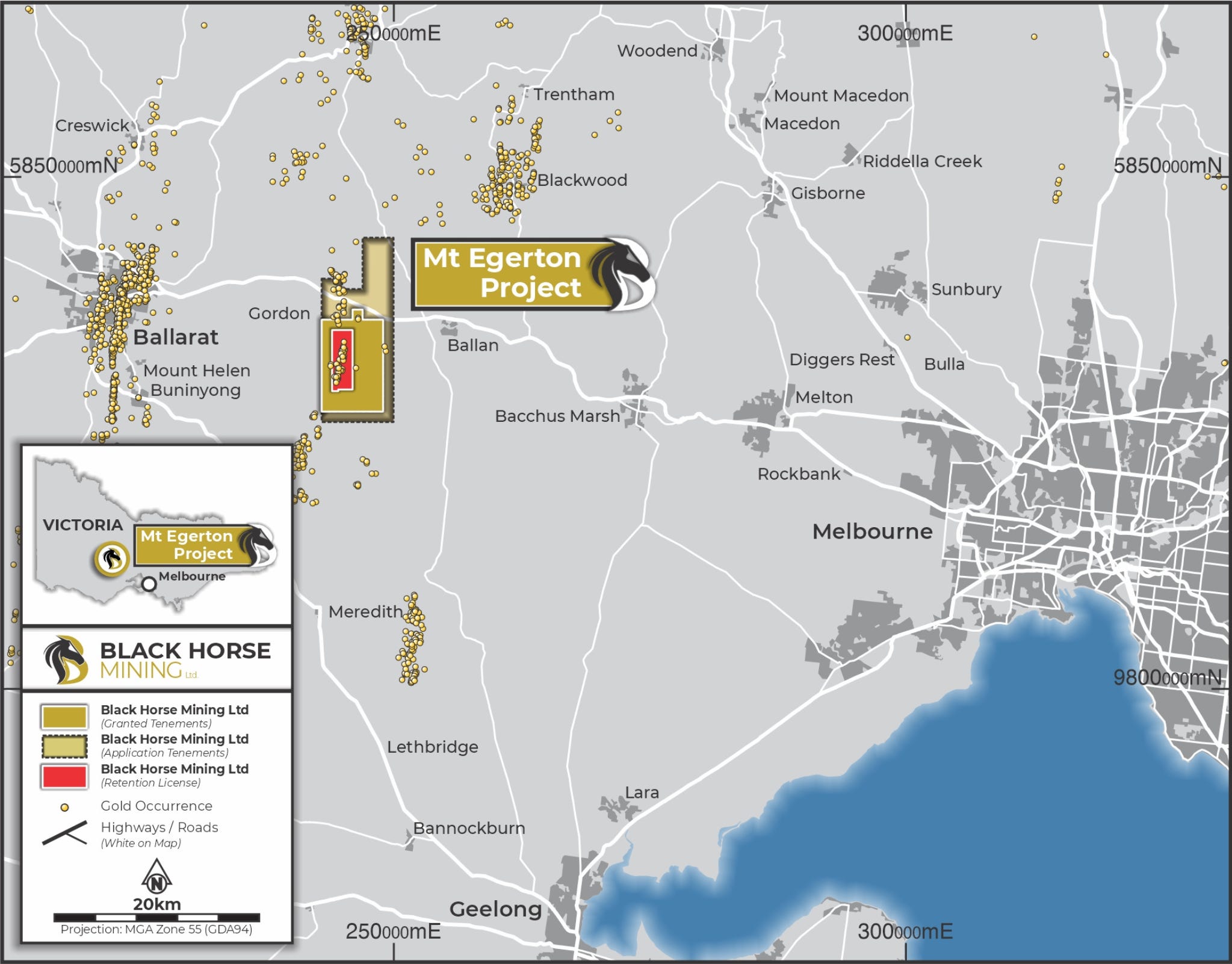
BHL listed in December 2025 with $8 million in the bank and drills turning from day one. The current market cap sits at around $25 million. The project sits in the same structural corridor as some of Victoria’s biggest gold success stories.
Fosterville, owned by Agnico Eagle (a $110 billion company), became one of the most profitable gold mines on the planet after its ultra-high-grade Swan zone was discovered at depth.
The Sunday Creek Project owned by Southern Cross Gold, barely 100km away, has turned a small explorer into a $3 billion company on drill results alone.
Costerfield, now part of the $2 billion Alkane Resources, has been producing high-grade gold and antimony for over 15 years.
BHL sits at $25 million, with gold confirmed and a larger drill rig on the way. The real test at Mt Egerton is about to start.
What the First Drill Results Show
The standout from BHL's maiden program is hole 26MEDD005, which hit a mineralised zone over 5.2 metres from 55.5 metres downhole, with assays returning up to 17.4g/t gold near surface.
Core recovery through the zone was patchy, meaning some sections couldn't be sampled. The true grade of that interval is probably higher than reported, because the gaps between samples were conservatively treated as containing no gold.
That’s a solid first pass for a maiden program.
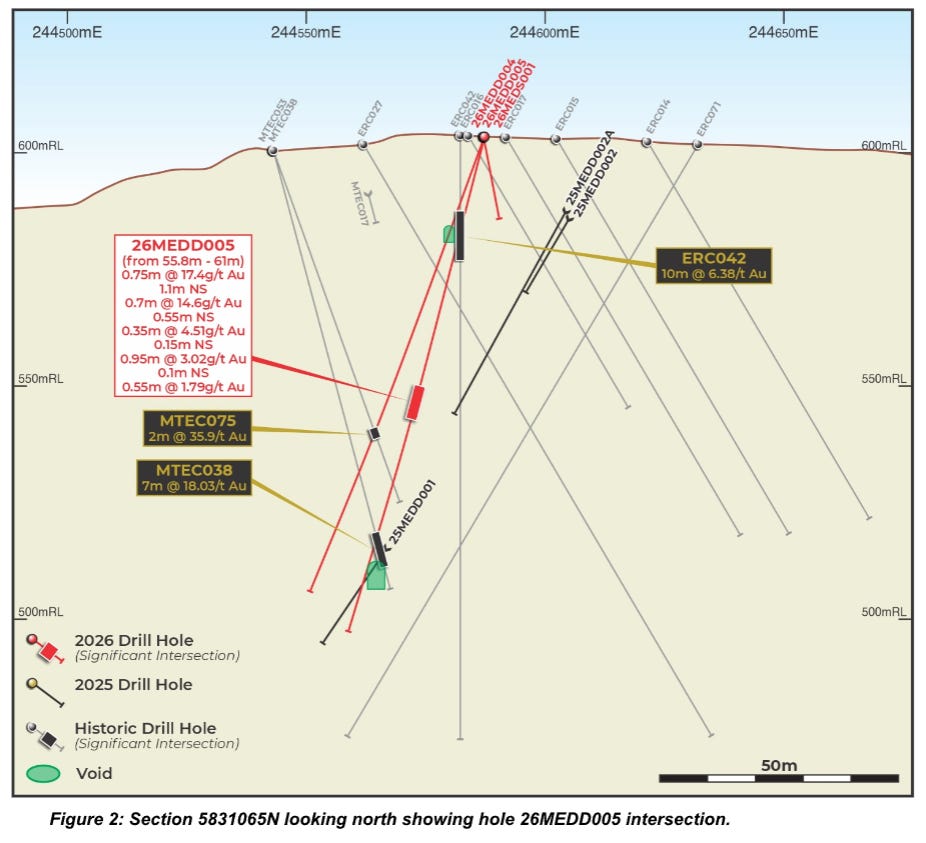
Hole 26MEDD001 targeted a historic high-grade intercept of 7m at 18.03g/t gold and hit a 4.85-metre void at the target depth, confirming the precise location of historic mining activity.
That proves the old data is reliable, which gives the team real confidence when planning the next round of holes.
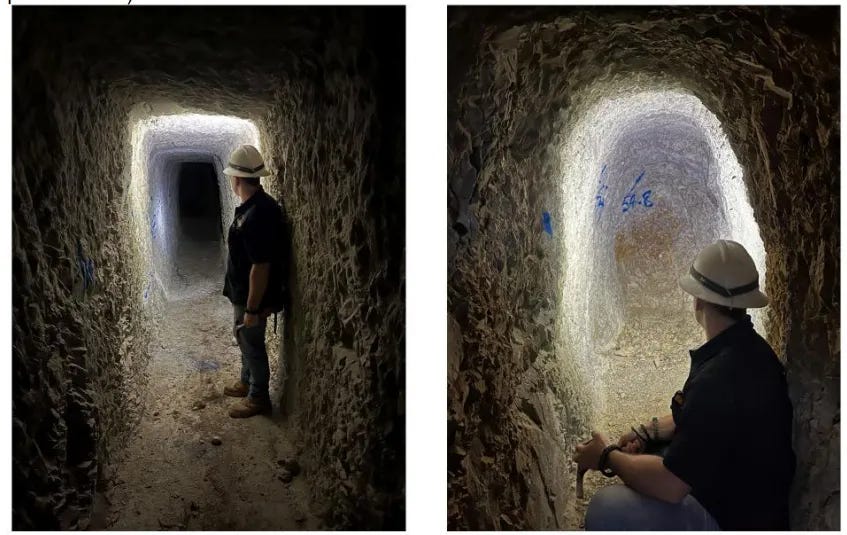
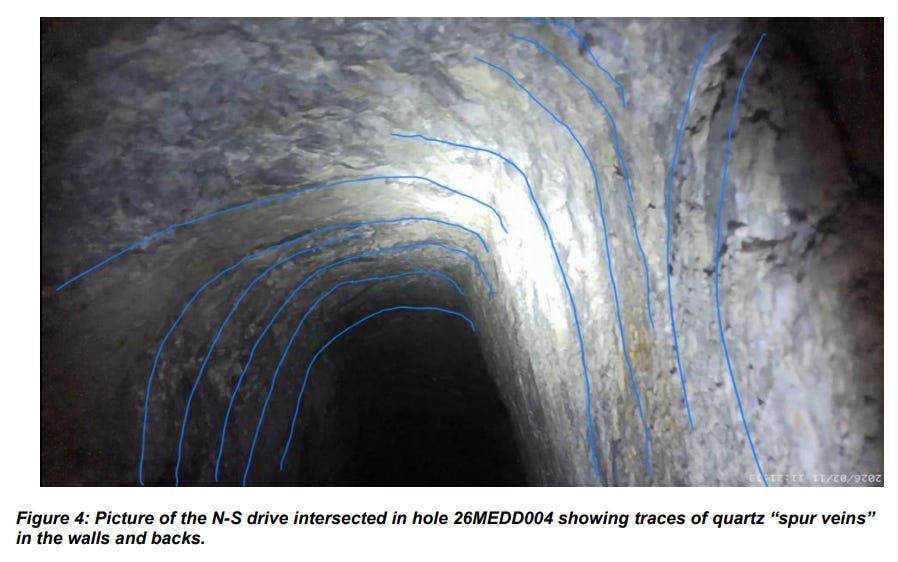
Hole 26MEDD004 cut a 1.75-metre void at just 20 metres downhole. A camera was lowered into the workings and filmed visible quartz spur veins in the walls.
In the Bendigo-Ballarat goldfields, spur veins are associated with gold mineralisation across the region, and a nearby historic hole (ERC042: 10m at 6.38g/t, including 3m at 17.7g/t) shows these same spur veins carry gold.
For the non-geologists: Think of the original gold reef as a main road running through the rock. Spur veins are the side streets branching off it. The old miners only had the gear to follow the main road.
BHL's drilling has found gold on the side streets too, which means the system is potentially much wider than a single line.
BHL’s drilling has found gold on the side streets too, which means the gold-bearing system could be much wider than anyone had mapped. That’s a bigger target to drill into.
BHL lowered a camera into the old workings and filmed the spur veins in the walls. You can see the quartz veining the old miners were following.
Assays from the remaining holes are pending.
Gold Above US$5,000 Changes the Maths
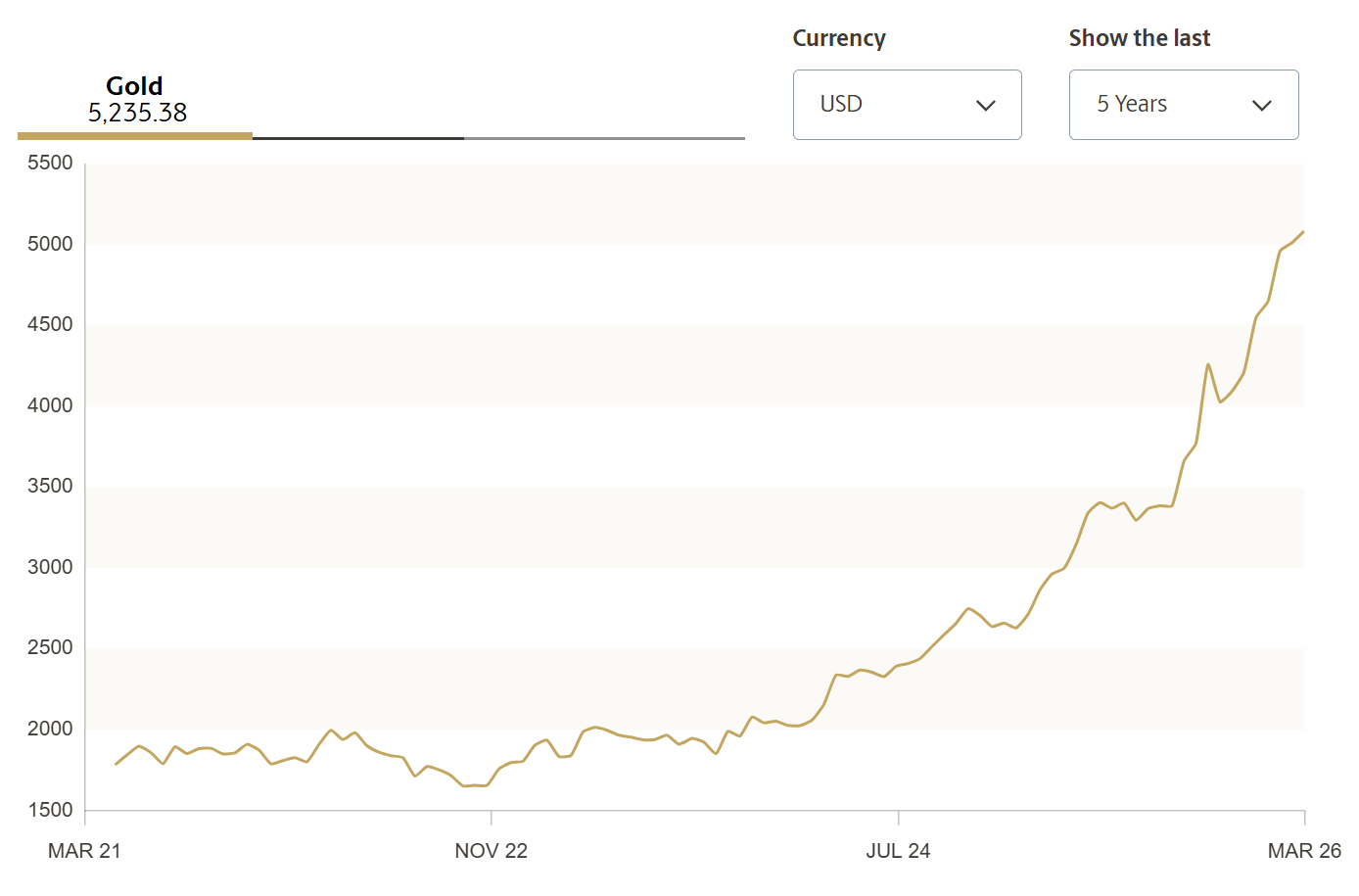
Gold is trading above US$5,100 an ounce as we type, more than double where it sat two years ago. At these prices, every gram in the ground is worth a lot more, and the economics for small-cap gold explorers with confirmed mineralisation have shifted.
For a company like BHL with a market cap of around $25 million, the leverage to further discoveries is real.
Look at Southern Cross Gold (ASX: SX2) in the same Victorian goldfields. SX2 went from a 20c IPO in 2021 to $10 a share on the back of its Sunday Creek discovery.
We can’t say BHL is the next SX2, but the geological address is similar and the gold price environment is far stronger today than when SX2 started out.
What Comes Next
The next program starts by the end of March.
BHL is bringing in a larger rig capable of drilling HQ-diameter core to 1,000 metres. The maiden program struggled with core recovery through the mineralised zones, so bigger core should mean better samples and more reliable grades coming back from the lab.
The team will target the shaft locations they’ve now pinpointed, follow up on these first results, and extend into other areas of known historic gold.
The first deeper holes are also on the list, testing the priority targets beneath the old workings that haven’t been touched since 1906.
Fosterville’s ultra-high-grade Swan zone was discovered past 800 metres. Mt Egerton has never been drilled anywhere near that depth.
Where We Stand
The maiden program did its job. Gold is confirmed, the old data checks out, and the spur veins have opened up a wider target than anyone expected going in.
At $25 million, we think BHL looks cheap for a company that just confirmed gold in one of Victoria’s most productive corridors, with a bigger rig about to test the depths.
We like the gap between where BHL sits today and where its Victorian gold peers have gone.
Assays from the remaining holes are still to come, and deeper drilling starts by the end of March. We backed BHL as our Small-Cap of the Year in December. These first results haven’t changed that view.