


In January Sovereign Metals (ASX: SVM) went through the sand it planned to throw away at the rutile mine it wants to build in Malawi, and found rare earths in it.
Its study said a US$29 million plant could pull them out and add about US$722 million to the value of the project.
We’ve thought about the two numbers a lot, because we own shares in the explorer 20km down the road.
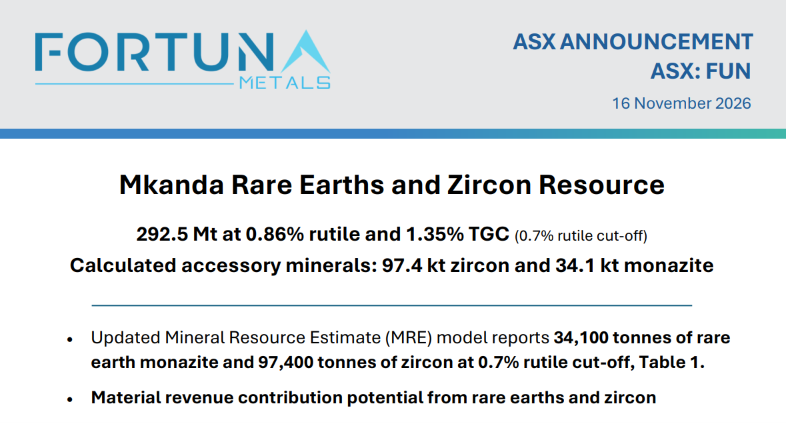
This morning Fortuna Metals (ASX: FUN) counted the same rare earth mineral in its dirt for the first time. There are an estimated 34,100 tonnes of it inside one of the six biggest rutile resources in the world.
We backed FUN at 4c in September last year. It ran to 16c within two months and has drifted back to 6.6c, which values the company at about $28 million.
What Fortuna is Digging For
Fortuna went to Malawi for rutile, the cleanest natural source of titanium.
Titanium goes into jet engines and into the humanoid robots Tesla and its Chinese rivals are racing to build.
The US imports all its titanium sponge and China makes 70% of the world’s supply, which is why we wanted to own some rutile in the first place.
Forecasters have the titanium market growing from US$30 billion last year to US$54 billion by 2034.
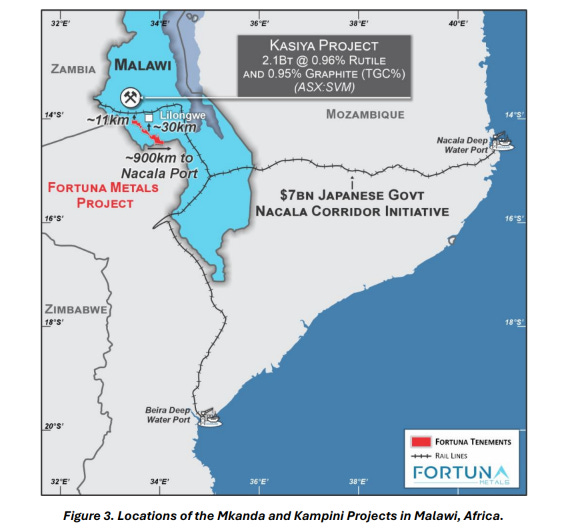
Fortuna’s project is called Mkanda. It sits 30km west of Malawi’s capital Lilongwe, on the same band of ground as Sovereign’s Kasiya, the biggest rutile deposit in the world.
Millions of years of tropical rain washed the lighter minerals out of the top few metres and left the heavy ones, which is why the monazite and zircon sit in the same shallow dirt as the rutile.
Crews drilled about 350 holes there by hand last year, and an independent geologist counted about 2.5 million tonnes of rutile in the top eight metres.
A test plant in Johannesburg has since turned the dirt into rutile grading 96.66% titanium dioxide.
We bought FUN for the rutile and we’ll happily take the rare earths as well.
What Fortuna Counted
The company went back through the samples behind its rutile resource and counted 34,100 tonnes of monazite and 97,400 tonnes of zircon.
Rutile outweighs the monazite 74 to one.
(The re-count also moved the rutile from 2.59 million tonnes to 2.53 million and lifted the graphite by about 11%.)
Monazite is the sand rare earths come from, and Fortuna’s assays in April found dysprosium and terbium among Mkanda’s rare earths. Magnet makers add the pair so an electric motor keeps working when it gets hot.
China makes nearly all of the world’s supply and has rationed exports by licence since April last year, so buyers outside China now pay about 20 times the Chinese price for dysprosium.
Monazite concentrate sells for about US$6,400 a tonne in China.

Zircon goes into ceramic tiles and the metal tubes that hold nuclear fuel. Mineral sands major Iluka (ASX: ILU) expects its zircon sand to sell for about US$1,825 a tonne this quarter, which is more than rutile fetches.
Sovereign built its US$722 million study on 69,000 tonnes of monazite inside its planned pits. Fortuna has counted about half as much, and it has only counted the top eight metres.
Fortuna has plenty to prove before anyone can put a dollar figure on its monazite. It calculated the tonnes from the elements in the samples, and a lab in Queensland is now testing how much of each mineral can be recovered and sold.
Sovereign’s study is an early one too, with a 30% margin for error either way.
Mkanda had rutile and graphite in its resource on Friday, and it has four minerals this morning.
What Comes Next
Today’s count comes from about 5,000 metres of hand drilling that stopped at eight metres, and Fortuna has now drilled more than 17,000.
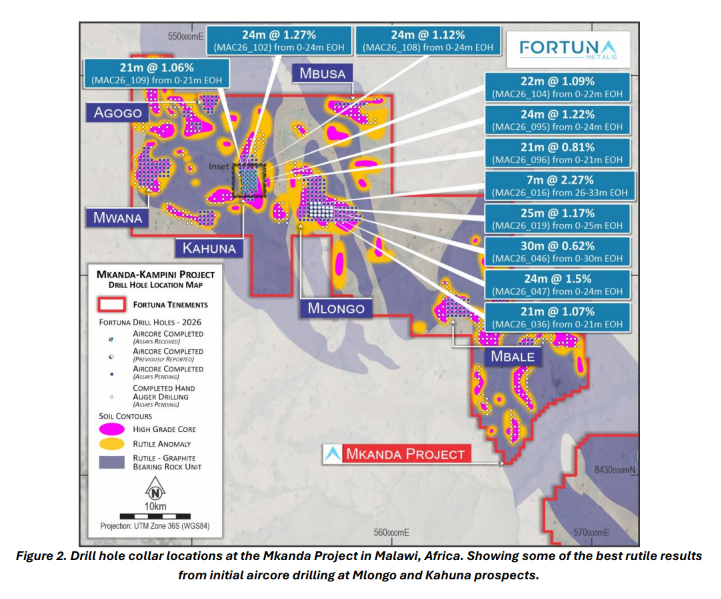
This year it brought in an aircore rig that averaged 22 metres a hole. The best hole at the first prospect ran 24 metres at 1.5% rutile from surface. The best at the second ran 24 metres at 1.27%, and both were still in rutile when the rig stopped.
It expects the rest of the assays over the next four to six months and plans a new resource for mid-2027.
The lab results go into a pre-feasibility study, and Fortuna is already talking to buyers and trading houses about who takes the product.
CEO Tom Langley says a bigger resource looks likely, and with holes nearly three times as deep going into it, we agree.
The Bottom Line
FUN last closed at 6.6c, and US venture fund WndrCo agreed in June to invest $8.6 million at 11c a share, taking close to a fifth of the company.
Since then the company has drilled rutile well below its resource and counted rare earths inside it. The share price has gone the other way, which has been hard to watch.
We’d like to know what the rare earths are worth, and we’ll have to wait for the lab like everyone else.
In the meantime there’s $11.4 million in the bank and four to six months of drill results on the way. We think just under 7c is cheap.