One of the most connected funds in Silicon Valley has just put $8.6 million into a 13-cent rutile explorer in Malawi.
The company is one we’ve backed: Fortuna Metals (ASX: FUN). The fund is WndrCo, an early backer of SpaceX and Figma, with more than US$3 billion under management. It now owns close to a fifth of FUN.
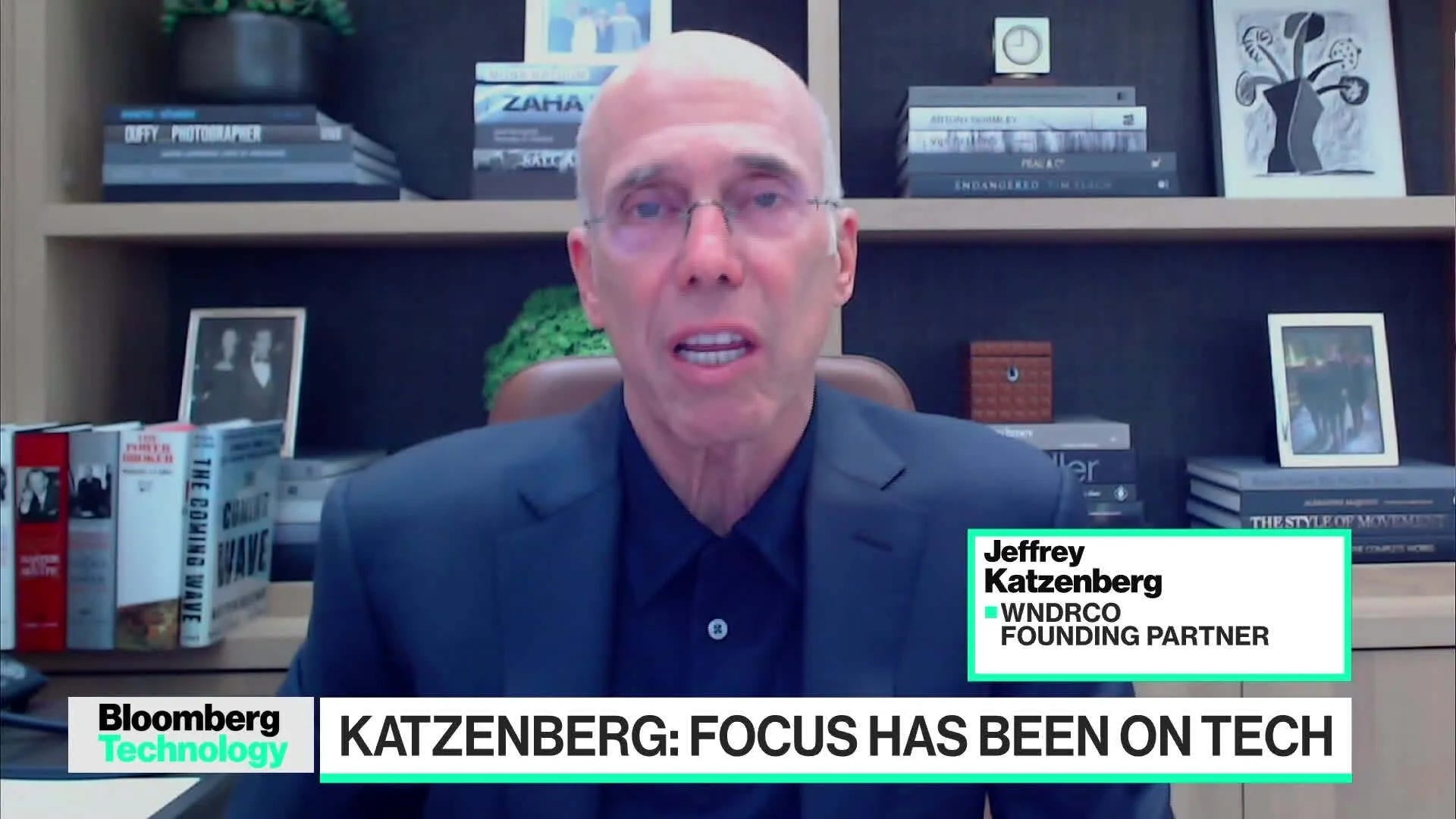
WndrCo was built by Jeffrey Katzenberg, who ran Walt Disney’s studio before he walked out and built DreamWorks into a Hollywood powerhouse. His partner, Sujay Jaswa, helped scale Dropbox from a few million in revenue to half a billion.
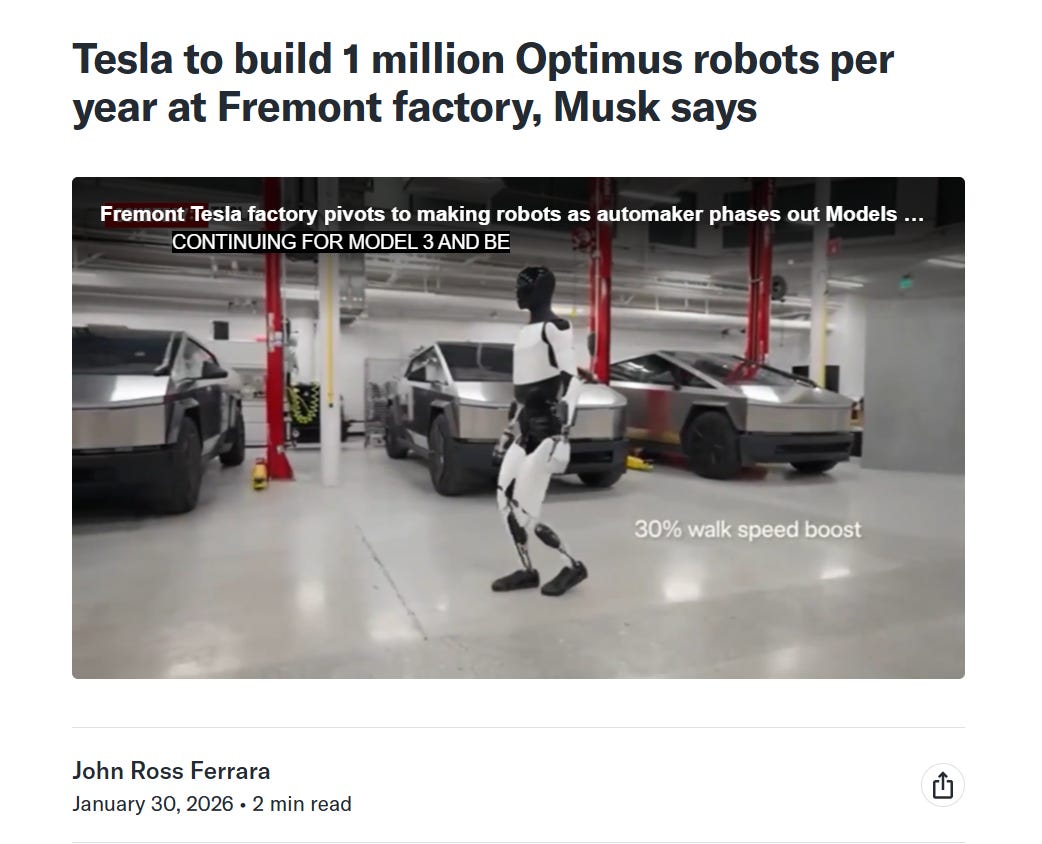
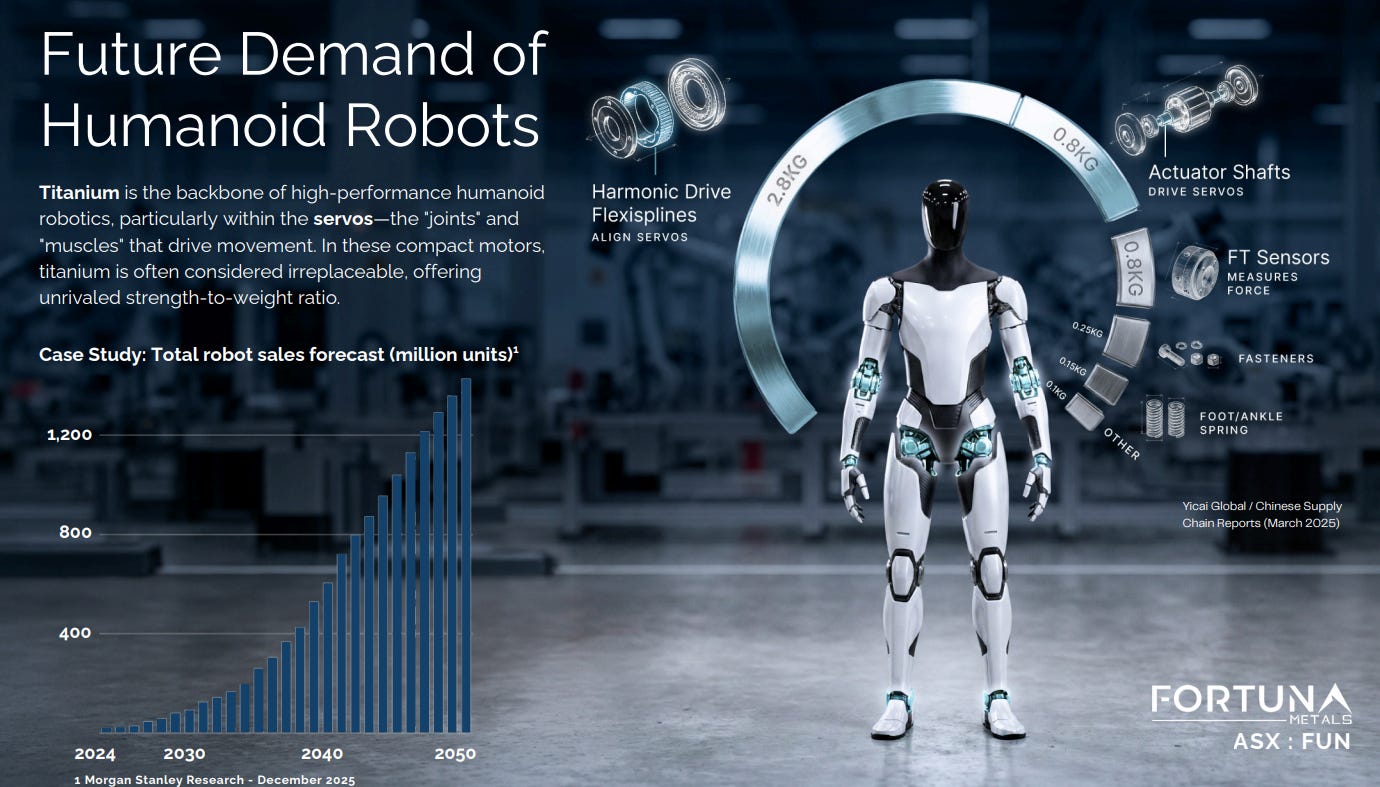
These are the people who get to the front of the queue on what’s coming next. Right now that’s Elon Musk winding down Tesla car lines to build Optimus instead, the humanoid robot he wants a million of a year.
Build robots in those numbers and you need titanium, light and strong under load. The cleanest source of it is rutile, the rock sitting under Fortuna’s ground in Malawi.
That rutile is why WndrCo wrote the cheque.
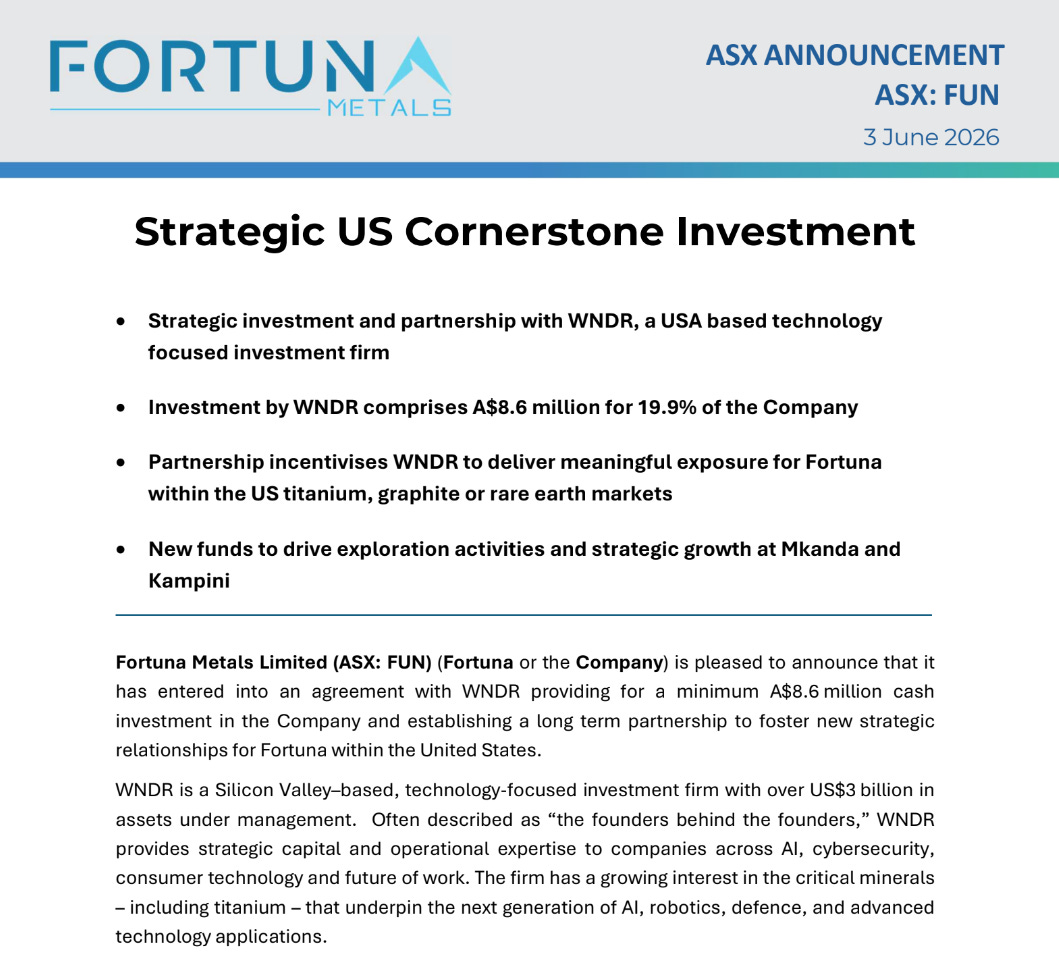
A cornerstone stake like this takes months in the data room before a cent changes hands. WndrCo came out the other side and put millions into a tiny explorer in a corner of Africa.
That leaves Fortuna with close to $15 million in the bank, enough to run for years without going back to shareholders.
The bigger prize is the network that comes with the money. WndrCo knows the major players who actually buy titanium, the buyers a junior in Malawi could chase for years and never get in front of.
We’ve held Fortuna since it was a 4c stock, and a backer like WndrCo turning up is the strongest sign yet we read it right. Companies this size rarely pull a partner of that calibre. FUN just did.
Who WndrCo Is, and What They’ve Backed
Sujay Jaswa has spent 20 years spotting which companies would win before the rest of the market caught on.
He did it at Dropbox, joining as one of its first hires and watching 15 million users turn into 300 million.
He did it cutting venture cheques at New Enterprise Associates, backing Workday and Cloudflare while they were still unproven names. He does it now at WndrCo, the firm he co-founded in 2016. He still finds time to lecture at Stanford between deals.
Katzenberg sits on the other side of the table, and the pair makes an odd one. One spent decades reading what the public would fall for next from the top of Hollywood. The other spent his career reading which technology would win from the inside of it.
Put a film mogul and a software financier together and you get a firm that backs both instinct and data.
That instinct runs right through WndrCo’s book. Most of the names mean little to an Australian investor, but in US tech they are the ones everyone knows.
They got into Figma early, the design software company that listed in New York last year and tripled on its opening day.
They hold a slice of Databricks, worth around US$134 billion while it is still private (one of a tiny club of companies to reach that kind of money without ever going public).
They own 1Password and Airtable, and they have built cybersecurity companies up from nothing.
Those rockets, drones and self-driving cars from the top of this piece have names. SpaceX. Anduril, the defence-tech outfit building autonomous weapons for the US military. Waymo, Google’s self-driving car arm.
Three of the most closely watched private companies on earth, and every one of them will be reaching for the same metals as it grows.
The way they back a company tells you as much as the names. WndrCo gets in early and goes deep. They lead the round and write the first institutional cheque.
They call themselves “the founders behind the founders”, and the model runs on seeing something before the market does, then helping drag it into the daylight.
So when a fund like that walks past the next AI darling and writes its cheque to a rutile explorer in Malawi, it’s worth asking what they saw. The rest of this is our best read on it.
Why They're Backing Fortuna
What they saw is titanium, and a squeeze coming for it.
Rutile is the cleanest natural source of titanium there is. Start with rutile and you strip less out on the way to the finished metal, which is why buyers pay up for it. Fortuna’s ground in Malawi is shaping up as one of the best rutile stories on the ASX.
Forecasters have the titanium metal market growing from about US$30 billion this year to US$57 billion by 2035, and the pull is coming from every direction at once.
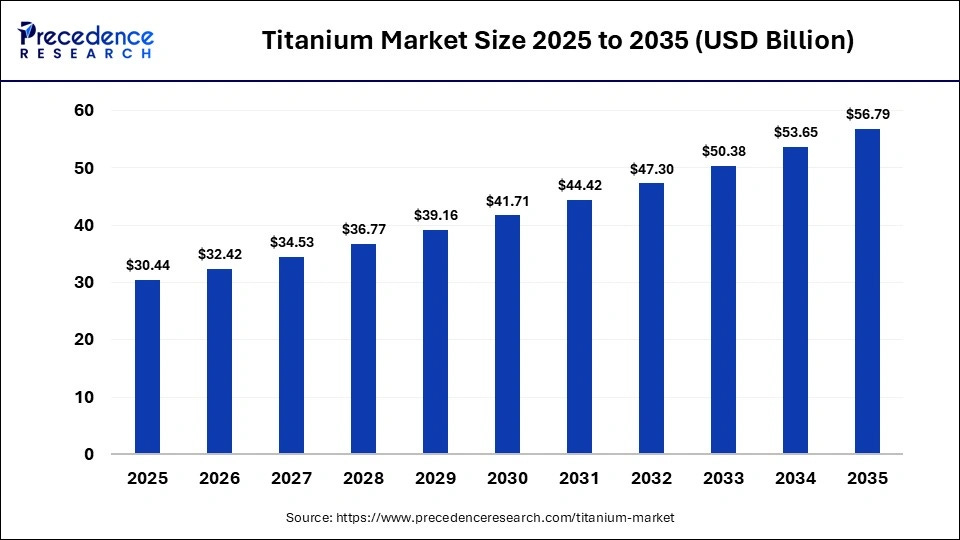
In aviation, every kilo of titanium that replaces something heavier in a jet engine or airframe saves fuel, so airlines never stop wanting more of it.
And since Russia rolled into Ukraine the West has been rearming in a hurry, with the US and Germany pushing defence budgets higher year on year, and a modern fighter jet is something like 40% titanium by weight.
Humanoids run on the very same metal. Tesla alone is talking about a million Optimus units a year to start, and Musk has floated far higher numbers after that, every one of them needing a frame that stays light under load.
While all that demand stacks up, supply is going the other way. The old rutile deposits are running down. China sits on roughly 70% of the world’s titanium sponge production, the first solid form the metal takes. And America imports 100% of the titanium metal feedstock it runs on, every gram of it from somewhere else.
Demand climbing while the supply tightens, with the biggest economy on earth caught short.
A Silicon Valley fund backing a friendly source early knows where this is heading.
The Doors They Open
The money is the smaller half of this deal. The bigger half is the doors it opens.
The way the deal is built shows WndrCo's hand. The $8.6 million buys the equity, but their real upside sits in a parcel of options that only pay out if they walk Fortuna in front of a US commercial partner by 2029, whether that is a metals trader, a defence or aerospace group, a processor that turns rutile into titanium sponge, or an end user like a humanoid robot maker.
The firm gets paid to open doors, so it keeps knocking long after the cash has cleared.
These are doors a Malawian junior could spend a decade knocking on and never get through.
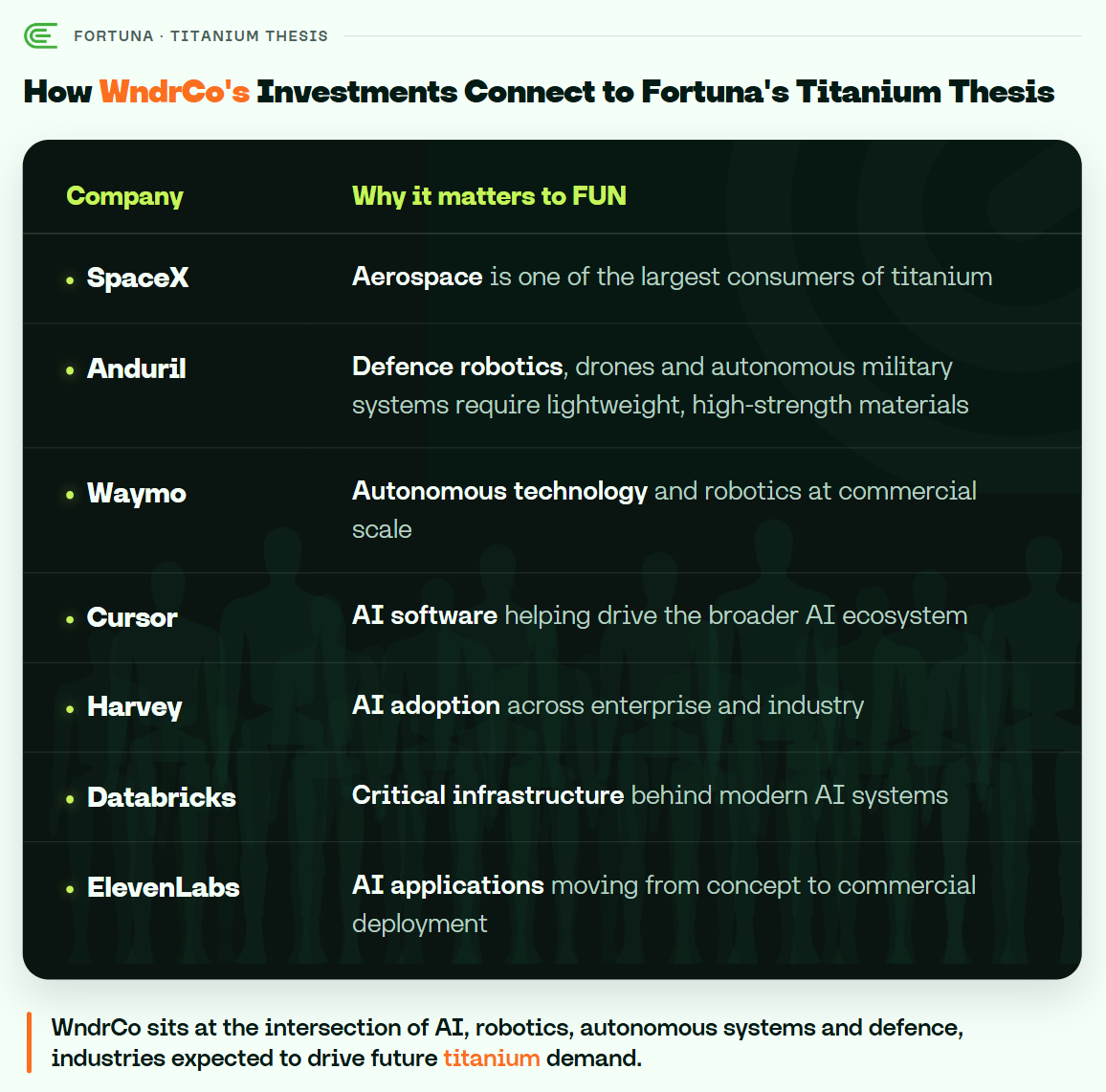
WndrCo already sits behind the companies turning metal into rockets and autonomous machines, the same outfits that will be hunting for titanium feed as they scale.
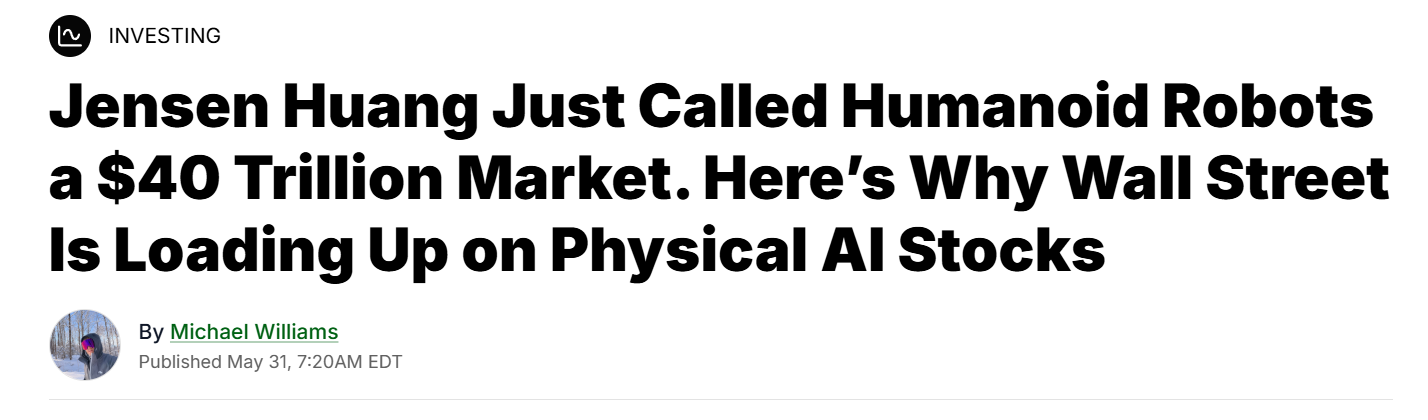
They led the funding round for Alembic, an AI business whose product NVIDIA uses in its own marketing and whose work NVIDIA boss Jensen Huang has publicly put his name behind.
Jaswa chairs cybersecurity firms and has sat on American boards for years. Katzenberg has spent four decades building a contact book at the very top of US business.
When people like that ask for a meeting, they get one.
They sit in the rooms where the buyers sit, the companies that will need the titanium all that demand is chasing.
A junior explorer in Malawi can pull brilliant rutile out of the ground and still never get near the people who turn it into jet parts and robot frames.
WndrCo can make the introduction in an afternoon, and the way the options are written, it is squarely in its own interest to make it.
What This Means for Fortuna
A week ago Fortuna was a $37 million explorer with a good story, a great project and the usual junior's headache of how to pay for the next phases.
It now has a US cornerstone holder, close to $15 million in the bank, and a partner whose own payday rides on dragging Fortuna into a room full of American buyers.
Many juniors this size have to live raise to raise, diluting holders just to keep the drills turning. FUN can fund itself through to a decision on whether to build a mine without going back to the market, cap in hand.
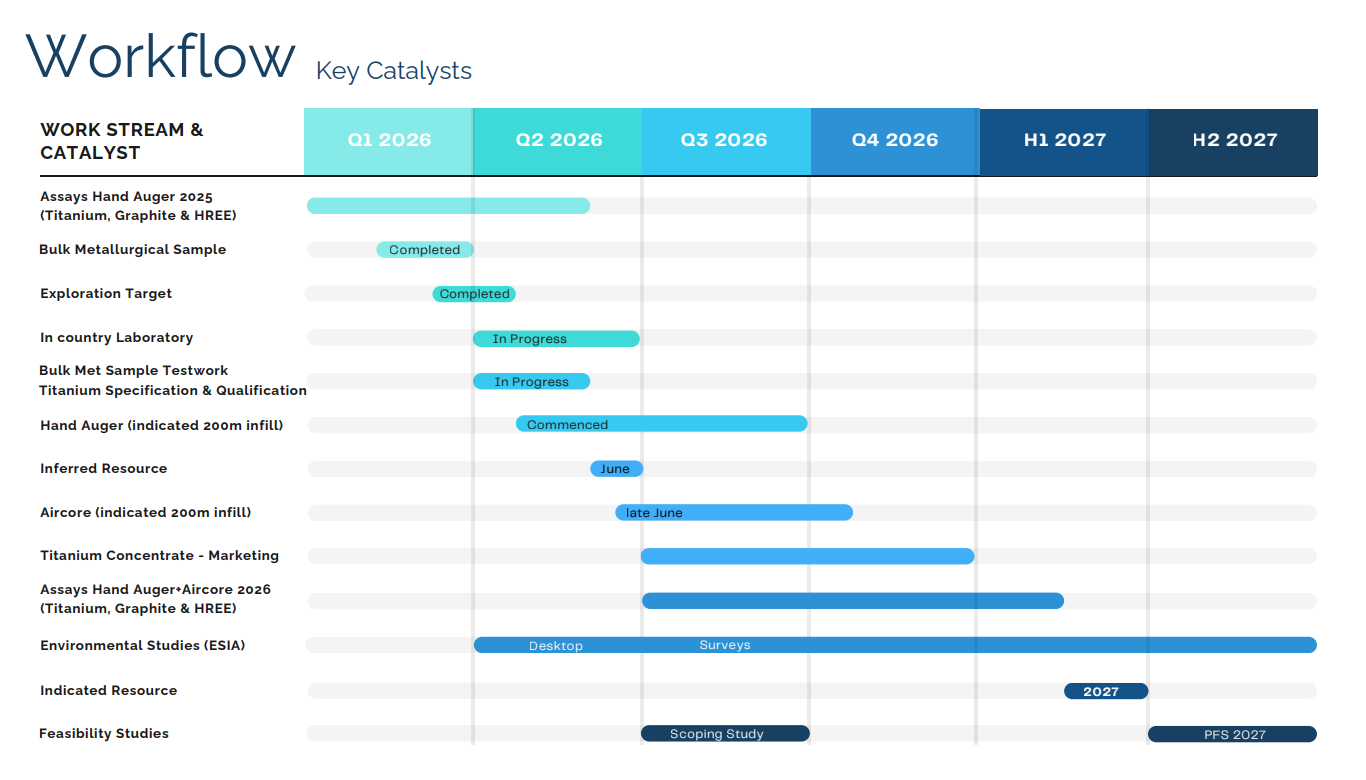
The catalysts are already lining up.
Deeper aircore drilling is about to start. A maiden resource estimate for Mkanda is due late this month, the first hard number on how much rutile is in the ground.
And in Johannesburg, the metallurgical test work on a six-tonne bulk sample is wrapping up, with the concentrate it produces headed for the desks of potential buyers.
FUN now storms into the back half of the year with money, a resource, a product in hand and a backer working the phones on its behalf.
A fund that has backed some of the biggest names in technology ran its diligence and decided Fortuna was worth millions and a multi-year partnership.
It is now paid to make Fortuna bigger, and it has the contacts to do it.
Tailwinds like this one do not come along often for a company this size.