


Elk Range Mining (ASX: ELK) has found visible gold at the Friday Gold Mine in Idaho.
It’s sitting in a tray of drill core from 2014, in the last metre of the standout hole from the old drilling. The specks and threads of gold in the quartz are big enough to pick out without a lens.
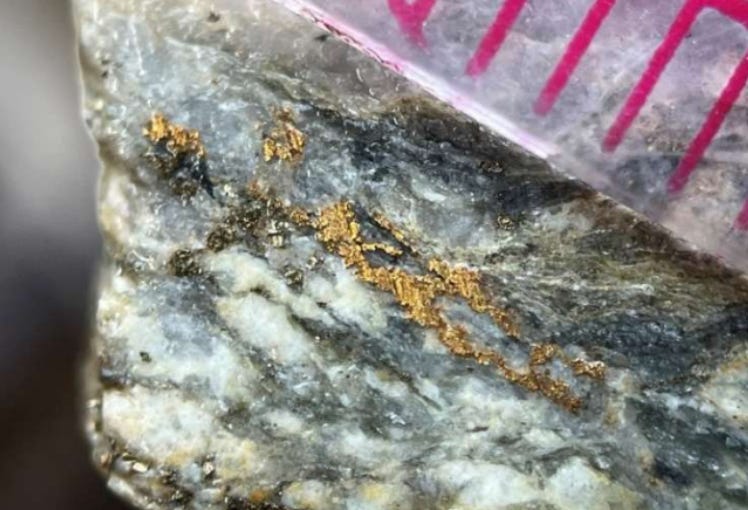
The core has been on a shelf in the shed at Friday since the day it came out of the ground. Friday is the built and permitted underground mine Elk bought this year. It came with the shed full of trays of old rock with the original sample numbers still in them.
Elk’s geologists have started working through those trays and assessing the core again with fresh eyes. They laid this hole out in order and on the final tray one of them saw gold in the metre before the hole stopped.
We’ve written about this hole twice, when we backed ELK at the float and again when the rig started turning. It ran 112 metres at 5.22 grams of gold a tonne and got better the deeper it went until the last three-quarters of a metre came back at 133 grams.

Then the crew reached 450 feet (the depth on their drilling plan) and pulled the rods out. That’s as far as the story went for the next 12 years.
ELK trades at 16.5c, a market cap of roughly $15 million, having just raised $10 million in the IPO. For a company with these grades, sitting on visible gold the last crew walked straight past, we think the market wakes to ELK quickly.
Two Tablespoons
The gold Elk found sits inside the 133 gram interval, and the people logging the core in 2014 missed it. Missing it changed the number the lab sent back because of the way a lab works out a grade.
A lab never tests the whole metre. It crushes the rock to powder, scoops out about two tablespoons, runs that through a fire assay and uses the result as the grade for the metre.
When the gold is scattered evenly through the rock, two tablespoons tells you pretty well what’s in the metre.
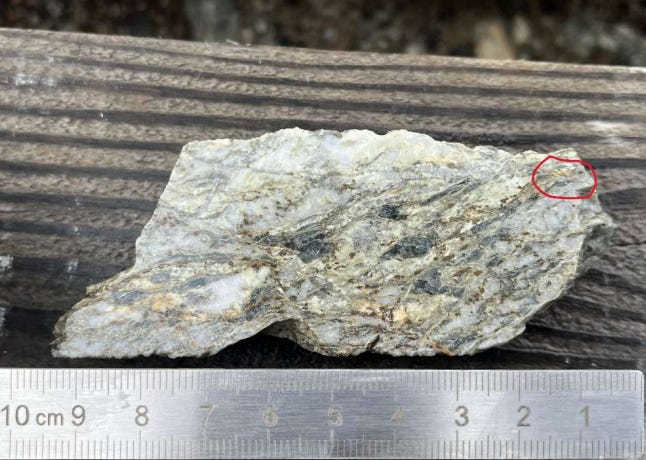
The gold at Friday is coarse. Elk calls it nuggety in the fine print and nuggety gold bunches into specks that can carry a lot of the gold in a metre.
If the speck lands in the two tablespoons the number can come back huge. If it lands in the bag left behind, the number can come back small.
The old owners knew this and had a rule to send any sample with visible gold back for a much bigger test.
The rule never kicked in back in 2014 because the geologist logging the metre wrote down the core but missed the gold.
When Elk went through the original assay certificates it found only the standard two-tablespoon result for the metre and for the whole 113 metres of the 2014 hole.
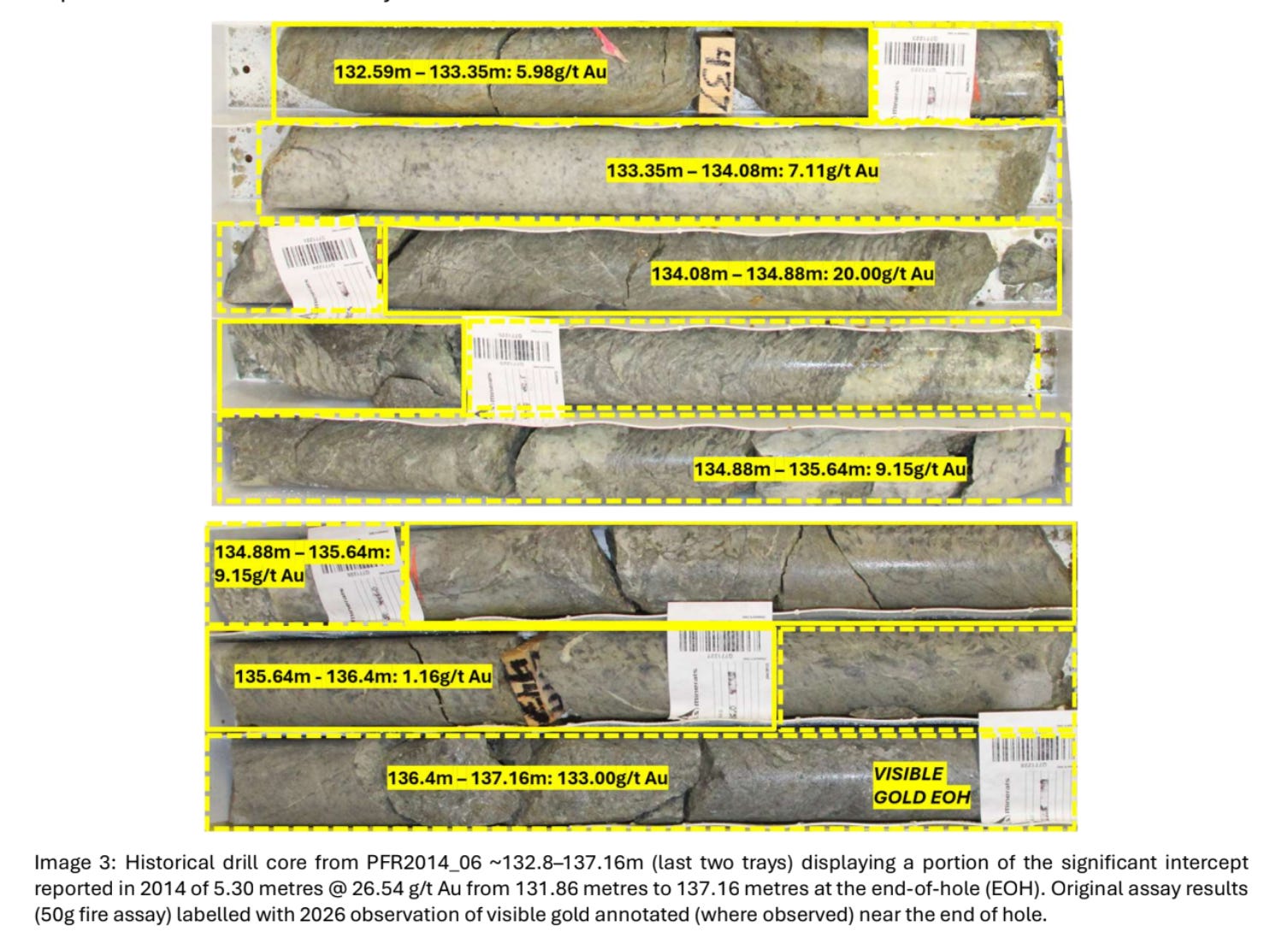
Elk has now sawn the remaining core again along the full 113 metres and sent it off for photon assay in the same sample lengths the 2014 crew used.
Photon assay fires X-rays through a 500 gram jar of rock and reads the gold in the whole jar. Ten times the rock means the speck has nowhere to hide. Results are due late October or early November.
The number could come back higher or lower than 2014. The new sample comes from a different quarter of the same core. Two slices of one metre can grade a long way apart in nuggety ground and Elk says so in the announcement. What it will be is the first measure of those 113 metres taken with a test built for the gold in them.
Eight Metres Away
The drill rig spinning right now is a stone’s throw from all of this.
Elk started its first hole eight metres from where the 2014 crew started theirs and the two run side by side down the hill. The gold in the photo sits 137 metres down. The new hole passes within 10 metres of it.
Then it keeps going another 200 metres into fresh ground past where the old crew pulled their rods.
As CEO Edward Keys put it, the gold sits “immediately adjacent to where we are drilling today.”
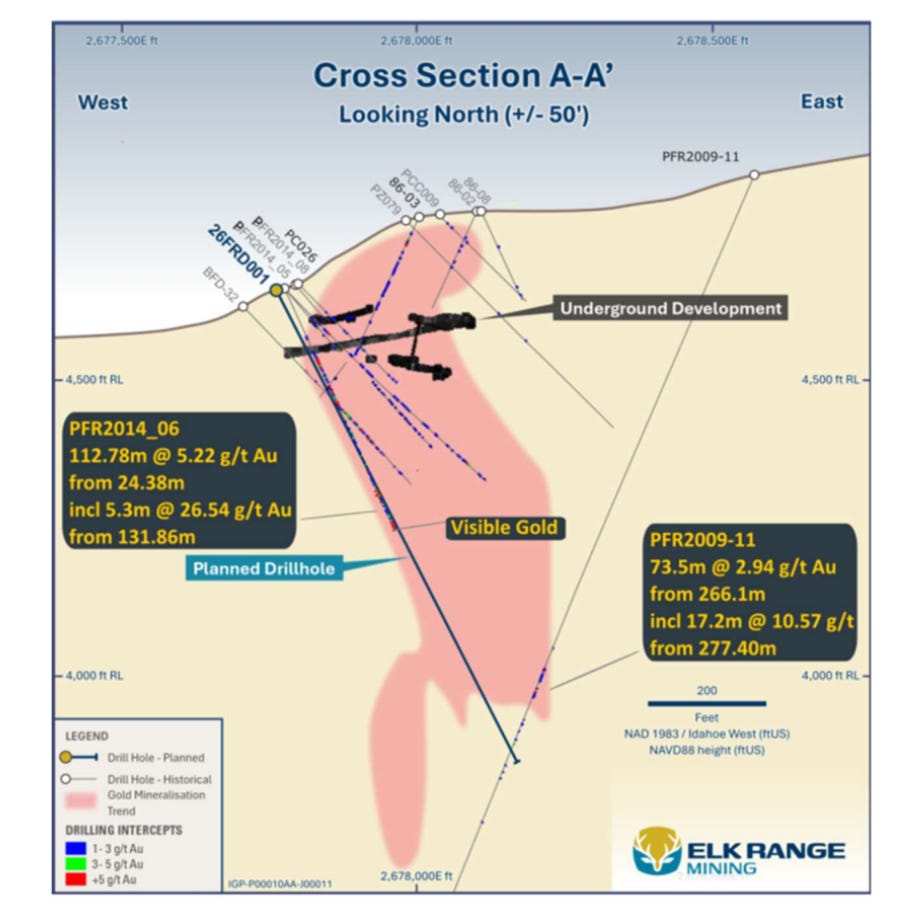
Elk has put the drill on day and night shift to get there quicker and the assays from the new hole are due in the same late October to early November window as the re-test.
So two sets of numbers land on the same patch of hillside within weeks of each other. One tells us what the old hole graded when it’s measured properly. The other tells us what’s underneath it.
Why We’re Backing Elk Range Mining
You can find our full write-up on why we’re backing ELK here.
Two Numbers in November
Elk gets two results back in November and both can move the stock.
The old numbers for this hole came from a test that struggles with coarse gold. A two-tablespoon scoop can miss the specks altogether, which makes the result a lot more hit-and-miss in nuggety rock. Elk is redoing the whole hole with ten times the rock.
There are 386 old holes at Friday and the crews graded nearly all of them the same way, so whatever comes back on this hole tells us something about every tray in the shed.
The new hole is the bigger swing. Elk is drilling straight past where the 2014 crew stopped and another 200 metres into ground nobody has tested. If the gold keeps going, Friday is a much bigger mine than the one the last owner built, and the mill and the decline are already sitting on top of it.
High-grade holes get paid for quickly in this gold market, and Friday has a history of them.
We’ve held since 20 cents and we’ll be holding in November.
The last crew went home at 450 feet. This one is drilling past it through the night shift.