


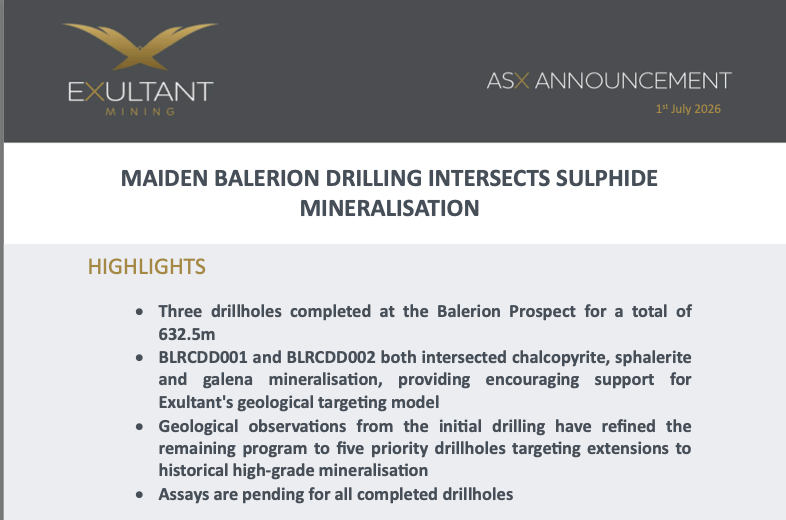
Exultant Mining (ASX: 10X) has its maiden drill results back, and the ground delivered. Two of the three holes came up carrying the copper, zinc and lead it went looking for.
At 18c and a market cap around $7 million, the company is hitting visible mineralisation in the ground while the market still has it priced like nothing’s going on. That gap is the whole reason we’re on the register.
A quick refresher for anyone meeting 10X for the first time. It’s a small-cap gold, silver and copper explorer that listed late in 2025, sitting on a pile of old high-grade hits across NSW and WA that nobody had gone back to test with modern gear.
We tipped it as our first pick of 2026, pulled in by the valuation and the quality of the ground. With around $3 million in the bank and only 37 million shares on issue, strip out the cash and you were paying next to nothing for the project.
These first three were the warm-up. The holes 10X really wants are still ahead.
The Ground: High-Grade Hits, Never Followed Up
Balerion has thrown up high-grade metal before, and nobody ever followed it down.
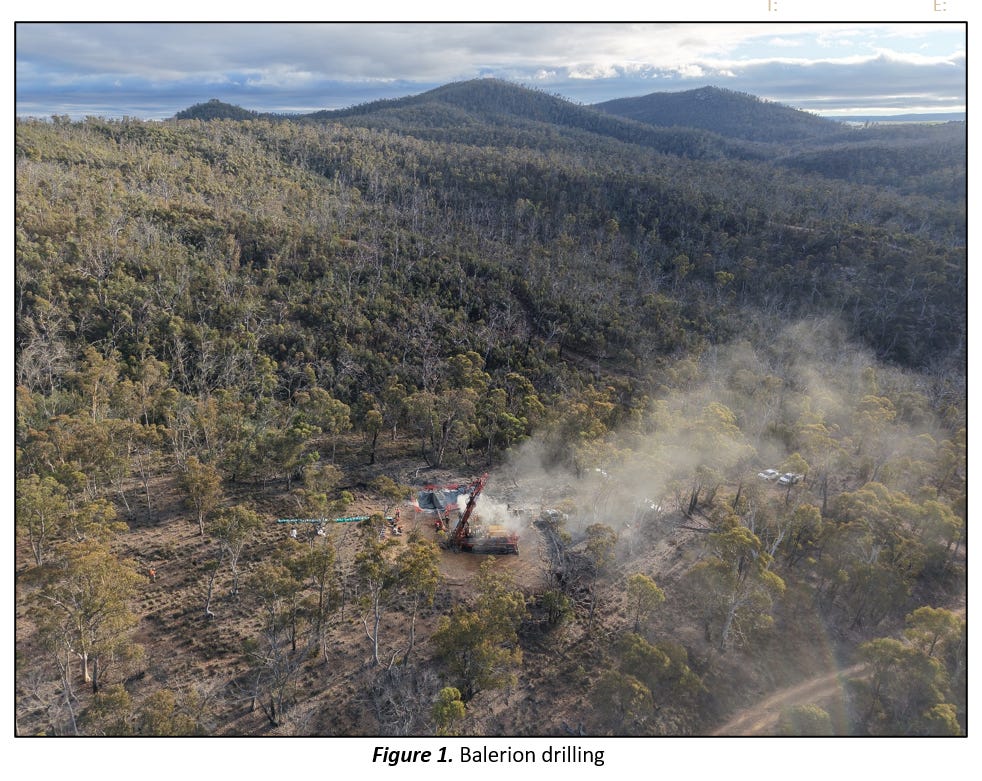
The three holes went into the prospect, part of 10X’s Peak View project, 35km northeast of Cooma in southern NSW and about 100km south of Canberra.
It sits in the Lachlan Fold Belt, the long mineral belt that’s hosted a good chunk of Australia’s gold and base metal mines. The old Big Badja silver mine sits on the project, and Western Mining and Ironbark Zinc both worked the ground back in the 70s.
The historic drilling threw up some standout hits, high-grade silver, lead and copper in one hole, a short, very rich slug of zinc and lead in another.
Nobody had chased those hits down-dip with a modern rig until now.
The Results: Metal in Two of Three Holes
10X put three holes into Balerion for 632.5m. The first two came up with chalcopyrite, sphalerite and galena, the minerals that carry copper, zinc and lead.
These are sulphides, the metal-rich material an explorer hopes to see when the core comes up the hole.
In the first hole, the metal showed up in veins down the length of the drill, the standout a thin but rich streak near 84m, with more scattered deeper down.
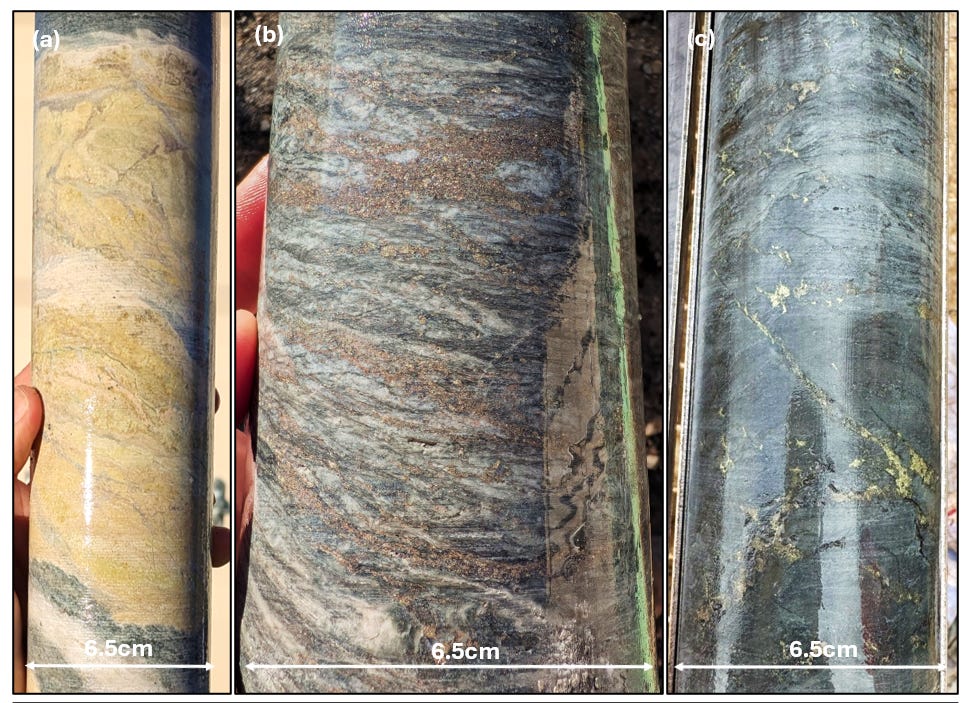
The second carried more, and carried it thicker, including a 5.8m zone with narrow bands of solid sulphide and an 8.2m run with copper and zinc through it. Meatier and more continuous hit than the first.
The third tested a separate target to the west and came back barren.
These are visual estimates from the geos logging the core, not lab numbers, and you can’t read grade off a visual log. So the metal’s there and the widths look good.
How rich it is comes down to the assays, which are still pending on all three holes.
The Hole That Got the Geos Talking
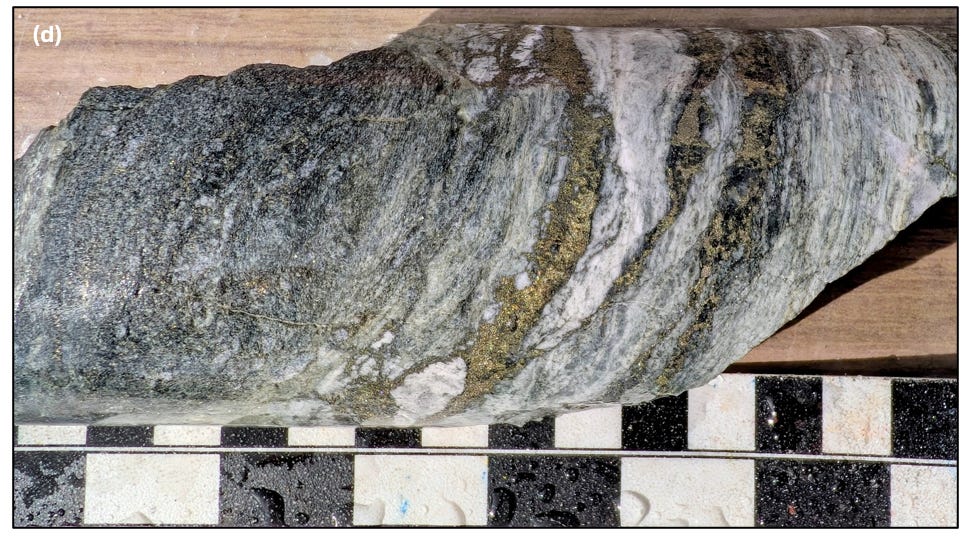
The second hole is the one that got the geologists talking. It cut a 4m zone packed with the same copper, zinc and lead minerals, sitting on a boundary between two different formations.
Some of it was disseminated, the metal grains scattered thinly through the stone. The better bit is the coarse, banded sulphide in the same zone, where the minerals clump into thicker streaks.
The scattered grains tell you the system is live, and the banded sulphide is the bit that points toward the heavier, more valuable hits.
Previous explorers logged that same boundary along strike from big slabs of high-grade mineralisation elsewhere on the project. So 10X has drilled into the right neighbourhood, the ground that tends to sit close to the major hits.
Whether it carries grade is still down to the assays, but geologically it’s the result they were after.
The program hit trouble early. Both holes hit heavy water, which slowed things down and pushed 10X off the faster RC drilling onto diamond core. Diamond's slower going, but it brings up a solid cylinder of stone instead of chips, so the geos get a much cleaner read on what's actually down there.
What's Next: The Five Holes That Count
10X didn't have to update here. Three holes in, assays still out, it could've sat quiet until the lab numbers landed. It's come to market now because the ground's reading well enough that management wants it on the record, with the better targets still ahead.
The first three holes did their job tidying up the targeting. They tested a batch of geophysical signals that 10X had multiple holes pencilled in for, and the results let the company cross several off in one go.
So the program’s been trimmed from 12 holes down to eight, with five still to drill.
Those five are the business end. They're aimed down-dip of the old high-grade hits, chasing the same mineralisation deeper, following it into ground no rig has reached.
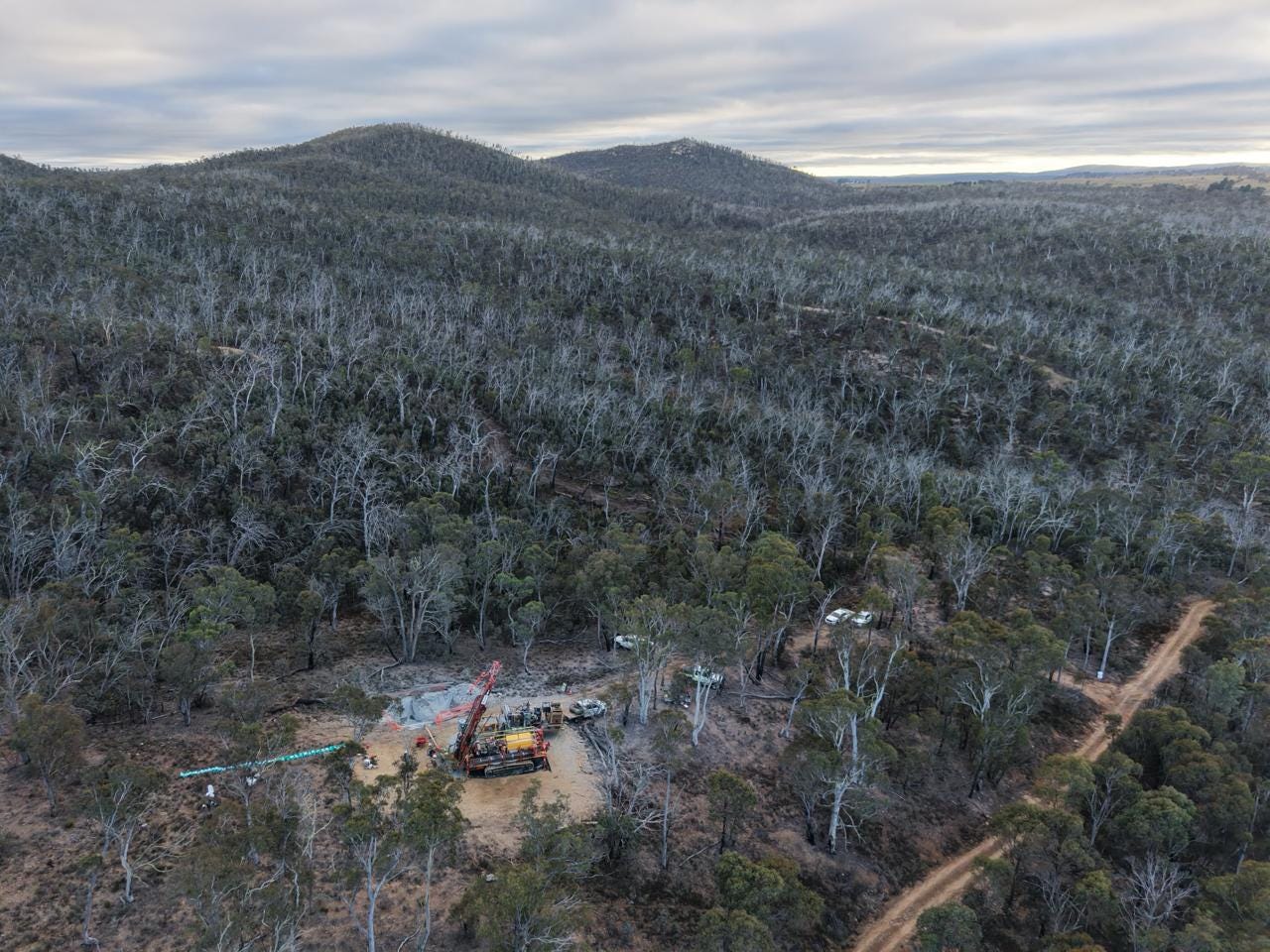
That includes the silver-lead-copper intercept and the short, rich zinc slug from the historic work. Those hits have to go somewhere, and the modern geophysics is pointing at where.
Assays from the first three holes are due back over the coming weeks. 10X will keep updating as the lab results land and the rest of the holes get drilled, so the newsflow stays steady from here.
Bottom line
Two of three hit sulphides, and the best of them landed on the geology that sits next to the old high-grade results. For a maiden program drilling blind into ground nobody had tested with modern gear, that's a solid first swing.
At 18c and a $7 million market cap, you’re paying explorer prices for a project already showing metal in the core, five more holes to come and a stack of historic high-grade hits sitting underneath.
The assays turn this from promising to proven, and they're only weeks away. That's what we're watching.