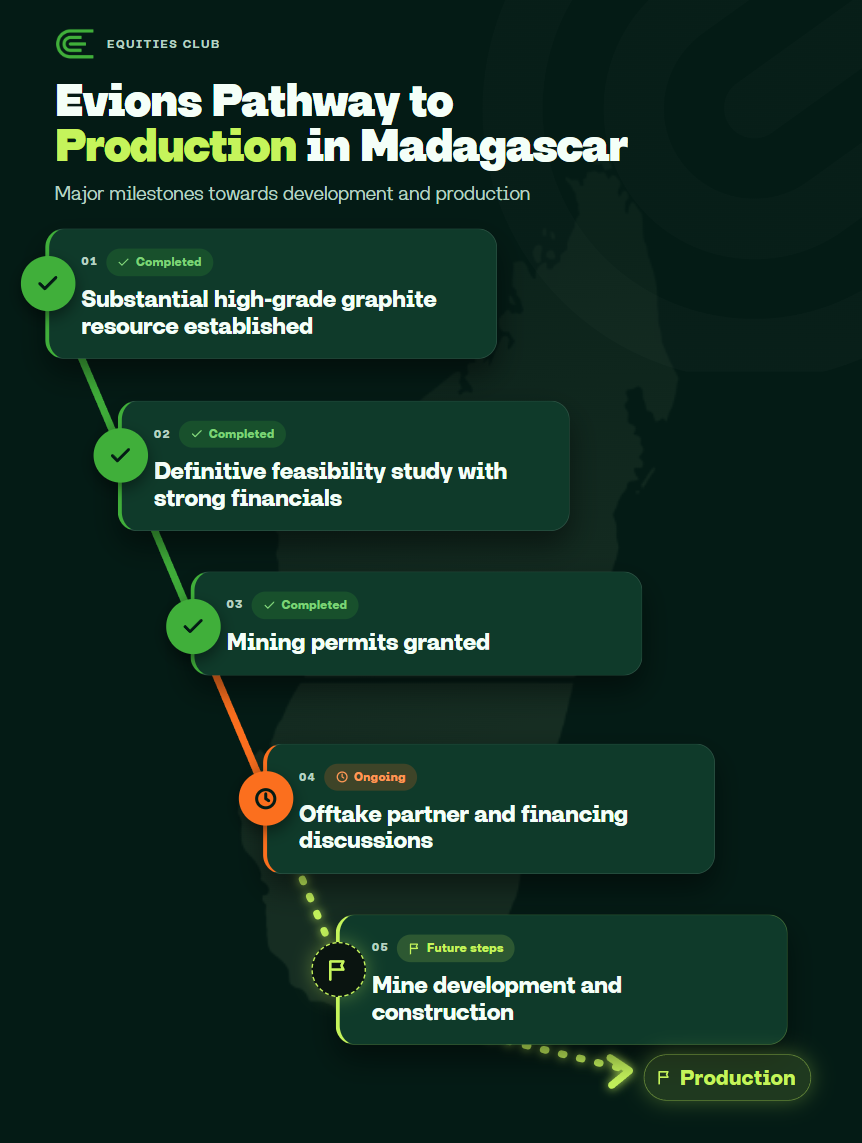
A month after Madagascar handed over the mining permits, Evion Group (ASX: EVG) has landed the next piece.
A German graphite house has signed a binding deal to buy at least 10,000 tonnes of flake graphite concentrate a year from the Maniry project, for five years from first production.
At the USD $1,448/t average graphite basket price used in Maniry’s DFS, that minimum commitment equates to roughly USD $72 million in gross sales over the initial five-year term.
Roughly a quarter of everything Stage 1 will dig up, now sold before the first sod is turned
Every tonne of it sells at the market price or at a price covering Maniry's production costs and bank payments, whichever is higher.
Evion has spent more than a year in meetings with Europe’s lenders, and we’d wager most of them ended with some version of the same polite brush-off. Lovely project, call us when someone’s agreed to buy the graphite.
Someone just has.
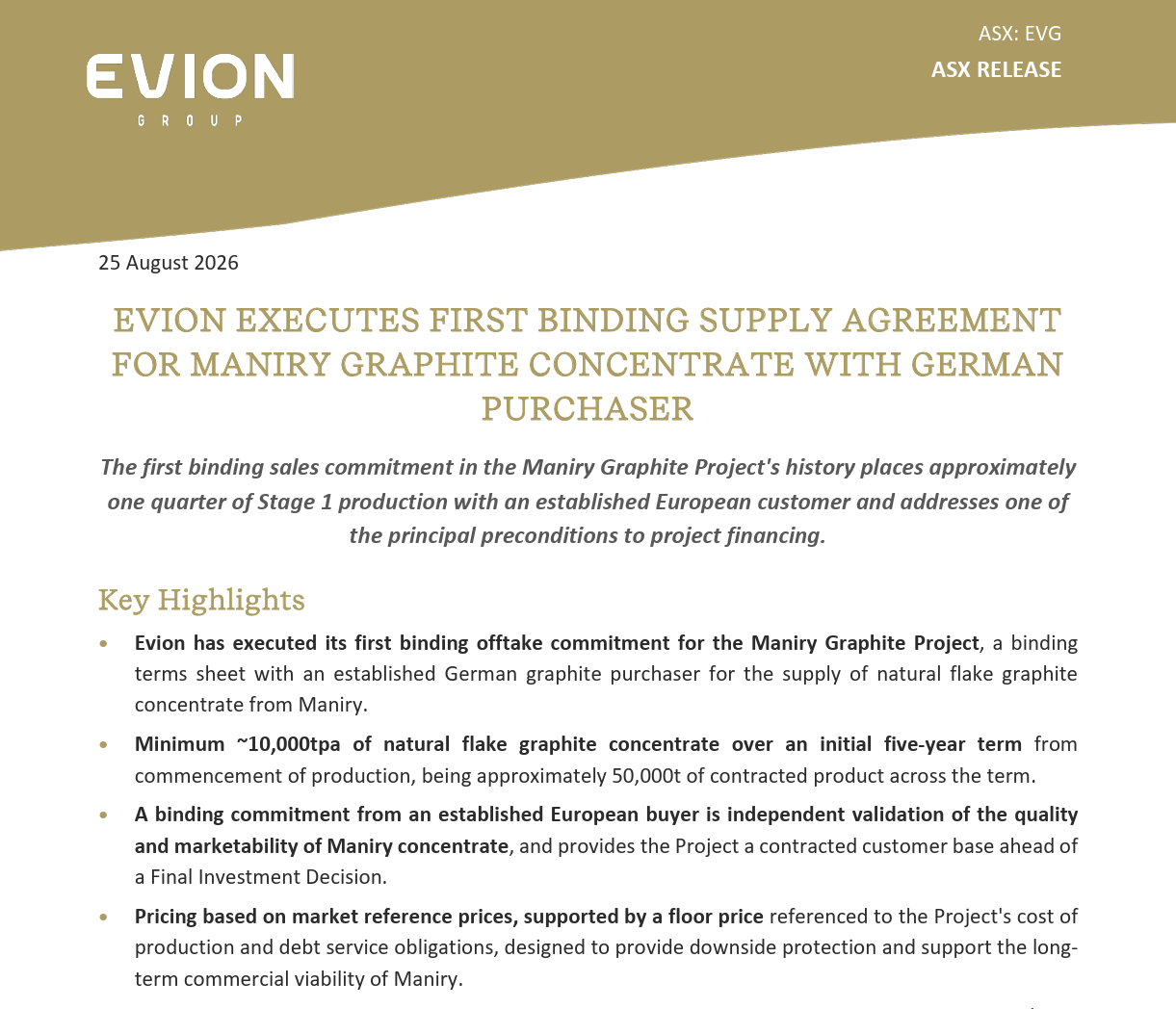
EVG isn't naming the buyer, what they can say is the buyer an established German outfit that has supplied and processed natural flake graphite across Europe and beyond for a long time.
Non-Chinese flake graphite is scarce, and the buyers who need it are locking it in years early.
EVG trades at 2.1 cents, which puts the whole company at around $18 million, a $13 mil EV when you include the near $5 mil cash position. Against what has been signed in the last month, the market has some catching up to do.
The Maniry Project
Maniry is a flake graphite deposit in the far south of Madagascar, 100% owned by EVG. The mining permits arrived in July, nearly four years after the paperwork went in, making Maniry the first critical minerals project approved under the country’s new mining code.
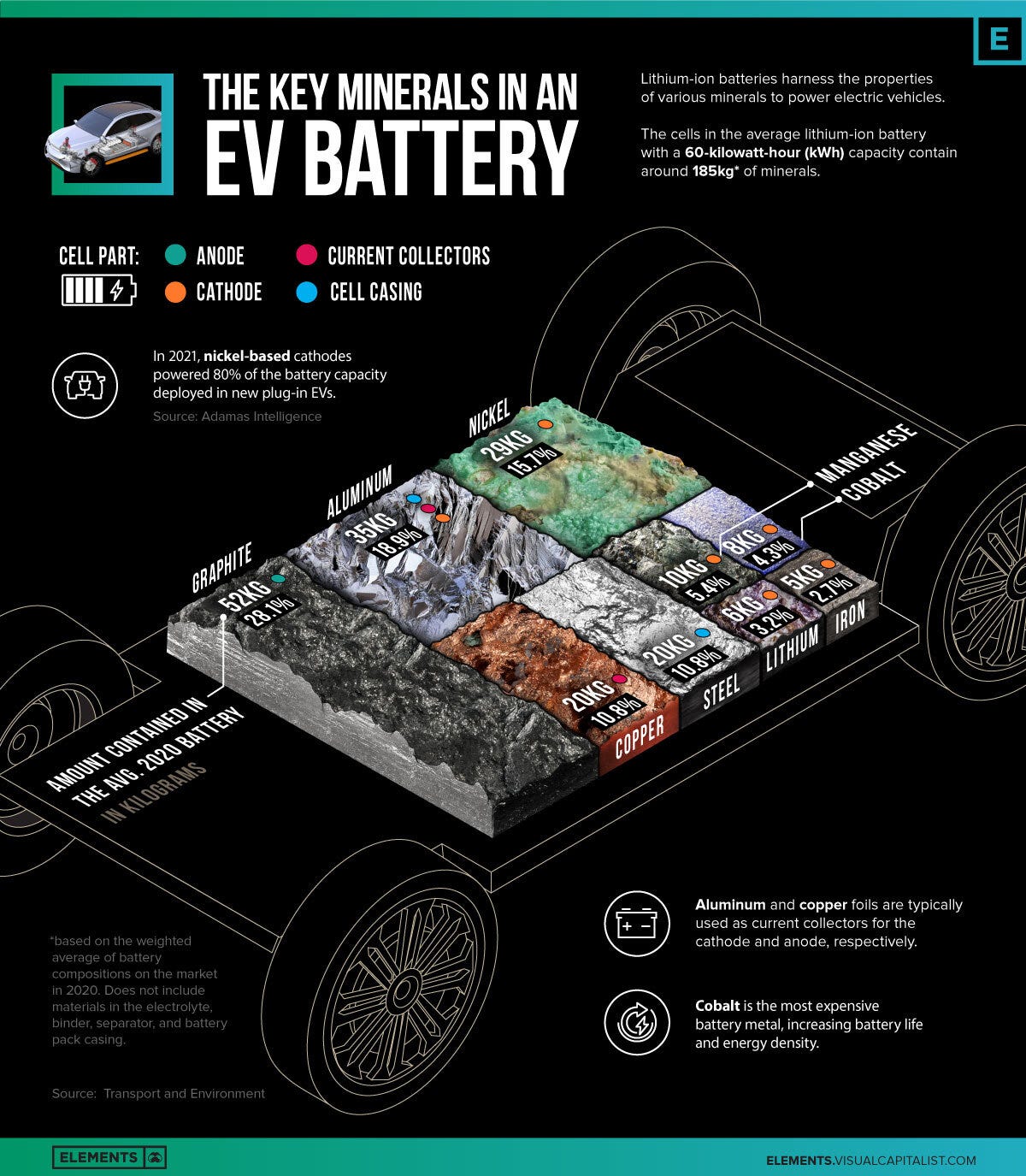
Graphite is the anode, the side of the battery that holds the charge while your EV sits on the driveway. Each electric car carries 50 to 55 kilograms of it, against eight to 13 kilograms of lithium.
Most graphite is synthetic, cooked from petroleum coke at 3,000 degrees on Chinese coal power, which is a strange way to build a clean car.
Natural flake graphite comes out of the ground with a fraction of the carbon footprint, and European carmakers under orders from Brussels to cut battery emissions are paying up for it. Maniry is the natural kind.
The deposit holds 40 million tonnes of ore at 6.5% graphite, with a reserve of 16.2 million tonnes at 6.58% inside it, which is the part proven to be mineable at a profit.
The feasibility study laid out a 21-year mine producing around 39,000 tonnes of concentrate a year in Stage 1, stepping up to 56,000 tonnes from the fourth year. Stage 1 costs US$79.2 million to build and the expansion another US$24.6 million. The study values all of it at US$204.8 million after tax.
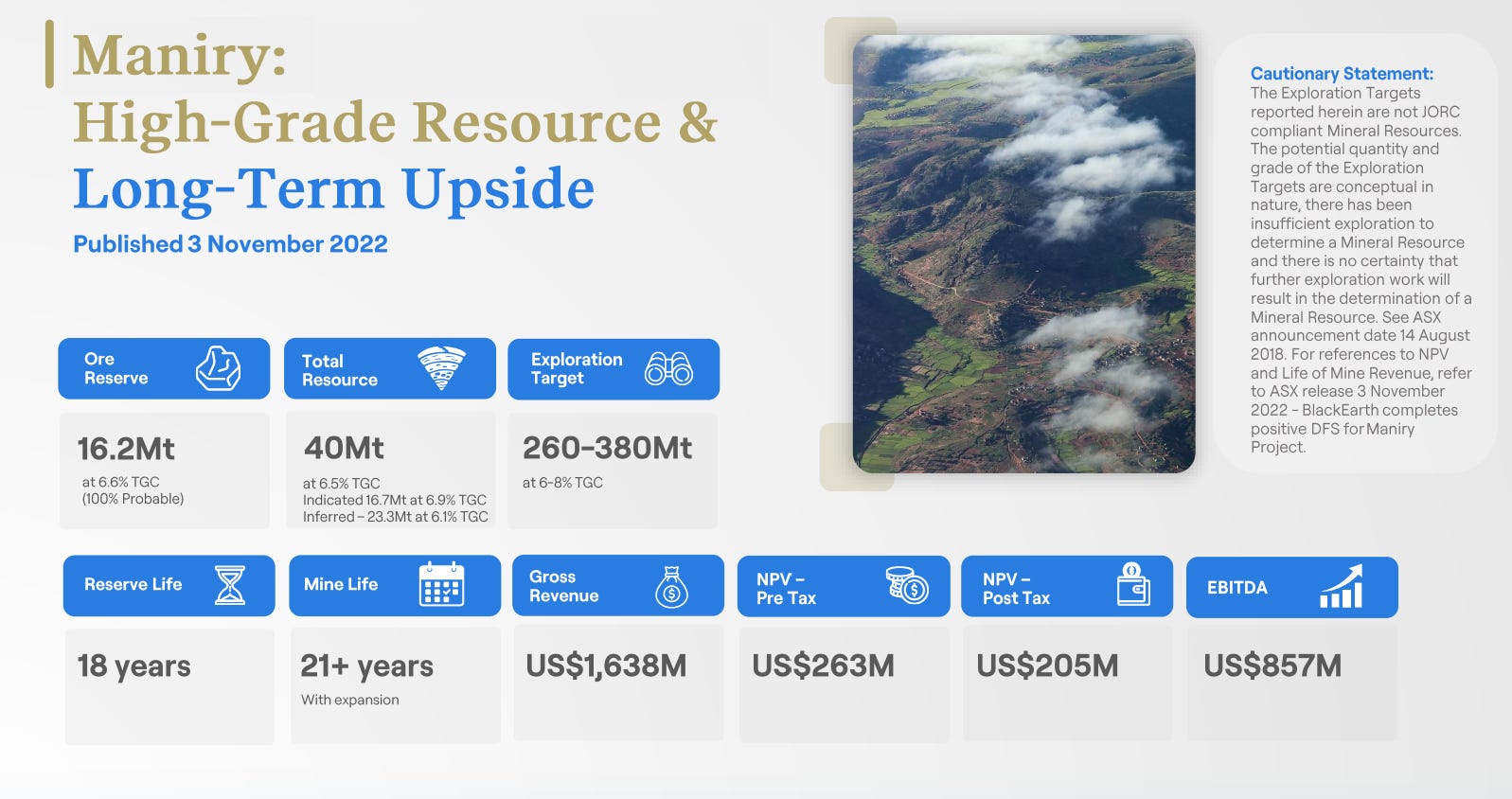
The study put a 3.8-year payback on the project, meaning the mine earns back its build cost in under four years and spends the next 17 making money.
Put those figures against EVG’s $18 million market cap, or a $13 mil EV when you include the $5 mil cash, and the gap is wide enough to drive an EV truck through.

What the Germans Signed
Each shipment is sold at the greater of two numbers.
The first is the published market price for comparable concentrate, delivered to German ports. The second is a floor pegged to what it costs Maniry to dig the graphite up and pay the bank.
If Chinese spot rips, EVG gets the market price. If Beijing floods the market again, the floor still covers the bills. The house never loses.
The long-form contract is due within six months. Graphite only ships once the board votes to build the mine, and that vote waits on the funding. The build conditions carry no deadline, which is standard for a deal signed this far ahead of first production.
Managing director David Round:
“This is the first binding sales commitment in Maniry's history, and it is the milestone that changes the conversation about this project. We now have secured tenure, European Union strategic recognition and a contracted European customer.”
Around three quarters of Stage 1 is still unsold, on purpose. Round says talks with other customers and strategic partners are continuing (a strategic partner being a customer who invests in the mine as well as buying from it), and they now negotiate against a signed German contract.
The Graphite Market
China mines around 80% of the world's natural graphite and controls close to 98% of the anode market once synthetic is counted.
Beijing restricted exports at the end of 2023 and the West panicked about supply, before Beijing flooded the market anyway. Prices fell and every Western graphite project hunting for finance stalled.
The controls on shipments to the US are suspended until November 27 this year, and nobody knows what Beijing does after that. Probably including Beijing.
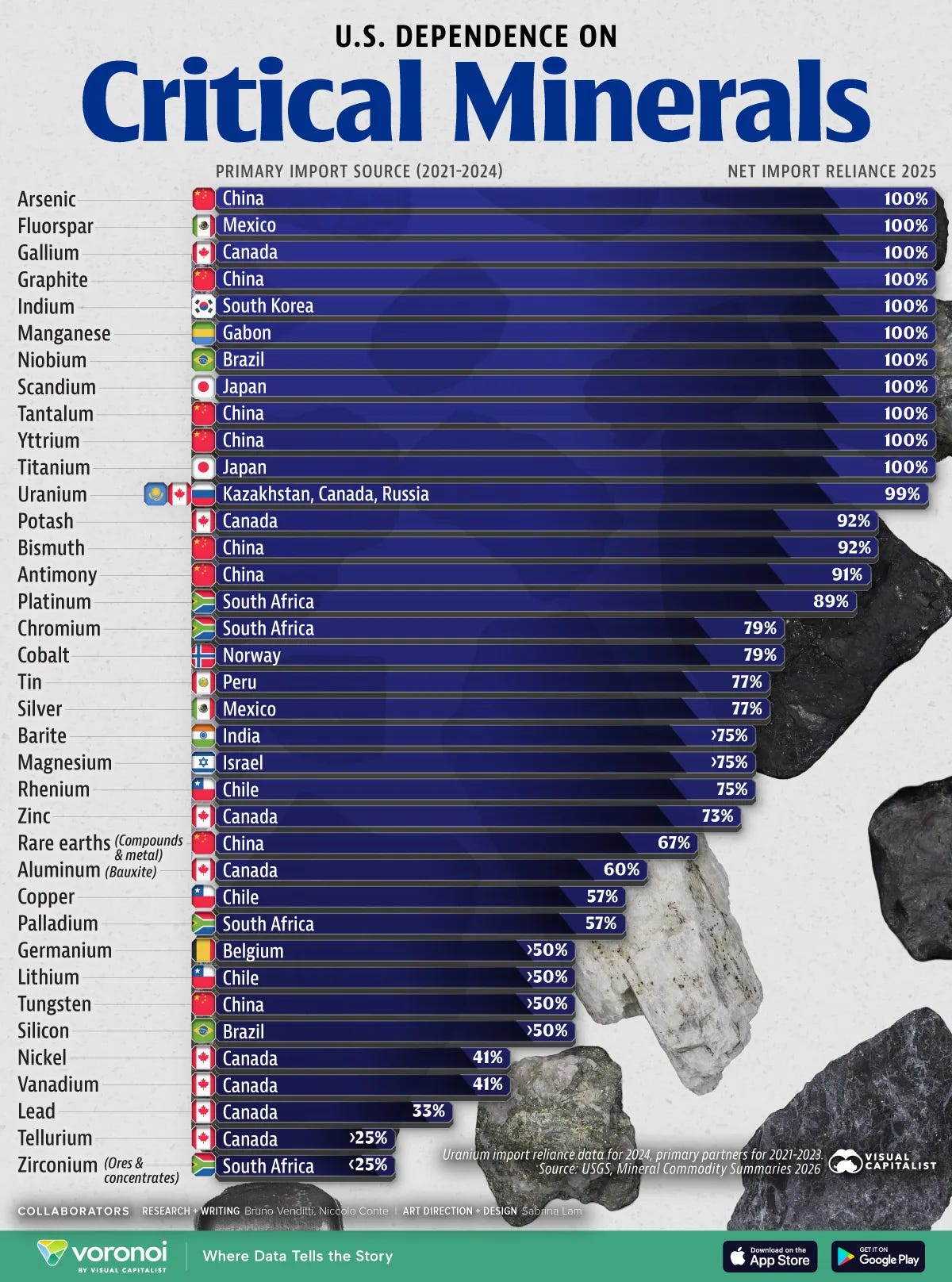
That whipsaw is what Maniry's floor price was built for. The producer gets repaid whatever the spot price is doing.
Europe has kept hunting for flake that never touched China, and Brussels named Maniry a strategic project under its Critical Raw Materials Act in June 2025, the only graphite project in Africa on the list. That status brings a seat at the table with the European Investment Bank and KfW, the lending arms of the EU and the German government.
Building a Mine in Madagascar
Madagascar has dug graphite for more than a century and digs more of it than anywhere on earth (bar China).
Rio Tinto and Sumitomo run the island’s two biggest mines and pay around a quarter of the government’s tax take between them, so the state has every reason to keep its miners happy.
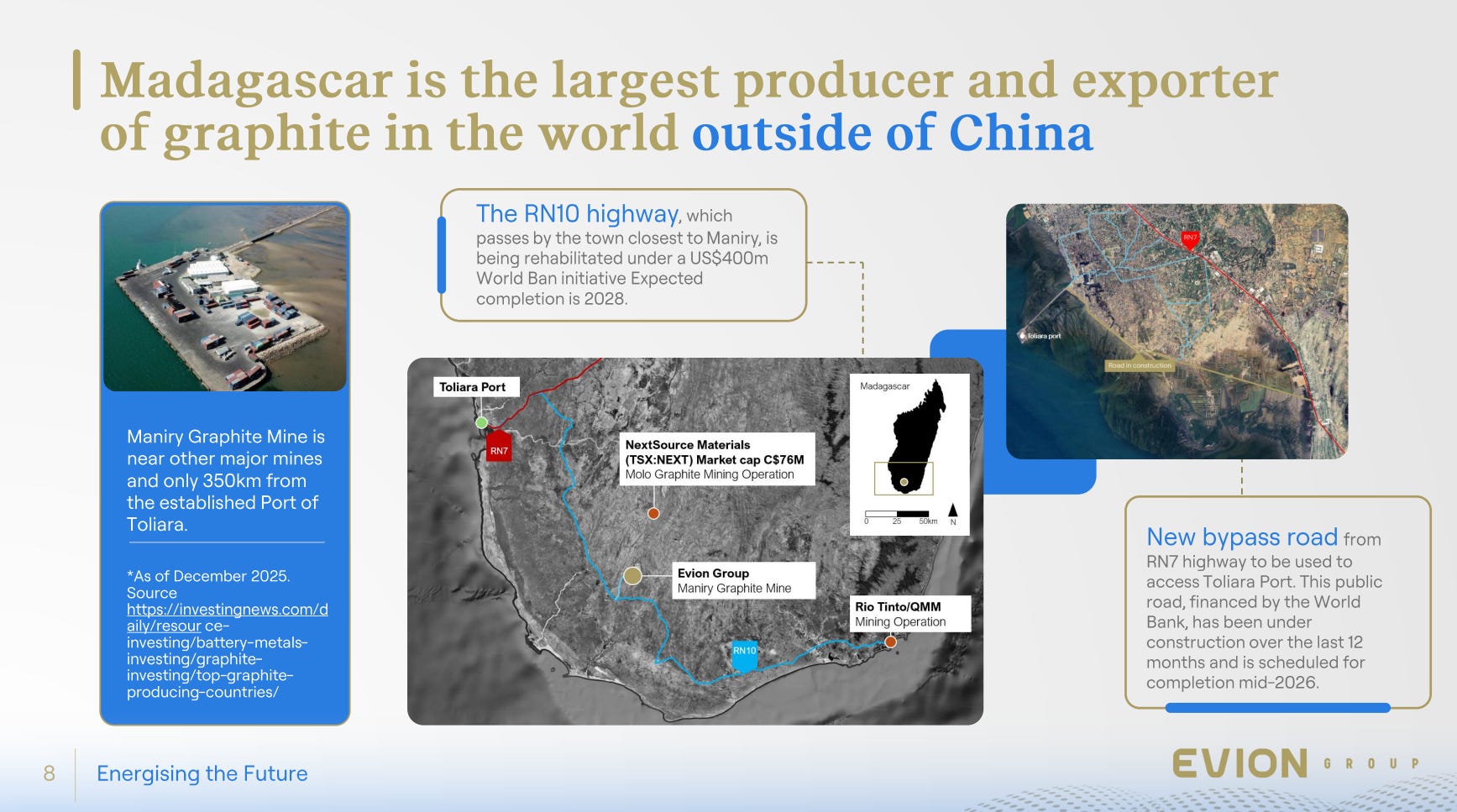
The new government approved a foreign-owned graphite mine within nine months of taking office, under a mining code that lets EVG own Maniry outright and lock the tax regime in five-year blocks.
The Financing Path
A mine this size gets built with bank debt, and a bank lending against a hole in the ground wants to know who's buying what comes out of it.
The Germans just answered.
The feasibility study has been done since 2022. The permits landed in July. The offtake was the piece the lenders kept asking for, and the next thing to land is a loan offer. After that comes a final investment decision, and after that, a 21-year mine.
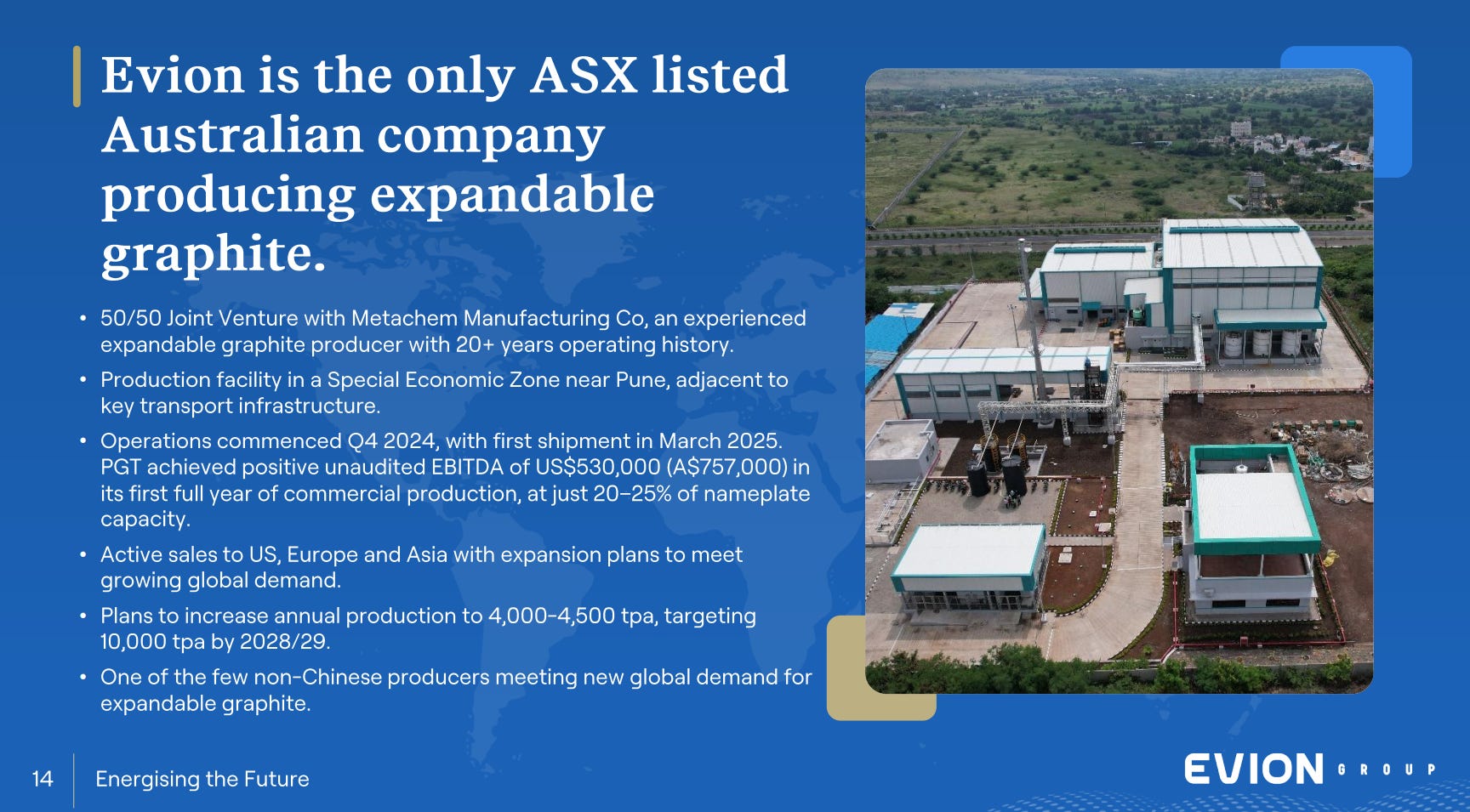
There's a buyer even closer to home too. Evion's half-owned Panthera joint venture in India has been making a profit selling expandable graphite into the US and Europe since early 2025.
Expandable graphite is flake treated to swell under heat, the material that seals a fire door shut, and it fetches more than double the price of raw concentrate. Panthera can take Maniry's flake as feedstock, so EVG half-owns one of its own future customers.
What we’re watching
The long-form contract is due within six months, so the word “definitive” turning up in an announcement before February is the first thing on the list.
A second buyer is next, and Round says those talks are live.
The big one is a funding announcement from the EIB or KfW. A number or a date on the debt package gives Maniry a build date, and at 2.1 cents the market is still pricing EVG as if the mine may never get built.