


For 31 years we’ve held one position that’s never paid out once.
Buying CBA shares at $9 is what sensible people did with their money in 1995. We’re small-cap people and we like backing the underdog, so we bought a Freo Dockers membership and left it on direct debit.
CBA closed above $150 on Friday, but for a few fleeting moments yesterday we thought we’d made the better investment.
Freo went 17 points up with four minutes to go and the bells tolled for Wharfie Time. Tears welled in the eyes of grown men who had never seen their side win a flag.
Then Brisbane kicked four goals in four minutes, and the same men cried again.
The small-cap end had a better week than we did. An Israeli defence prime handed our drone company a contract, MRD found richer dirt outside its resource, copper set a record the day before the world’s biggest copper mine shut, and a chairman bought his own stock under 3c and watched it triple.
What caught our eye this week:
KTK lands an Israeli defence prime
MRD finds scandium 8km past the resource line
Rare earths on the table at the Trump-Xi summit
Copper hits a record and Escondida shuts
Micro-X triples after the chairman buys in
Italy votes for nuclear as POW gets to work
Saudi pays a quarter of the drilling bill
Paradigm's knee trial fails at half-time
AMD hits a trillion and Firmus heads for the ASX
KTK Lands an Israeli Defence Prime
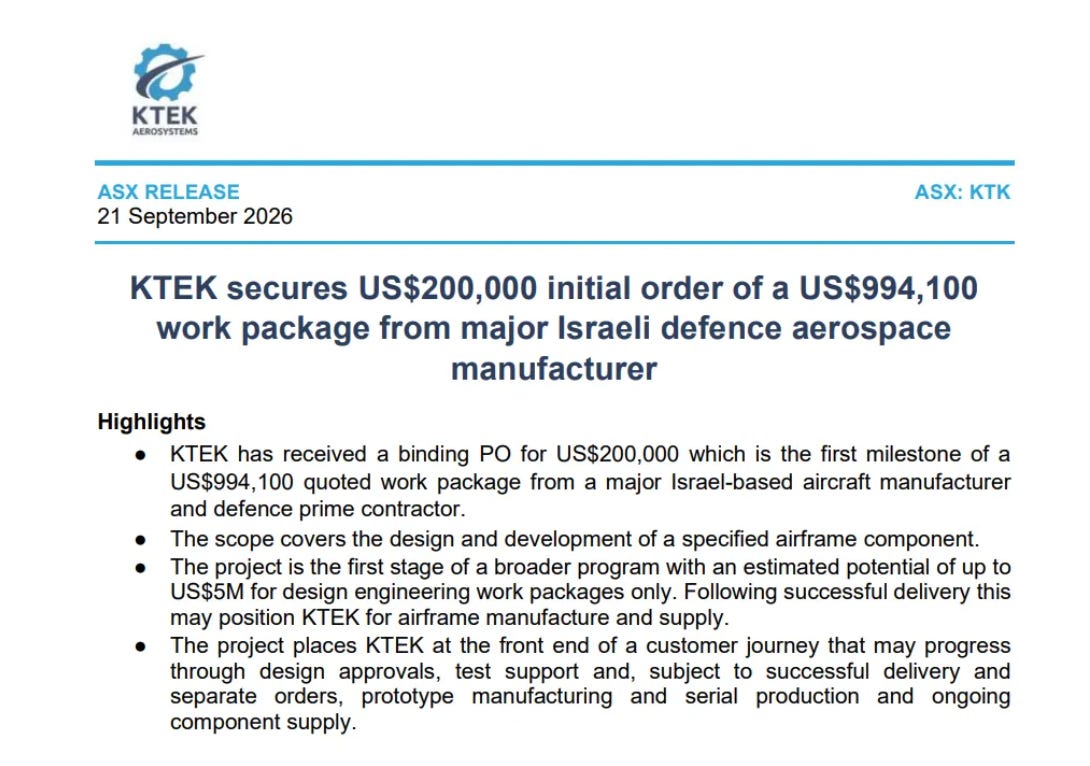
Ukraine sent more than 1,000 drones into Russia last weekend, and on Monday morning one of Israel’s three big defence contractors placed an order with our drone company KTEK Aerosystems (ASX: KTK).
KTK builds the wings and body sections that go inside military drones, and the prime has ordered the drawings for a new part. The order is binding and worth US$200,000, the first payment on a US$994,100 design package.
The package covers the drawings and the stress work to prove on paper the part holds together before anyone builds one. Prototypes and production come as separate orders if the design gets through, and KTK puts the design work across the wider program at around US$5 million.
The customer’s name stays secret for national security reasons, so we spent Monday going through the annual reports of Israel’s defence companies to narrow down the list. Three fit the description and each turns over about US$7 billion a year.

Founder Dekel Keisar ran UAV structural engineering at Israel Aerospace Industries before he started KTK, and he still owns 36% of it.
KTK finished last week at 17c. The stock opened on the news Monday and hit 24c before sellers pushed it back down.
US$200,000 is small money (we said as much on Monday). We’re backing KTK on who’s paying it, and those three companies finished last year sitting on US$80 billion of orders they haven’t built yet.
KTK turned over A$5.5 million last year, so the US$5 million design program would be bigger than the whole business, and the order to build the part comes after that. At 17.2c the stock costs 0.2c more than it did before the prime turned up, and the airframes held up by the war since March should start shipping again in the next fortnight.
MRD Finds Scandium Past the Resource Line
Drillers left thousands of bags of crushed rock behind at Grass Patch over the years, and our critical minerals explorer Mount Ridley Mines (ASX: MRD) has been sending them back to the lab to test for scandium.
Grass Patch is MRD’s clay deposit 25km north of Esperance, and it already holds the world’s biggest reported scandium resource at 946 million tonnes.
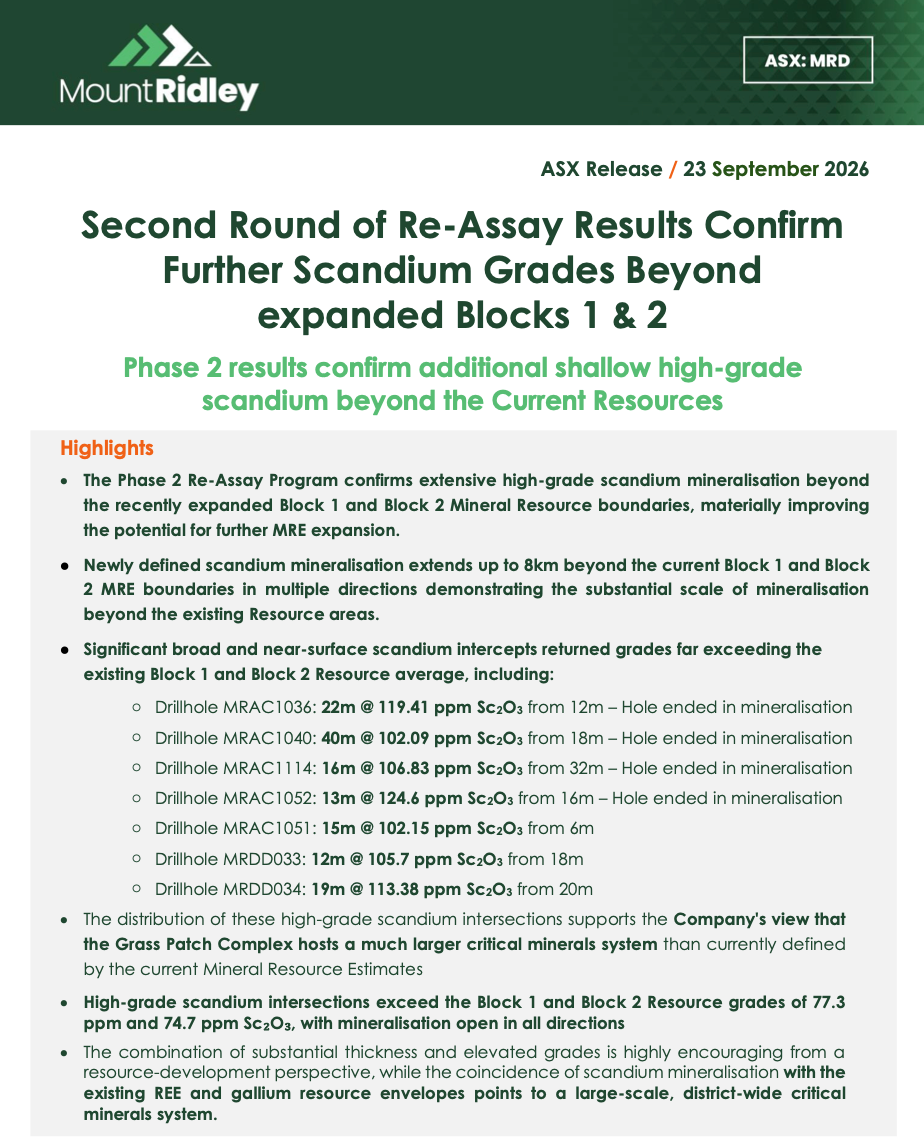
The resource only counts the ground MRD has drilled closely enough to sign off on, and the second batch of re-assays came from old holes outside it.
The scandium keeps going. MRD found it up to 8km past the resource, at better grades than the ground it has already counted.
The best hole ran 22m at 119ppm scandium oxide from 12m down, against resource grades of about 75 to 77ppm. (ppm means parts per million, so 119ppm is 119 grams in every tonne of dirt.)
Another hole went 40m at 102ppm from 18m, and the drillers stopped before they reached the bottom of the scandium.
Selectro is the part of MRD that has us most excited. It’s the leach Chris Larder brought to MRD before he became CTO, and last week his team recovered 91.8% of the scandium in their third test on half the chemicals.
Richer dirt through Selectro means more scandium out of every tonne MRD would dig.
Managing director Allister Caird says the re-assay program is only at the midway point. The Phase 2 numbers go into the next resource upgrade, and 2,800 more samples went to the lab on Monday.
When we wrote up Test 3, the lab was floating Grass Patch material to strip out clay before the leach. The bulk sample comes after it, running a much bigger lump of Grass Patch through the half-dose recipe to show whether the lab numbers hold at scale.
Those results also feed the demonstration plant costings we wrote about in August.
MRD closed the week at 4.5c. We bought it at 2.4c in March for the size of the dirt, Chris Larder has since given us a second reason to hold it, and he’s still finding out how little chemical Selectro needs.
Rare Earths at the Trump-Xi Summit
Xi Jinping landed in Washington on Wednesday for his first state visit in 11 years, and both sides arrived ready to argue about magnets.
China’s customs figures came out on Sunday and showed its rare earth magnet shipments to the US fell 20% in August to 512 tonnes.
Those magnets go into everything from electric car motors to guided missiles, and American officials have complained that Beijing hasn’t held up its end of last year’s trade truce.
On Wednesday night, Treasury Secretary Scott Bessent said the two sides had extended the truce by two months to January 10. The truce keeps US tariffs lower and holds back China’s controls on rare earth and critical mineral exports.
The bigger date is January 1, 2027, and no summit moves it. From that day, US defence contractors can’t supply the Pentagon with systems that have Chinese rare earth material anywhere in the magnet, from the mine to the finished part.
China’s gallium ban runs to a different date. Beijing banned gallium exports to the US in December 2024, then suspended the ban until late November this year, and gallium goes into computer chips and military radar.
Buyers in Rotterdam were paying about US$2,100 a kilo for gallium earlier this year. Inside China it trades for under US$250.
MRD’s Grass Patch made the news this week for scandium, and the same clay holds heavy rare earths and gallium.
Heavy rare earths like dysprosium and terbium keep magnets working at high temperatures, and defence contractors will need them from outside China come January 1st.
MRD boss Allister Caird said this week that the size of MRD’s resource puts the company “on the radar of offtakers, government departments, strategic capital and defence primes”. The Pentagon’s deadline is three months away.
Copper Climbs to a Record as Escondida Shuts
Copper closed at a record US$6.92 a pound in New York on Tuesday night, its sixth rise in a row and 7.9% above where it was six trading days earlier.
Copper trades in two locations. New York is where Tuesday’s record was set, and London, where most miners price their sales, sat around US$14,700 a tonne this week, a touch under the US$14,875 record it set on September 10.
Chinese manufacturers bought heavily before China shuts for the Mid-Autumn Festival this week and National Day in early October, and they paid the biggest premium to bring copper into the country in nearly four years.
On Wednesday BHP shut down Escondida in Chile, the world’s biggest copper mine, after a worker was killed doing maintenance. BHP expected Escondida to produce up to 1.28 million tonnes this year, and it hasn’t said when the mine will restart.

In the same corner of Chile, workers at Antofagasta’s Centinela mine vote this weekend on whether to strike.
Two weeks ago we wrote that the world’s copper mines went backwards in the first half of the year and the spare metal in the London and Shanghai warehouses was down 40% and 85%. None of that has improved, and now the biggest mine of the lot is shut.
A record price makes every tonne an explorer finds worth more to whoever eventually digs it up, and BHP, Rio Tinto and the rest of the big miners mostly buy their next mines from explorers. A price like this puts more cash in their pockets to go shopping with.
We called FMR Resources (ASX: FMR) at 16c in 2025 when its Chilean copper projects went into the company, and it hit an all-time high of 60c this month.
This week a much smaller one moved on holes drilled decades ago. Mamba Exploration (ASX: M24) went back through the old drilling at Meeka East, its copper-gold ground in WA’s Murchison, and found 165 copper hits in 47 holes across a 3km corridor.
The best of them ran 26m at 1% copper and 0.33 grams a tonne of gold from 24m down, and a shallow one hit 10m at 1.3% copper from 2m. Meeka East sits 30km down the same belt of rock from Nanadie, the discovery that made Solstice Minerals a $500 million company.
Mamba ran from 2.1c to 3.6c and closed the week at about a $13 million market cap. It’s planning mapping and soil sampling first, then a drill program to test the gap between the two prospects, which nobody has ever drilled.
At a record copper price a copper explorer doesn’t need much of a hit to move.

Micro-X Triples After the Chairman Buys In
An Adelaide company that builds X-ray machines light enough to fit in a Flying Doctor plane was the biggest mover under $100 million on the ASX this week, and the news that moved it was its own chairman buying shares.
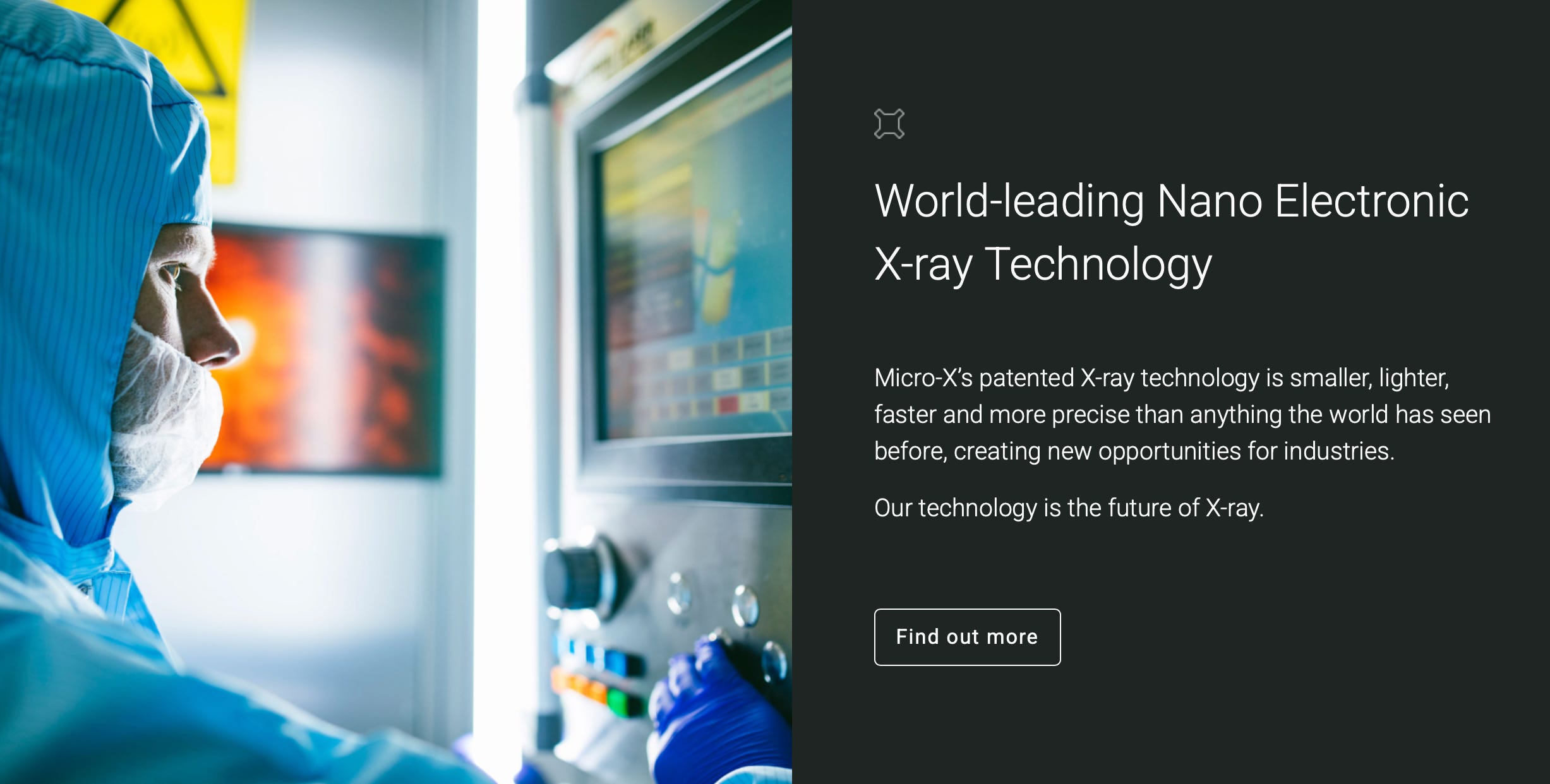
Micro-X (ASX: MX1) makes X-ray and CT scanners around a carbon nanotube emitter, which does the job of the big glass tube in a hospital machine at a fraction of the weight. Its brain scanner is built to spot a stroke in the ambulance, where every minute the patient waits costs brain cells.
The stock had been sliding all year. Perennial Value Management held 6.79% in July and sold it down until it dropped off the substantial holder list on September 3, and by last Friday MX1 was 1.8c.
Chairman Patrick O’Brien has been buying the whole way down. He paid 7c a share in May last year and 8c in the placement in April, and this week his companies bought just over 1.36 million shares on market between 2.2c and 2.9c, roughly $35,000 worth.
By Wednesday the stock hit 5.4c, the ASX sent a speeding ticket, and Micro-X pointed to the chairman’s buying and Perennial’s selling. It closed the week at 4.5c and a $31 million market cap.
Underneath it sits a contract with the US Department of Homeland Security to design the next airport checkpoint, with miniature CT baggage scanners and passengers screening themselves. Micro-X says the contract can pay up to $31.7 million in milestones, and on Monday morning the whole company was worth less than half of that.
A chairman who paid 7c, then 8c, then 2.8c for the same stock is either stubborn or right. We like directors who back their company with their own money, and this week the buyers followed him in.
Italy Goes Nuclear as POW Gets to Work
Italy’s Senate voted 81 to 51 on Wednesday to bring back nuclear power, nearly 40 years after Italians turned their backs on it following Chernobyl.
Belgium scrapped its nuclear phase-out law last year, and Switzerland’s upper house voted in March to lift its ban on new plants. Denmark is studying an end to its own 40-year ban.
Australia still bans nuclear power under federal law, while sitting on more known uranium than any other country (we dig it up and ship it to everyone else’s reactors).
Uranium sat flat this week at just under US$90 a pound.
On Wednesday the US announced plans for its Export-Import Bank to back up to US$7 billion of mining and energy projects in Argentina.

Argentina is where our uranium explorer Powerhaus Uranium (ASX: POW) is hunting. POW is looking for roll fronts, which are long bands of uranium sitting in sandstone underground.
Kazakhstan produces around 40% of the world’s uranium from roll fronts, and it does it without digging a pit. The miners pump a solution down one well, let it dissolve the uranium, and draw it back up another. POW’s ground in Argentina has the same sandstone.
POW CEO Siobhan Lancaster’s team started fieldwork this month at Malbec in Chubut province, where grab samples at surface have run up to 771ppm uranium oxide. (Grab samples are hand-picked rocks and aren’t representative of the grade across the project.)
POW plans 20 to 30 drill holes starting in October or November once permits land, with results expected from November.
Lancaster found and sold a uranium discovery at 92 Energy before this one, and she’s about to put the first rig POW has ever owned on the ground.
We backed POW at its 20c float in August because we want to own the junior before the drill results, and with Europe voting reactors back on and Washington backing Argentine mines, we think a uranium discovery in Chubut would get noticed quickly. News from the field could be close too.

Saudi's Mining Push Brings Small-Caps to the Desert
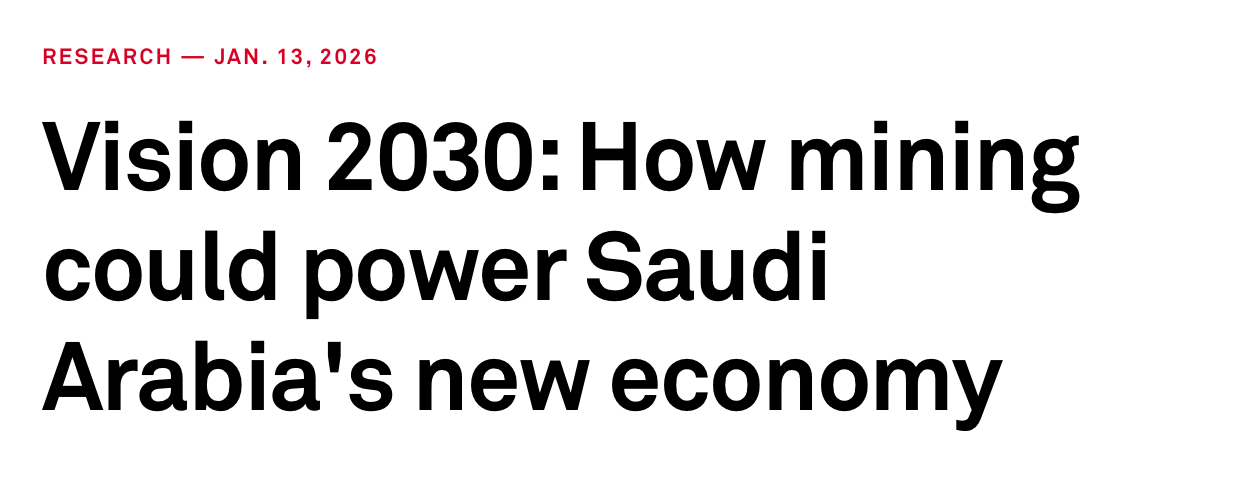
Saudi Arabia’s government puts the value of the minerals under its desert at US$2.5 trillion, nearly double the estimate it gave in 2016.
Riyadh wants mining to become the third pillar of its economy alongside oil and manufacturing, and it’s paying explorers to come and look. The government’s exploration program covers up to 25% of an explorer’s drilling and lab costs, and spending on exploration in the Kingdom went from US$54.6 million to more than US$280 million in 2024.
The government has handed out more than 33,000 square kilometres of ground through tender rounds. Its ninth round, awarded in January, went to 24 companies.
Gina Rinehart’s Hancock Prospecting formed a joint venture with Saudi state miner Ma’aden in December and picked up five exploration licences in a Saudi gold belt. Rinehart said she was excited by the Kingdom’s pro-mining policies.
China’s Zijin and India’s Vedanta won licences in the Jabal Sayid copper belt last year.
Peako Minerals (ASX: PKO) valued at $36 million completed its purchase of six gold projects covering 862 square kilometres this week. Its flagship sits next door to the 2-million-ounce Sukhaybarat gold mine.
Sierra Nevada Gold (ASX: SNX) won its As Safra copper-gold project in a government tender last December and drilled it for the first time this year. In August it raised $12.3 million for a 25,000m second round.
Three SNX rigs should be turning by September 30, with first assays due in November. The company is worth about $68 million.
A government that pays a quarter of your drilling bill is a rare thing for a junior explorer, and Peako and SNX are two of the first ASX names to take it up. We’ve been spending time on the Kingdom ourselves and expect a few more to follow them into the desert.
Paradigm Fails its Halfway Test
Paradigm Biopharmaceuticals (ASX: PAR) has spent years and a lot of shareholder money on one drug for sore knees, and this week the trial fell over at half-time.
Zilosul is an injection meant to ease the pain of knee osteoarthritis. Paradigm’s Phase 3 trial put 538 patients on the drug or a placebo.
The trial rules gave an independent board a look at the first half of the results to decide whether the study was worth finishing.
The shares had run 40% in the month before the halt. Paradigm went into a trading halt on Monday morning and cancelled the investor lunch it had booked for the result.
On Wednesday it said the interim numbers didn’t reach the threshold the study needed to continue.
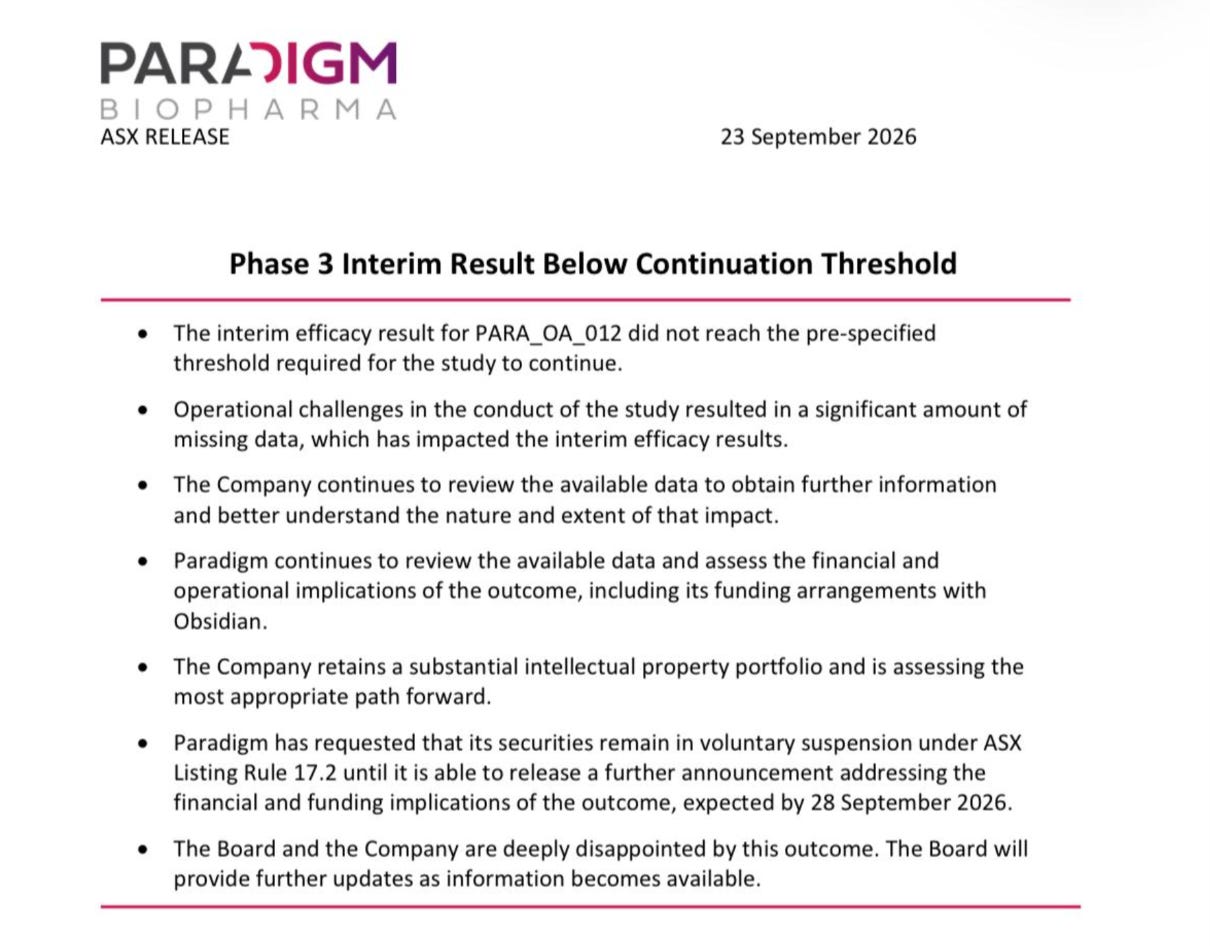
The company blames a large amount of missing data on how the trial was run, and it’s going back through the numbers to work out what happened.
On Thursday it handed back US$2 million it had drawn from its note holder Obsidian a fortnight earlier. The stock last traded at 24c, about $140 million of market cap, and it stays suspended until Paradigm tells the market by Monday how much cash it has left.
Six years ago, with the same drug and no Phase 3 result, Paradigm was worth $334 million at $1.69 a share.
We like biotech. When a drug works the payoff is enormous, and when it doesn’t you get a week like Paradigm’s. Its holders took that risk with their eyes open, and it went the wrong way.
AMD Hits a Trillion as Firmus Heads for the ASX
AMD shares jumped almost 10% on Monday to a record, taking the chipmaker past US$1 trillion in market value for the first time. Only three other US chipmakers have got there before it, and Nvidia is still the biggest at about US$5.4 trillion.
A US index of chip stocks, including Micron and Nvidia, rose for a sixth straight session on Tuesday.
In China, Alibaba unveiled a new AI chip it says triples the performance of its last one. It plans to take its data centres past 20 gigawatts by 2032, which is roughly the output of 20 big power stations.
Micron reports its results on September 30.
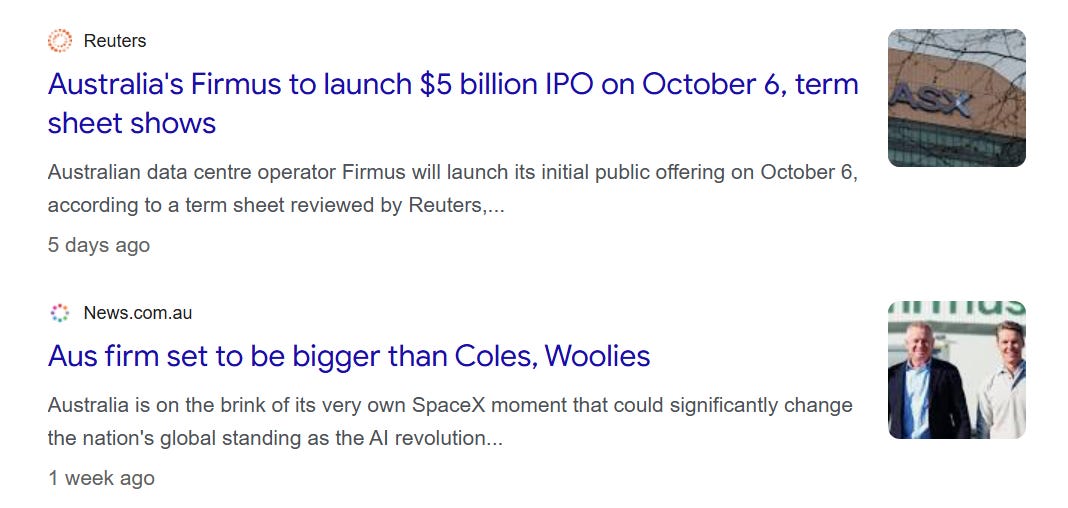
Closer to home, data centre operator Firmus is chasing about $5 billion in what would be the second-biggest IPO in Australian history, behind Telstra in 1997. Blackstone backs it, Nvidia and OpenAI are customers, and it’s due to list in late October.
On Tuesday, Reserve Bank governor Michele Bullock told a Sydney audience that AI could be a bubble. “Some people think it’s a bubble, some people don’t,” she said, and the RBA is keeping an eye on it.
Every chip going into those data centres is a stack of copper wires, and the wires can only shrink as far as the wrapping around them allows. Our graphene company Adisyn (ASX: AI1) grows the wrapping one nanometre thick, at a temperature a chip factory can live with.
Adisyn was quiet this week in its first week inside the All Ordinaries. We added it at 6.8c in April, and a week of trillion-dollar chipmakers and a $5 billion data centre float is a reminder of how much money is chasing better chips.
What We’re Watching Next Week
The Reserve Bank announces its rate decision at 2:30pm on Tuesday. All four big banks expect a 0.25% rise to 4.60%, which would be the fourth rise this year.
If you’ve got a mortgage, a rise that size adds about $15 a month for every $100,000 you owe. Small explorers feel it too, because most of them raise money every few months and every placement gets priced against what the bank is paying on a term deposit.
BHP still hasn’t said when Escondida will restart. Every week the world’s biggest copper mine sits idle keeps the pressure on the copper price, and explorers with copper in the ground are the ones who stand to gain.
We’re out hunting for our next small-cap copper pick to follow FMR. We want an explorer with copper already in the drill holes and the cash to keep drilling, and a market cap small enough that a discovery moves the share price.
Powerhaus Uranium’s team has been in the field at Malbec since mid-September, and we’re expecting an update soon.
Gold drilling is on our radar too, and we hope to have more to share on the gold side of the portfolio soon.
If you want a piece of Firmus, retail applications for the float open on October 12.
Thanks for the distraction from the footy result. We’ll go back to staring into the abyss now.
Till next week.