


In the late 1800s, miners in the NSW Snowy Monaro struck a rich silver deposit from shallow shafts. The main shaft later collapsed, and the mine has sat untouched since 1890. Until now.
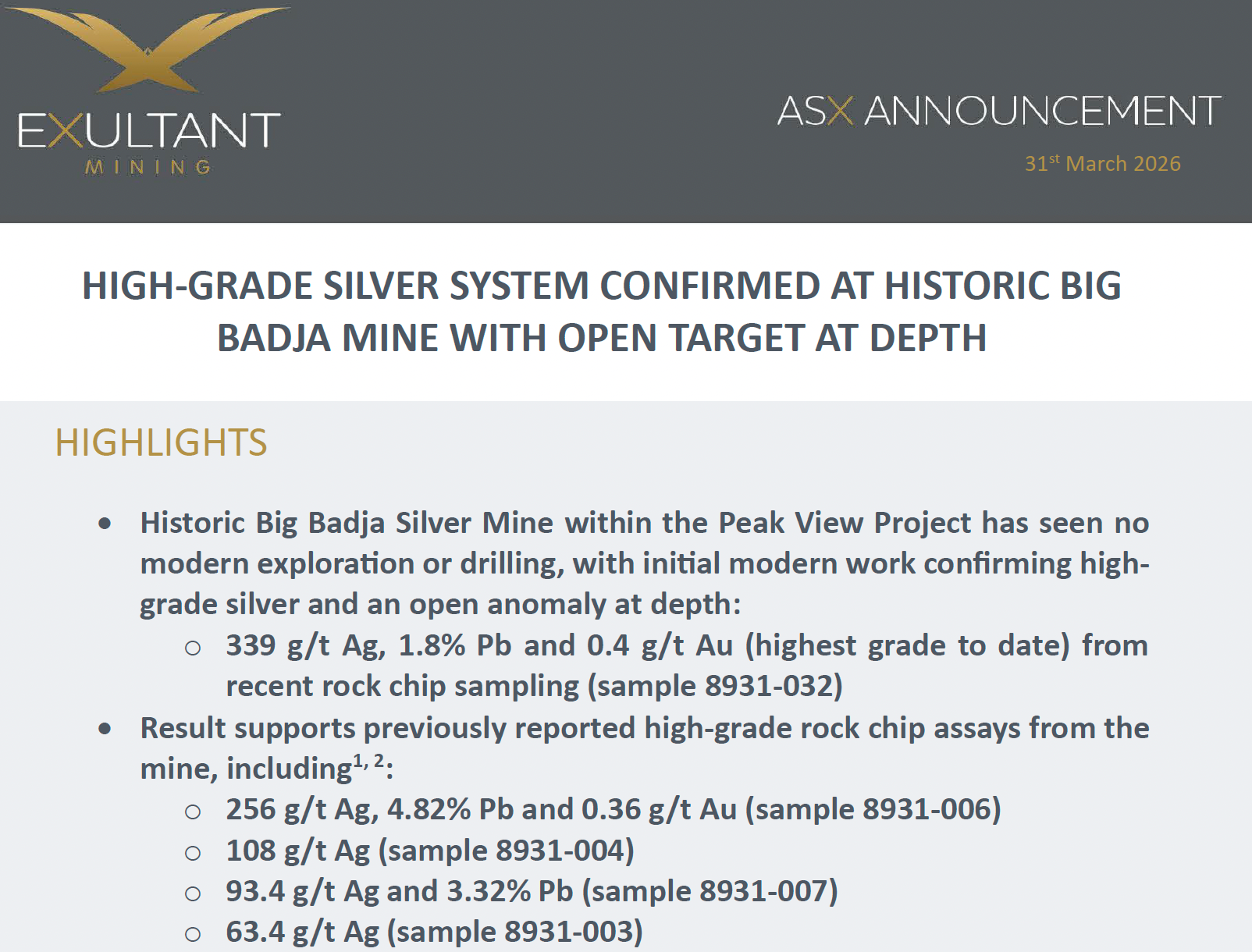
Exultant Mining (ASX: 10X) just dropped 339 g/t silver from rock chip sampling around the old workings at the historic Big Badja Silver Mine - the highest-grade result yet from the target.
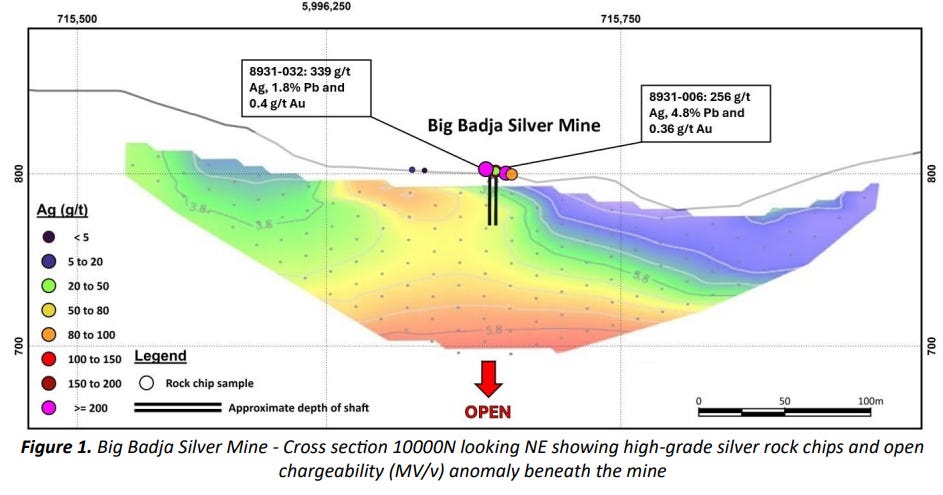
A trial IP survey lit up directly beneath the mine, and the anomaly stays open at depth.
Every result like this is stacking the deck in favour of 10X before the rig shows up to test a system that hasn’t been touched in 136 years.
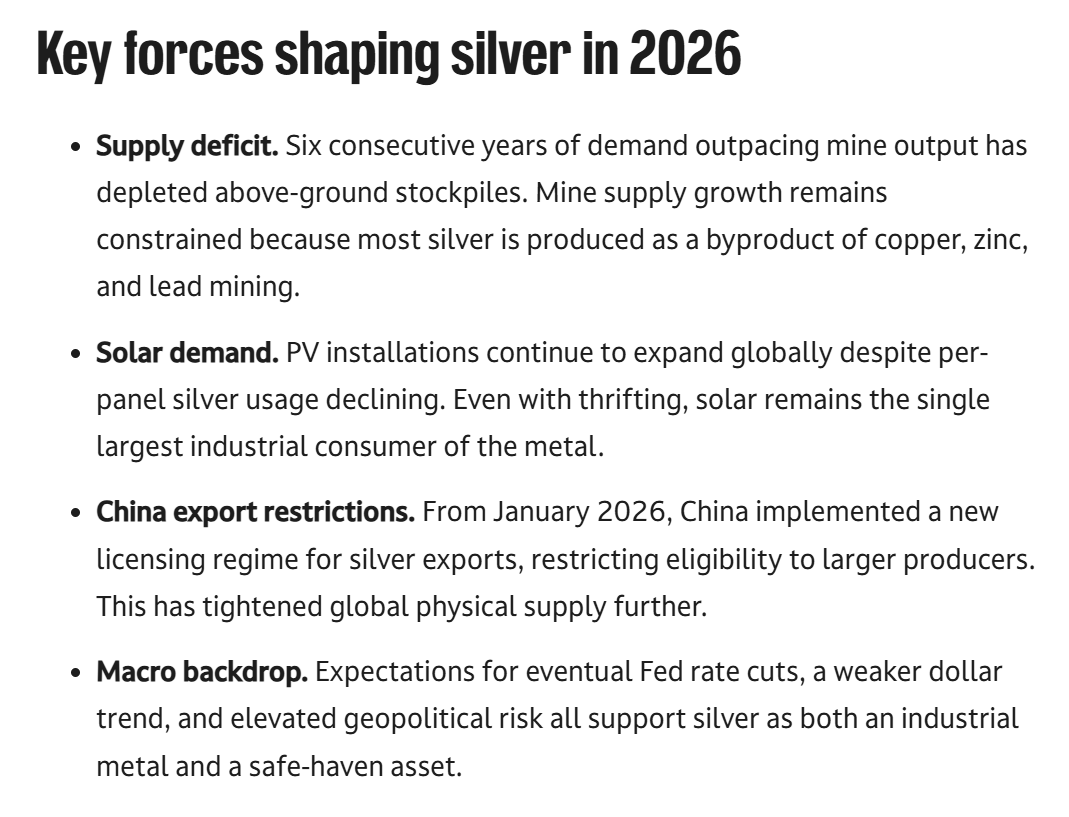
Silver’s more than doubled since the start of last year. It spiked to an all-time high above US$121/oz in January and sits around US$70 today, even after a sharp pullback.
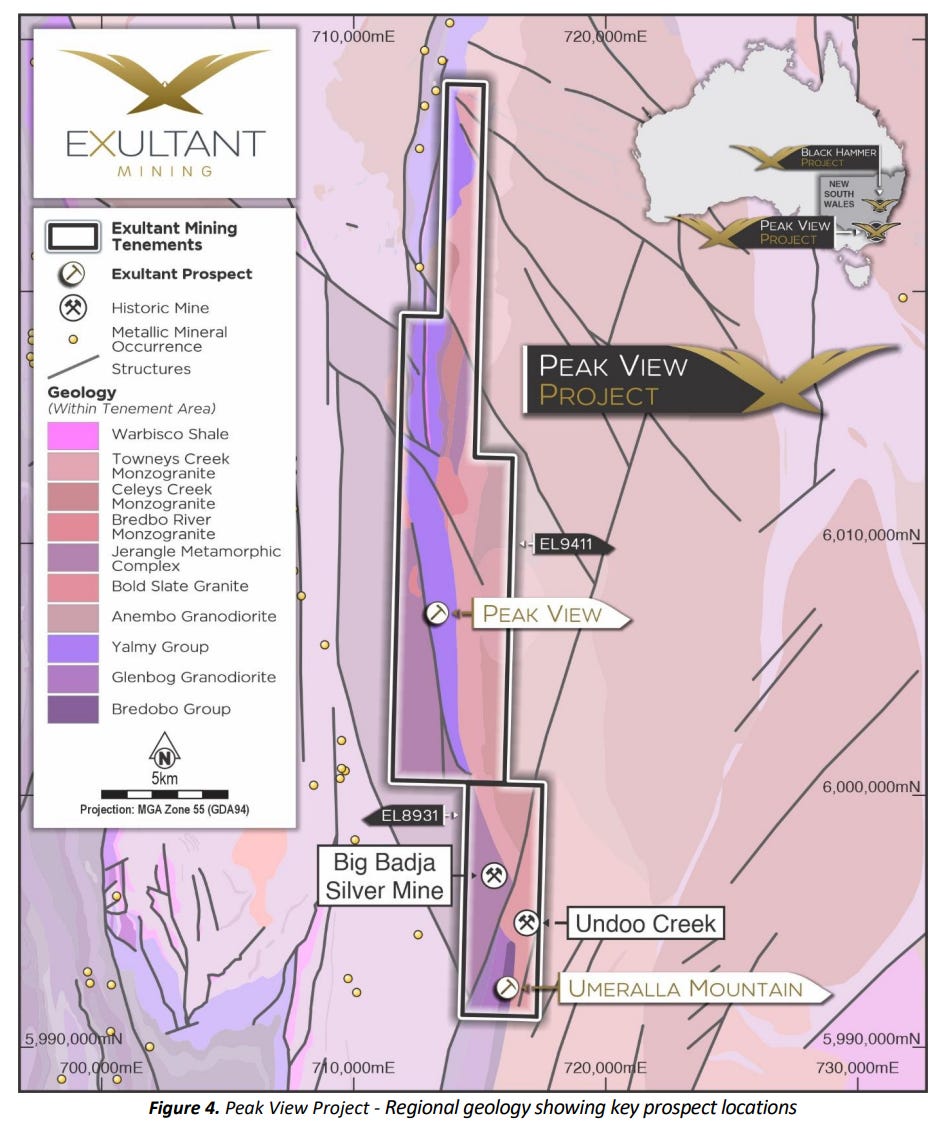
If you've been following our coverage, Exultant Mining’s broader tenement package will ring a bell. Big Badja sits within Peak View, the same project that delivered 50.9 g/t gold rock chips at Undoo Creek last week.

What started as a gold story now has exposure to the two hottest commodities of the past 18 months.
At a $7 million market cap with more than $4 million in cash, 10X has two active high-grade systems on one tenement. One gold, one silver, and both heading toward the drill.
High-Grade Silver From a Mine Nobody Drilled
We covered the basics above. Here’s where the historical detail gets interesting.
The Warden’s Report from the era documents silver grades of up to 334 oz/t from just six metres depth. In modern terms, that’s 9,469 g/t Ag.

The main shaft reached 30 metres before it collapsed, and the reasons for shutting down were never properly recorded.
Alongside the 339 g/t headline result, four other rock chips from 10X came back with grade from around the old workings:
339 g/t Ag, 1.8% Pb and 0.4 g/t Au
256 g/t Ag, 4.82% Pb and 0.36 g/t Au
108 g/t Ag
93.4 g/t Ag and 3.32% Pb
63.4 g/t Ag
Silver and lead are showing up together across multiple samples. In vein systems like Big Badja, that pairing usually means the mineralisation has depth to it.
The veins sit along a contact between granite and sediment, a geological boundary that acts like plumbing for metal-bearing fluids. That same structure is what made the IP survey work.
The geophysics can see it, and it lit up.
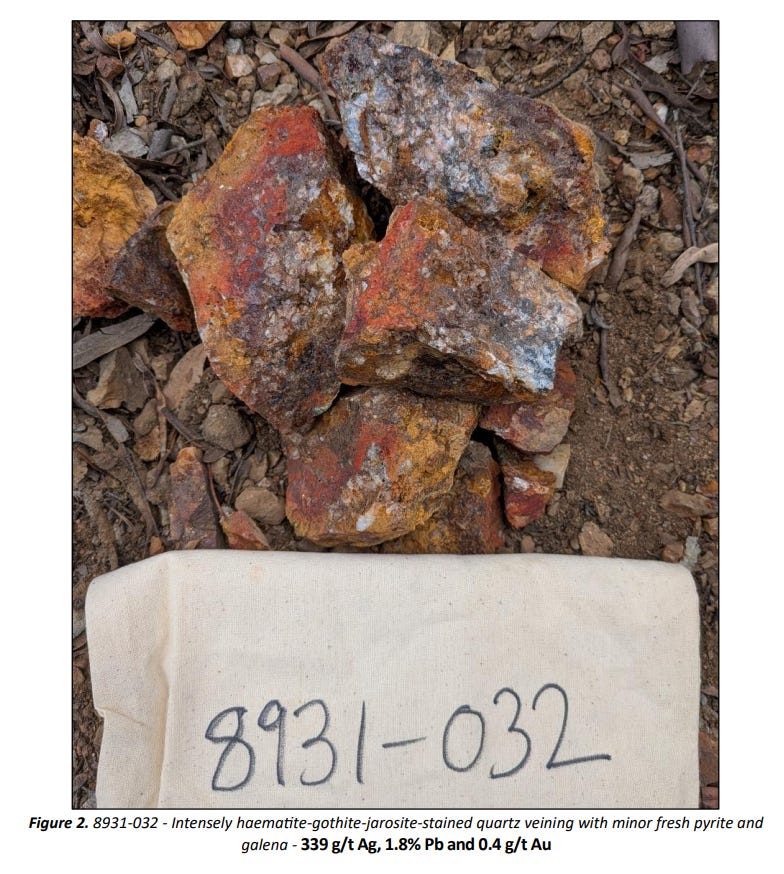
Rock chips are hand-picked surface samples, so they’ll skew toward the best stuff on the ground. They tell you the system carries metal, not what grade it’ll run at when you drill it.
But five separate results between 63 and 339 g/t silver, clustered around workings where the Warden’s Report recorded grades in the thousands, says there’s a real system here carrying real metal.
The IP Gives Them a Map
Some early-stage explorers at this market cap would be punching holes based on surface samples and a best guess.
10X has a geophysical response sitting directly under the old workings that tells them where the sulphides are and how deep they go.
10X ran a trial induced polarisation (IP) survey line over the mine, and the result was clean and stays open at depth.
That means the sulphide mineralisation that carries the silver continues well below where the old-timers stopped digging, and the first drill hole at Big Badja can target something specific.
The next round of work is more IP lines to push the depth penetration further and test along strike of the granite-sediment contact.
There’s also a 3km lead-zinc soil anomaly sitting about three kilometres north of Big Badja along the same structural corridor.
If that anomaly turns out to be another Big Badja-style target, you’re looking at district-scale potential across a 15km contact zone that’s barely been touched.
The Commodity Tailwind
Gold and silver have both pulled back hard from their highs earlier this year. Gold’s off more than 20% from above US$5,500 in January. Silver’s dropped from US$121 to around US$70.

But zoom out and the picture is still strong. Gold’s up more than 40% over the past year. Silver’s more than doubled. Both corrections look ugly on a short-term chart, but the longer-term run hasn’t broken.
For a pre-drill explorer, commodity prices are the tide that lifts or sinks everything. You can have the best geology in the world, but if the metal you’re chasing is in a bear market, the phone doesn’t ring.
Even after the pullback, the cycle is still working in 10X's favour. Gold and silver explorers heading into their first drill program don't often get a commodity backdrop like this.
Our Take
The drill will decide this one. Rock chips and geophysics can tell you a system is there. Only the bit going into the ground confirms what’s underneath.
But the surface work at Big Badja keeps delivering. Five rock chips between 63 and 339 g/t silver from a mine that’s sat idle since 1890, an IP anomaly open at depth, and silver sitting at US$70 after more than doubling in a year.
A couple of weeks ago it was 50.9 g/t gold at Undoo Creek. Now it’s 339 g/t silver at Big Badja. Two high-grade systems on one tenement, both heading toward the drill, with more than $4 million in the bank to get there.
And that’s before you factor in the copper exposure across the broader project portfolio. 10X is a gold, silver and copper company trading at a $7 million valuation.
With 37 million shares on issue and no need to raise capital in the near term, the register is tight. If drill results land at either target, there aren't a lot of shares to absorb the demand.
Only one of these targets needs to come off for a $7 million company to look very different.
We reckon it’s a good place to be sitting when the rig turns up.